Vancomycin dosing in critically ill patients receiving renal replacement therapy: a critical appraisal of the toxicity threshold and external validation - Report - MDSpire
Clinical Report: Evaluating Vancomycin Dosage in Critically Ill Patients
Background
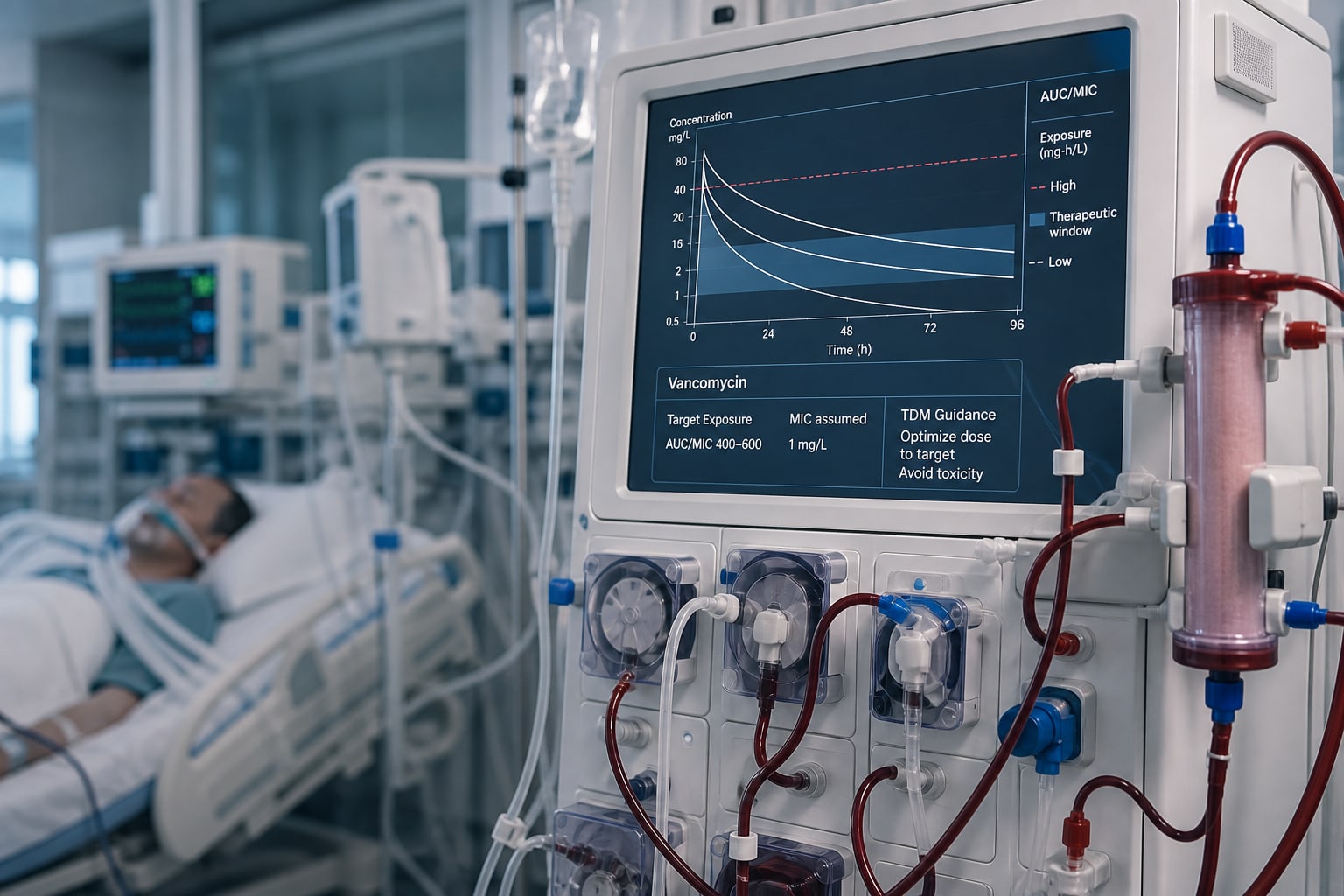
Vancomycin is a critical antibiotic used to treat infections in critically ill patients, particularly those with renal impairment. Accurate dosing is essential to balance efficacy and minimize nephrotoxicity, especially in patients undergoing renal replacement therapy. Recent guidelines, such as the ASHP/IDSA/PIDS/SIDP vancomycin therapeutic monitoring guideline, emphasize the importance of maintaining daily vancomycin exposure within 400–600 mg·h/L to minimize nephrotoxicity and maximize efficacy.
Data Highlights
No numerical or trial data provided in the source material.
Key Findings
The toxicity threshold for vancomycin dosing simulations was set at AUC0−24 h ≥ 700 mg·h/L, which contradicts the guideline recommendation of maintaining AUC below 600 mg·h/L.
External validation showed a median prediction error of 81.9% in a distinct TDM dataset, indicating systematic overprediction of vancomycin concentrations.
Residual urine output was not included as a stratification variable in the nomogram, despite its recognized impact on vancomycin clearance.
46.7% of patients in the TDM dataset had urine output ≥ 500 mL/24 h, compared to 21.5% in the development dataset, suggesting a potential bias in model performance.
The authors are urged to revise the toxicity threshold to align with the guideline recommendation of 600 mg·h/L and acknowledge limitations in external validation reporting.
Clinical Implications
Clinicians should be cautious when applying the proposed vancomycin dosing nomograms, particularly in patients with residual urine output. Therapeutic drug monitoring is essential to ensure appropriate dosing and minimize the risk of nephrotoxicity.
Conclusion
The findings indicate the need for careful interpretation of vancomycin dosing nomograms in critically ill patients. Adjustments to toxicity thresholds and thorough reporting of validation data are necessary for safe clinical application.