Pan-immune-inflammation value for risk stratification of adverse cardiovascular outcomes in acute coronary syndrome undergoing percutaneous coronary intervention: a systematic review and meta-analysis - Report - MDSpire

Pan-immune-inflammation value for risk stratification of adverse cardiovascular outcomes in acute coronary syndrome undergoing percutaneous coronary intervention: a systematic review and meta-analysis

  • By

  • Xinrui Yin

  • Shijia Du

  • June 1, 2026

  • 0 min

Share

Clinical Report: Evaluating the Prognostic Significance of Pan-Immune-Inflammation Value

Overview

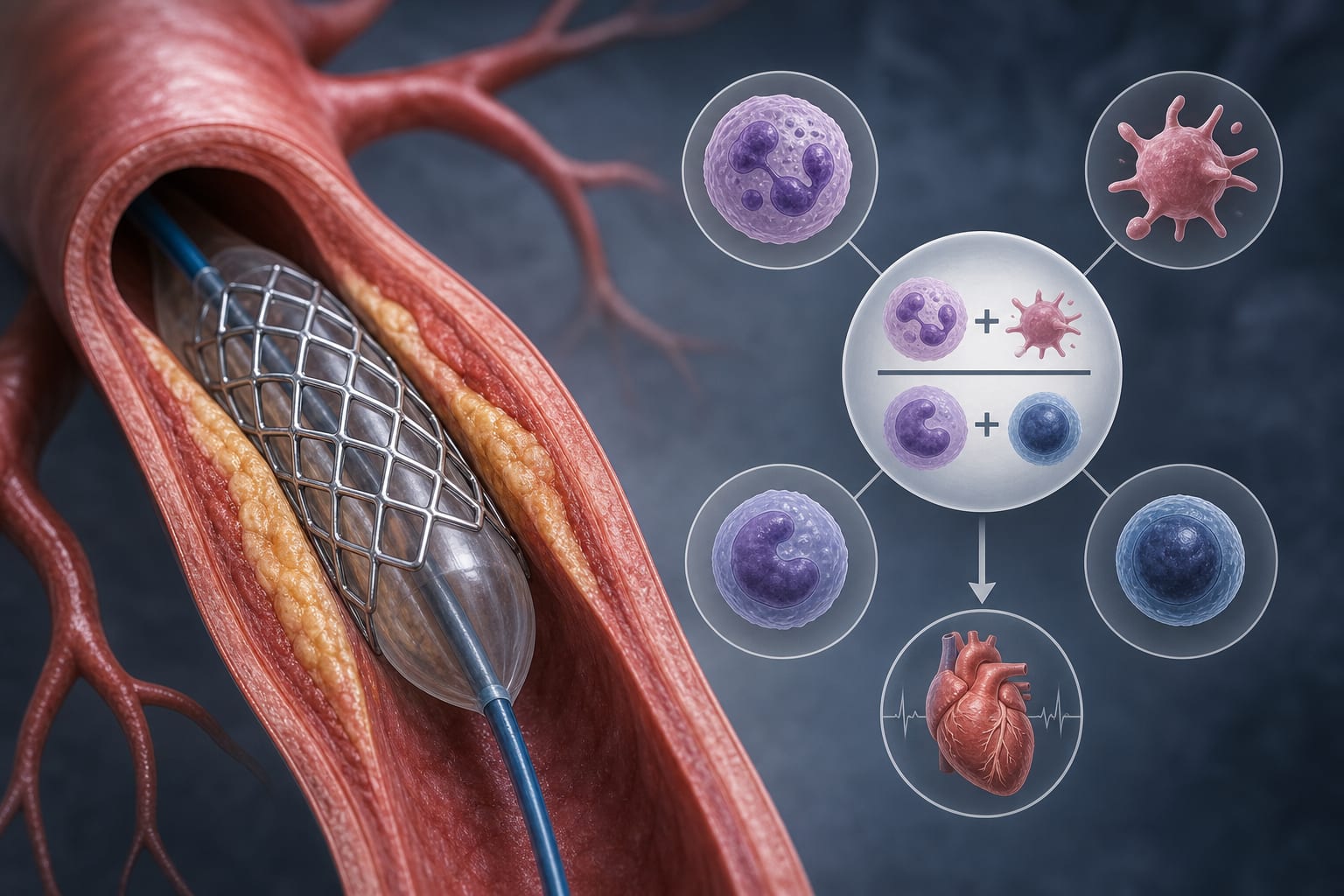
This systematic review and meta-analysis evaluated the prognostic value of the pan-immune-inflammation value (PIV) in patients with acute coronary syndrome (ACS) undergoing percutaneous coronary intervention (PCI).

Background

Acute coronary syndrome (ACS) is a leading cause of cardiovascular morbidity and mortality, with patients undergoing PCI still facing significant residual risk. Identifying reliable prognostic biomarkers is crucial for risk stratification and management of these patients. The pan-immune-inflammation value (PIV) integrates multiple inflammatory markers.

Data Highlights

OutcomeAdjusted HR (95% CI)Certainty
Major Adverse Cardiovascular Events1.65 (1.20–2.27)Low
All-Cause Mortality3.51 (2.15–5.74)Moderate
Cardiac Mortality3.24 (1.34–7.81)Low
No-Reflow or Slow-FlowAUC 0.828Moderate
Post-Contrast Renal InjuryAUC 0.771Very Low

Key Findings

  • Higher PIV is associated with major adverse cardiovascular events (MACE).
  • Elevated PIV correlates with all-cause mortality in ACS patients undergoing PCI.
  • There is an association between PIV and cardiac mortality, though evidence is limited.
  • PIV demonstrates discrimination for no-reflow or slow-flow during PCI.
  • Discrimination for post-contrast renal injury using PIV is heterogeneous.
  • Risk of bias was moderate in most studies included in the analysis.

Clinical Implications

Further validation in prospective multicenter studies is necessary before routine clinical application.

Conclusion

Elevated PIV may indicate a higher risk of adverse cardiovascular outcomes in ACS patients undergoing PCI.

Related Resources & Content

  1. Clinical Research in Cardiology, 2026 -- The prognostic value of systemic inflammatory response index (SIRI) in acute coronary syndrome patients treated with primary percutaneous coronary intervention: a meta-analysis and systematic review
  2. European Journal of Preventive Cardiology -- Perivascular Inflammation's Role in Coronary Microcirculation and Vasoreactivity: Insights into Angina in Non-Obstructive Coronary Artery Disease
  3. Frontiers in Cardiovascular Medicine -- Prognostic value of CTI for major adverse cardiovascular events in patients With ST-elevation myocardial infarction after primary percutaneous coronary intervention
  4. ACC, AHA Issue New Acute Coronary Syndromes Guideline | American Heart Association
  5. Canakinumab Anti-Inflammatory Thrombosis Outcomes Study - American College of Cardiology
  6. Frontiers in Neurology — Systemic immune-inflammation index predicts post-thrombectomy outcomes and reveals a mediating role in the association between neurocardiac stress and prognosis: a multicenter study
  7. Pan-Immune-Inflammation Value Is Independently Correlated to Impaired Coronary Flow After Primary Percutaneous Coronary Intervention in Patients With ST-Segment Elevation Myocardial Infarction
  8. ACC, AHA Issue New Acute Coronary Syndromes Guideline | American Heart Association
  9. Canakinumab Anti-Inflammatory Thrombosis Outcomes Study - American College of Cardiology

Original Source(s)

Related Content