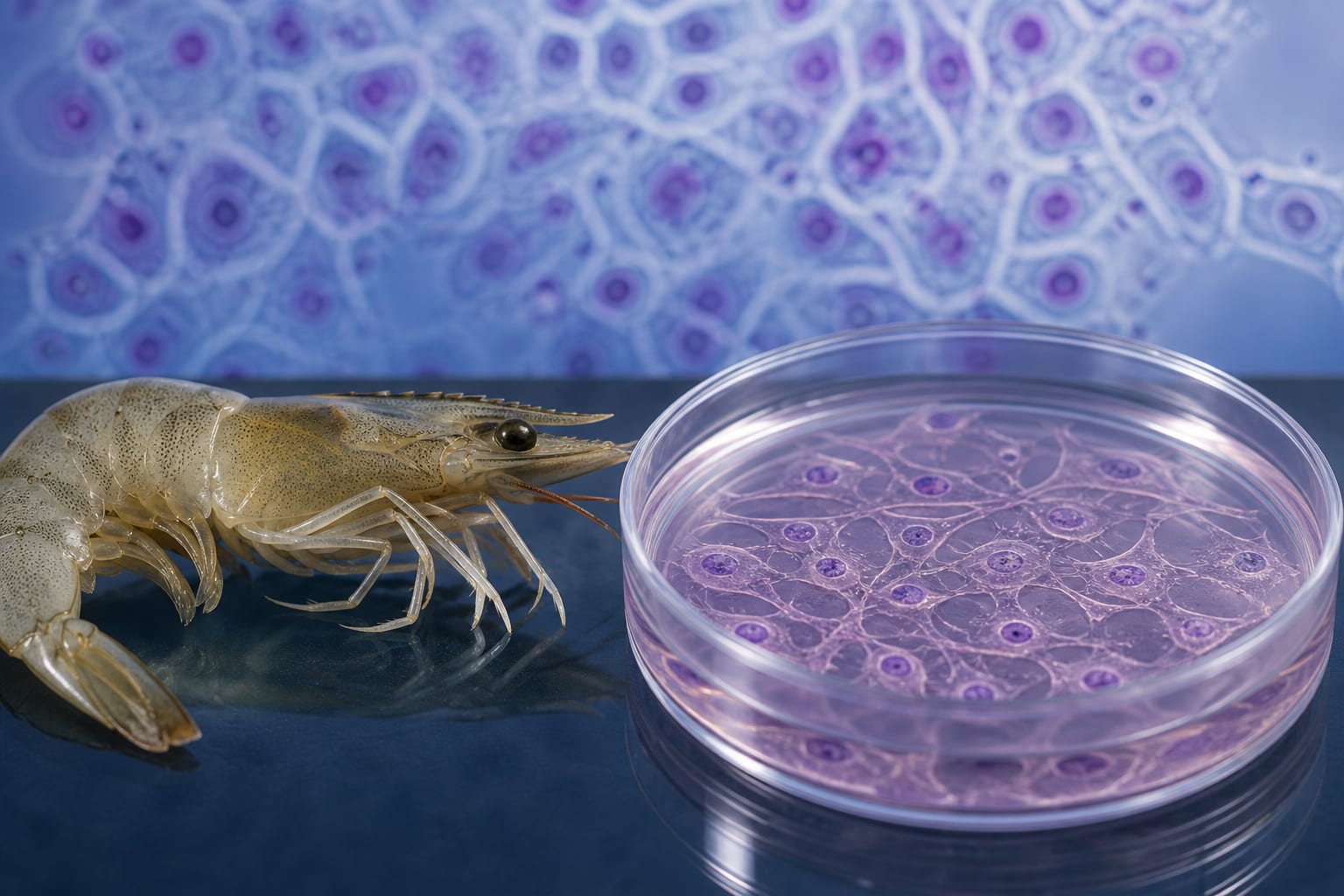
Clinical Report: Establishment of a Primary Hepatopancreatic Cell Model
Overview
This study establishes a primary hepatopancreatic cell model from Litopenaeus vannamei to investigate glucose metabolism and endocrine regulation. The model demonstrates preserved metabolic responses to glucose and insulin.
Background
Crustaceans, including shrimp, are vital to global aquaculture, and understanding their metabolic regulation is crucial for optimizing growth and nutrient utilization. Current knowledge of glucose metabolism in these species is limited, primarily relying on whole-animal studies. The development of reliable in vitro models is important for investigating the cellular mechanisms underlying metabolic regulation in crustaceans.
Data Highlights
No numerical data or trial data provided in the source material.
Key Findings
A primary hepatopancreatic cell platform was established from Litopenaeus vannamei.
The cells maintained key characteristics and viability during short-term culture.
Exogenous glucose increased glucose transport and glycolysis-related transcription while suppressing gluconeogenesis-related genes.
Insulin enhanced intracellular glucose accumulation and transcriptional responses.
Starvation conditions led to reduced glucose availability and altered gene expression patterns.
Visual assessments of glycogen and lipid storage were optimized to reflect cellular energy status.
Clinical Implications
The established cell model allows for controlled investigations into glucose metabolism and endocrine regulation in crustaceans.
Conclusion
The primary hepatopancreatic cell model enables detailed studies of glucose homeostasis and endocrine interactions.
Nearly 40% of patients initiated thyroid hormone therapy within 2 years of hemithyroidectomy, with higher preoperative thyroid‐stimulating hormone levels and thyroid cancer identifying those at greatest risk.