Clinical Report: FDA Revises Monitoring for SCLC Therapy
Overview
The FDA has updated the prescribing information for tarlatamab-dlle, reducing the recommended monitoring time after the first two doses for patients with extensive-stage small cell lung cancer from 22-24 hours to 6-8 hours.
Background
Small cell lung cancer (SCLC) is a highly aggressive form of lung cancer with limited treatment options. Tarlatamab is a targeted immunotherapy that has shown promise in treating SCLC, necessitating careful monitoring for adverse effects.
Data Highlights
No numerical data provided in the article.
Key Findings
The FDA reduced the monitoring time for tarlatamab-dlle from 22-24 hours to 6-8 hours after the first two doses.
Patients must still be monitored for 6-8 hours after the third dose and throughout cycle 2.
Monitoring time decreases to 3-4 hours during cycles 3 and 4, and to 2 hours during cycle 5 and subsequent doses.
Cytokine release syndrome occurred in 57% of patients in a pooled safety population, with 2% experiencing grade 3 events.
Neurologic toxicity was reported in 65% of patients, with 7% experiencing grade 3 or higher events.
Patients must remain within 1 hour of a healthcare setting for 48 hours after specific doses.
Clinical Implications
Clinicians should remain vigilant for potential adverse effects, particularly cytokine release syndrome and neurologic toxicity, during the specified monitoring periods.
Conclusion
The FDA's update on monitoring for tarlatamab-dlle provides new guidelines for patient management.
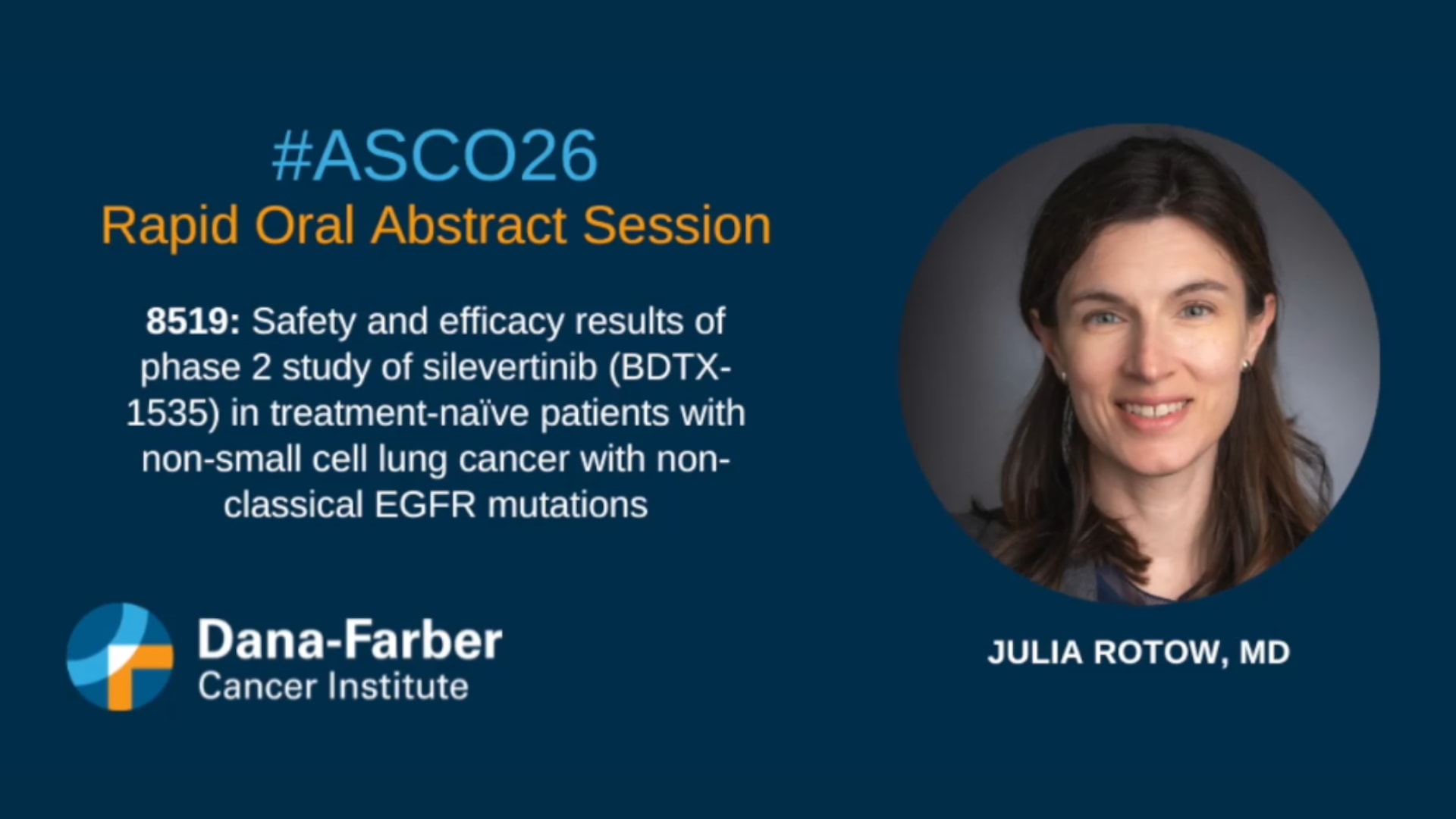
Dana-Farber Cancer Institute's Dr. Julia Rotow reported on a study looking at silevertinib, with data showing it may offer a new first-line option for hard-to-treat EGFR non-small cell lung cancer variants, with encouraging brain activity and manageable side effects.