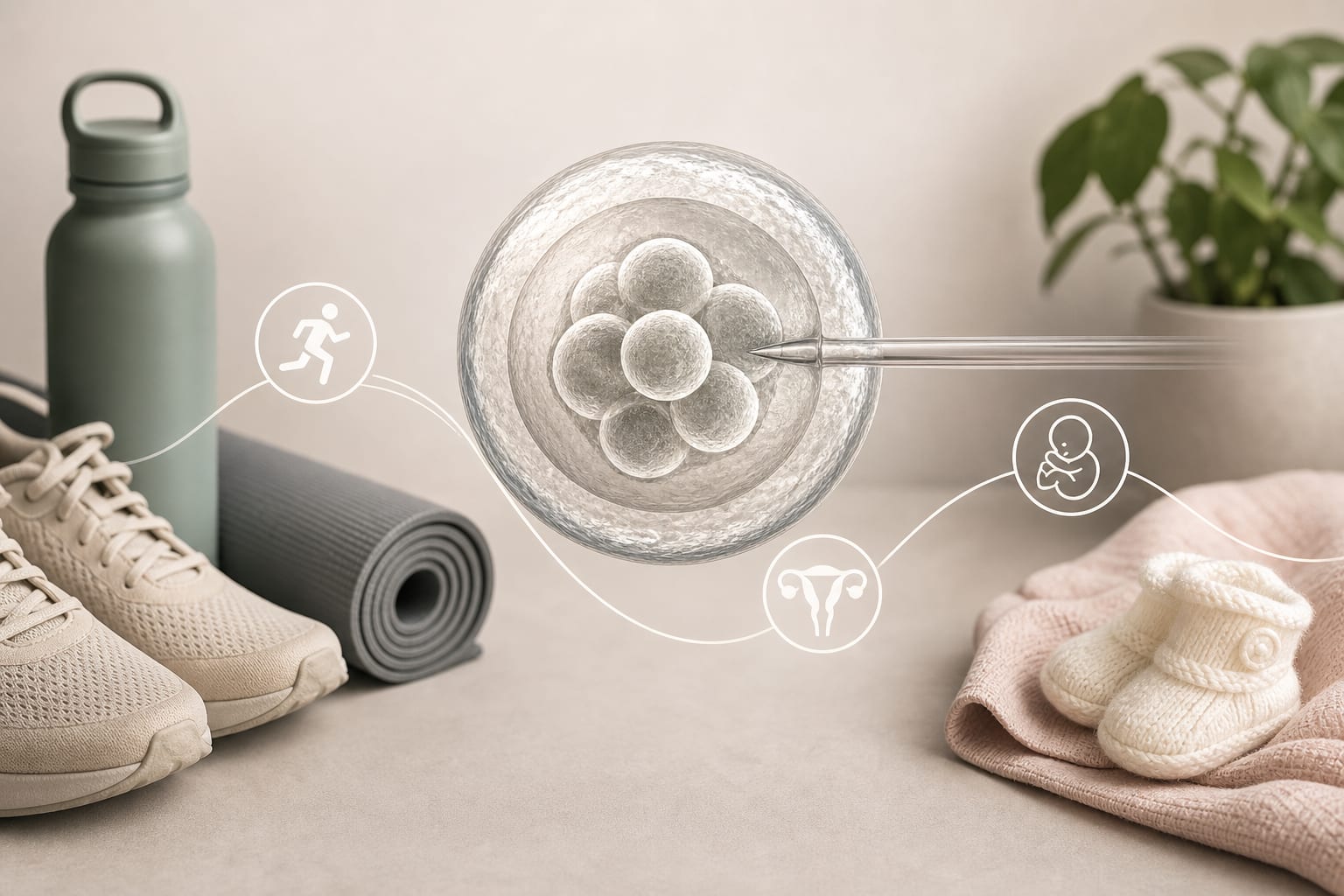
Clinical Report: Effects of Maternal Exercise on Assisted Reproductive Technology Outcomes
Overview
This study evaluates the impact of self-reported physical activity on reproductive outcomes in patients undergoing assisted reproductive technology (ART). Moderate exercise (1-2 times per week) was associated with higher pregnancy and live birth rates compared to no exercise or high levels of activity.
Background
Understanding the influence of lifestyle factors, such as physical activity, on ART outcomes is crucial due to the rising prevalence of infertility and the increasing use of ART. Previous studies have produced conflicting results regarding the optimal level of exercise during ART cycles, highlighting the need for further investigation. This study aims to clarify the relationship between maternal exercise and reproductive success in ART.
Data Highlights
Group
Pregnancy Rate per Transfer
Live Birth Rate per Transfer
Cumulative Pregnancy Rate per OPU
Cumulative Live Birth Rate per OPU
Group A (No Exercise)
32.5%
23.0%
52.5%
37.2%
Group B (1-2 times/week)
34.8%
25.6%
58.7%
43.1%
Group C (≥3 times/week)
29.7%
22.4%
49.5%
37.1%
Key Findings
Patients exercising 1-2 times weekly had the highest pregnancy rate per embryo transfer (34.8%).
Live birth rate per transfer was also highest in Group B (25.6%) compared to Groups A and C.
Cumulative pregnancy rate per oocyte pick-up (OPU) was highest in Group B (58.7%).
Cumulative live birth rate per OPU was higher in Group B (43.1%) than in Groups A and C.
Moderate physical activity was associated with more favorable ART outcomes compared to both no exercise and high levels of physical activity.
Clinical Implications
The findings indicate a relationship between moderate physical activity and ART outcomes.
Conclusion
Moderate exercise is associated with reproductive outcomes in ART. Further research is warranted to explore the mechanisms underlying these associations.