T cell-microglial interactions that impair myelin maintenance and regeneration: cellular mechanisms on white-matter associated changes - Report - MDSpire
Advertisement
T cell-microglial interactions that impair myelin maintenance and regeneration: cellular mechanisms on white-matter associated changes
Interactions Between T Cells and Microglia Disrupt Myelin Preservation and Repair
Overview
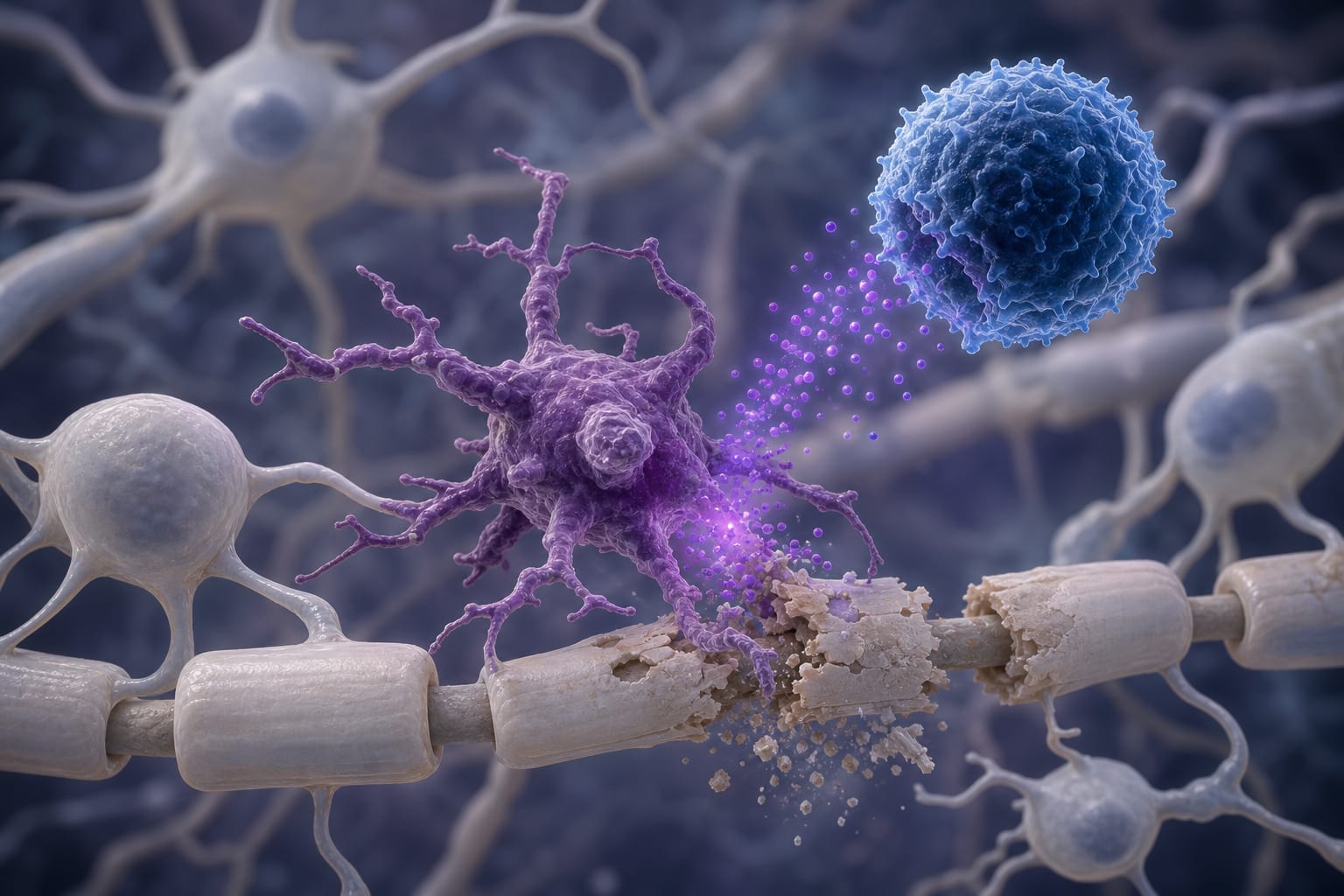
This review discusses how interactions between microglia and T lymphocytes contribute to white matter changes associated with aging and neurodegenerative diseases. It highlights the role of CD8+ T cells and the impact of interferon-gamma on myelin integrity and repair mechanisms.
Background
White matter integrity is crucial for cognitive function and declines with aging, correlating with increased dementia risk and motor dysfunction. Understanding the cellular mechanisms behind white matter deterioration is essential for developing therapeutic strategies. Recent studies have identified the interactions between microglia and T cells as significant contributors to these changes.
Data Highlights
No numerical data or trial data provided in the source material.
Key Findings
Aging alters microglial signaling profiles and promotes CD8+ T cell recruitment.
Interferon-gamma from T cells induces transcriptional changes in microglia and oligodendrocyte lineage cells.
These changes destabilize myelin and limit remyelination, characteristic of aging and neurodegeneration.
Microglia transition from homeostatic to dysfunctional, proinflammatory states with aging.
Bidirectional communication between CD8+ T cells and glia perpetuates inflammation and impairs regeneration.
Clinical Implications
Understanding the role of T cell-microglial interactions may inform therapeutic approaches aimed at restoring myelin integrity in aging and neurodegenerative conditions. Targeted interventions could potentially mitigate the inflammatory processes that contribute to white matter pathology.
Conclusion
The review provides a mechanistic framework for how T cell-microglial interactions contribute to white matter alterations, emphasizing the need for further research into therapeutic strategies.