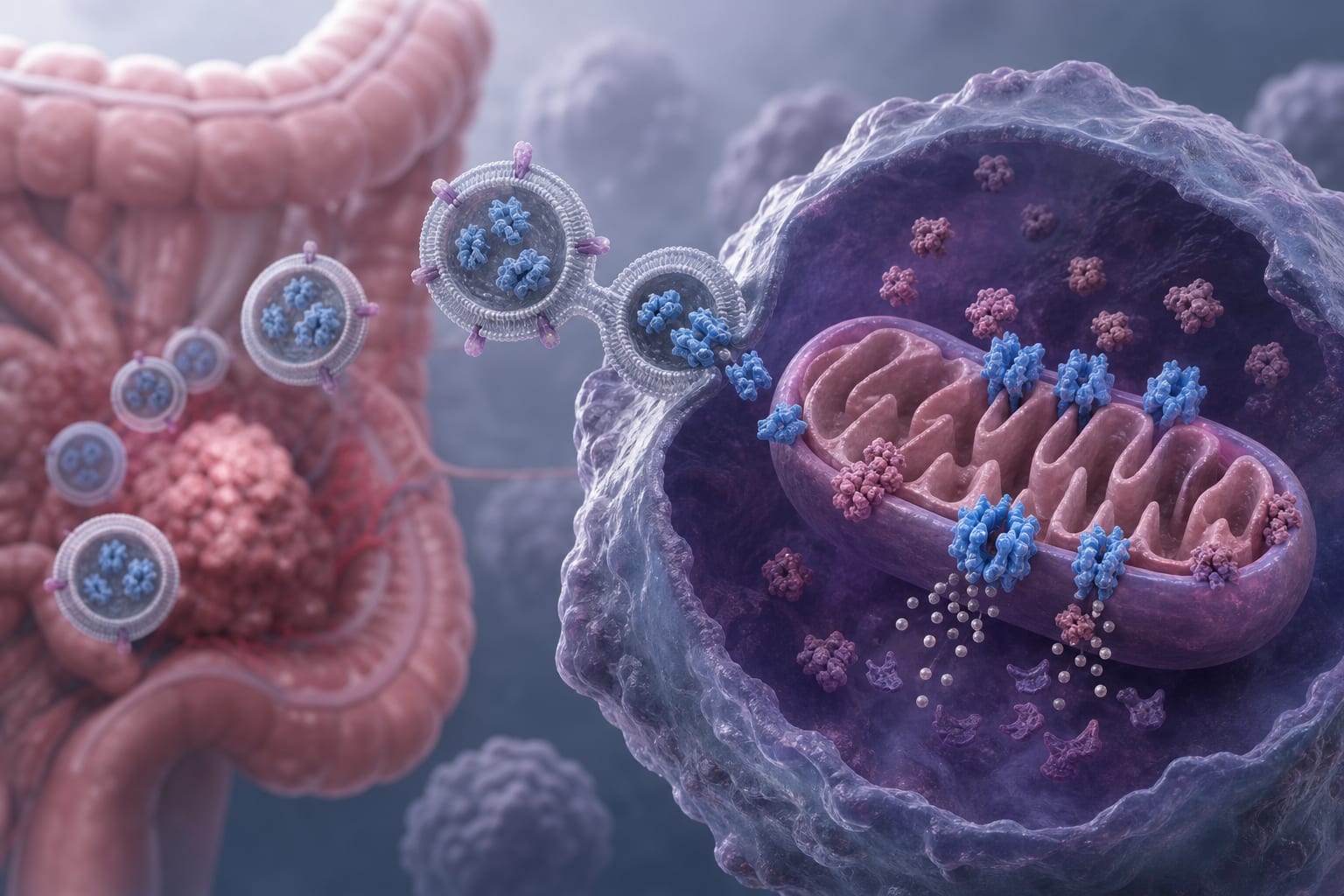
Modified exosomes transport optimized toad BAX to restore mitochondrial apoptosis in colorectal cancer
Overview
This study investigates the use of engineered exosomes to deliver optimized toad BAX, a pro-apoptotic protein, to colorectal cancer (CRC) cells. The findings demonstrate that this approach induces apoptosis and inhibits tumor growth in preclinical models.
Background
Colorectal cancer (CRC) is a leading cause of cancer-related mortality, largely due to the evasion of programmed cell death. The BCL-2 family of proteins plays a crucial role in regulating apoptosis, and the overexpression of anti-apoptotic proteins contributes to therapeutic resistance. Direct delivery of pro-apoptotic proteins like BAX represents a strategy to address these challenges.
Data Highlights
Measurement
Value
BAX binding affinity to human BCL-2
Kd = 12.7 ± 1.9 µM
In vivo antitumor activity
Enhanced with triple mutant BAX
Key Findings
Toad BAX binds to human BCL-2, triggering mitochondrial outer membrane permeabilization.
The triple mutant of BAX shows improved affinity for BCL-2 and enhanced antitumor activity compared to wild-type BAX.
Exosome-mediated delivery of optimized BAX effectively targets CRC cells and inhibits tumor growth.
This approach extends overall survival in AOM/DSS-induced CRC models without inducing overt toxicity.
The study provides a preclinical foundation for protein-based therapeutics targeting apoptosis-evasive solid tumors.
Clinical Implications
The findings indicate that engineered exosomes can deliver pro-apoptotic proteins in CRC treatment.
Conclusion
The study presents the use of modified exosomes to deliver optimized BAX as a strategy in colorectal cancer, aiming to restore mitochondrial apoptosis.