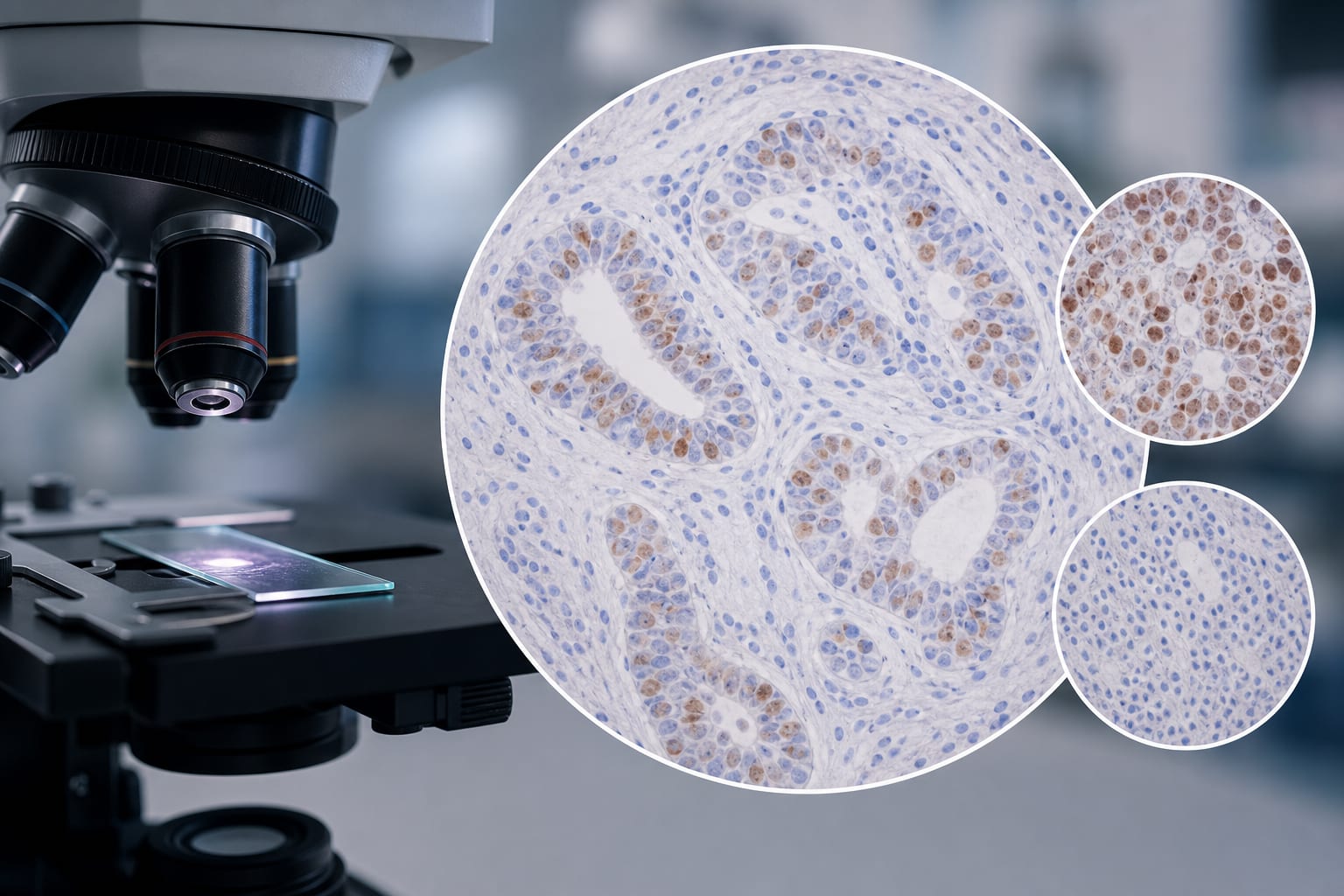
Clinical Report: Pulmonary Leiomyosarcoma Induced by Post-Surgical Radiotherapy
Overview
This report presents a rare case of pulmonary leiomyosarcoma that developed over 20 years post-radiotherapy for breast cancer. The tumor exhibited a TP53 mutation and low PD-L1 expression, with rapid progression and poor response to multiple treatment modalities.
Background
Radiation-induced sarcoma (RIS) is a rare but serious complication following radiotherapy, particularly in breast cancer patients. The long latency period and high malignancy associated with RIS complicate diagnosis and treatment, leading to significant variability in patient outcomes. Understanding RIS is crucial for improving management strategies and patient quality of life.
Data Highlights
No numerical data or trial data presented in the article.
Key Findings
Radiation-induced pulmonary leiomyosarcoma can develop more than 20 years after breast cancer radiotherapy.
The tumor in this case harbored a TP53 mutation and exhibited low PD-L1 expression.
The patient had a poor response to multiple treatment modalities, including chemotherapy and immunotherapy.
Survival was under 10 months following diagnosis.
Clinical Implications
Healthcare professionals should be aware of the potential for RIS in patients with a history of breast cancer treated with radiotherapy. Early recognition and referral to specialized sarcoma teams may improve management outcomes. Multimodal treatment approaches may be necessary, although responses can be limited.
Conclusion
This case underscores the challenges of diagnosing and treating radiation-induced sarcomas, highlighting the need for ongoing research and improved clinical guidelines.