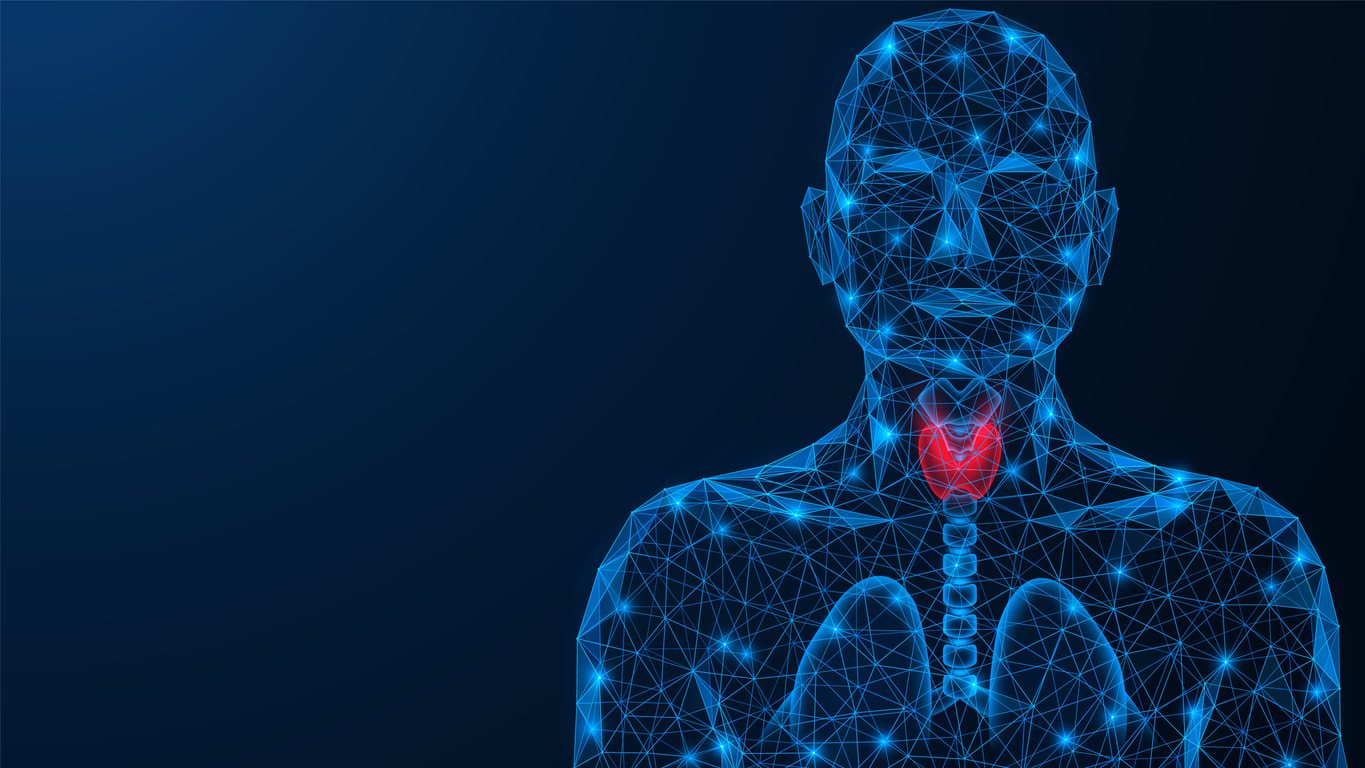
Clinical Report: AI Meets Molecular Testing in Thyroid Nodules
Overview
A retrospective study demonstrates that integrating AI-based ultrasound with molecular testing enhances specificity and positive predictive value in indeterminate thyroid nodules while maintaining high sensitivity. This approach may reduce unnecessary surgeries and improve patient outcomes.
Background
Thyroid nodules with indeterminate cytology pose a diagnostic challenge, often leading to unnecessary surgeries due to limited positive predictive value of molecular tests. The integration of artificial intelligence (AI) with molecular diagnostics could refine malignancy risk assessment, thereby optimizing clinical decision-making and patient management.
Integration of AIBx with ThyroSeq maintained 95% sensitivity while improving specificity from 45% to 91%.
Positive predictive value (PPV) increased from 66% with ThyroSeq to 72% with the combined approach.
Negative predictive value (NPV) improved to 99% with the integrated strategy.
The area under the receiver operating characteristic curve (AUC) rose from 0.70 for ThyroSeq to 0.93 for the combined approach.
No discordant pairs for sensitivity were found, indicating consistent identification of malignant cases.
The combined approach correctly classified additional benign nodules, although this difference was not statistically significant.
Clinical Implications
The integration of AI with molecular testing in thyroid nodule evaluation may enhance diagnostic accuracy and reduce unnecessary surgical interventions. Clinicians should consider this combined approach to better inform decisions regarding patient management and surgical risk.
Conclusion
The study highlights the potential of AI-driven imaging combined with molecular diagnostics to improve the management of indeterminate thyroid nodules, warranting further validation in larger cohorts.