Academic anti CD19 CAR-T cell therapy for relapsed/refractory B-cell lymphomas in real-world clinical practice: a prospective cohort study - Report - MDSpire

Academic anti CD19 CAR-T cell therapy for relapsed/refractory B-cell lymphomas in real-world clinical practice: a prospective cohort study

  • By

  • Natalya E. Konoplya

  • Tatiana M. Doroshenko

  • Katsiaryna Yu. Zharkova

  • Tatyana V. Savich

  • Ihar M. Seviaryn

  • Nadezhda M. Bobrova

  • Alexey A. Beleevsky

  • Eldar Kh. Sarydze

  • Sergey L. Polyakov

  • July 17, 2026

Share

Clinical Report: Evaluation of Academic Anti-CD19 CAR-T Cell Therapy

Overview

This study evaluates the efficacy and safety of academic anti-CD19 CAR-T cell therapy in patients with relapsed/refractory B-cell lymphomas (r/r BCLs). The findings indicate a complete response rate of 57.5% and acceptable toxicity profiles.

Background

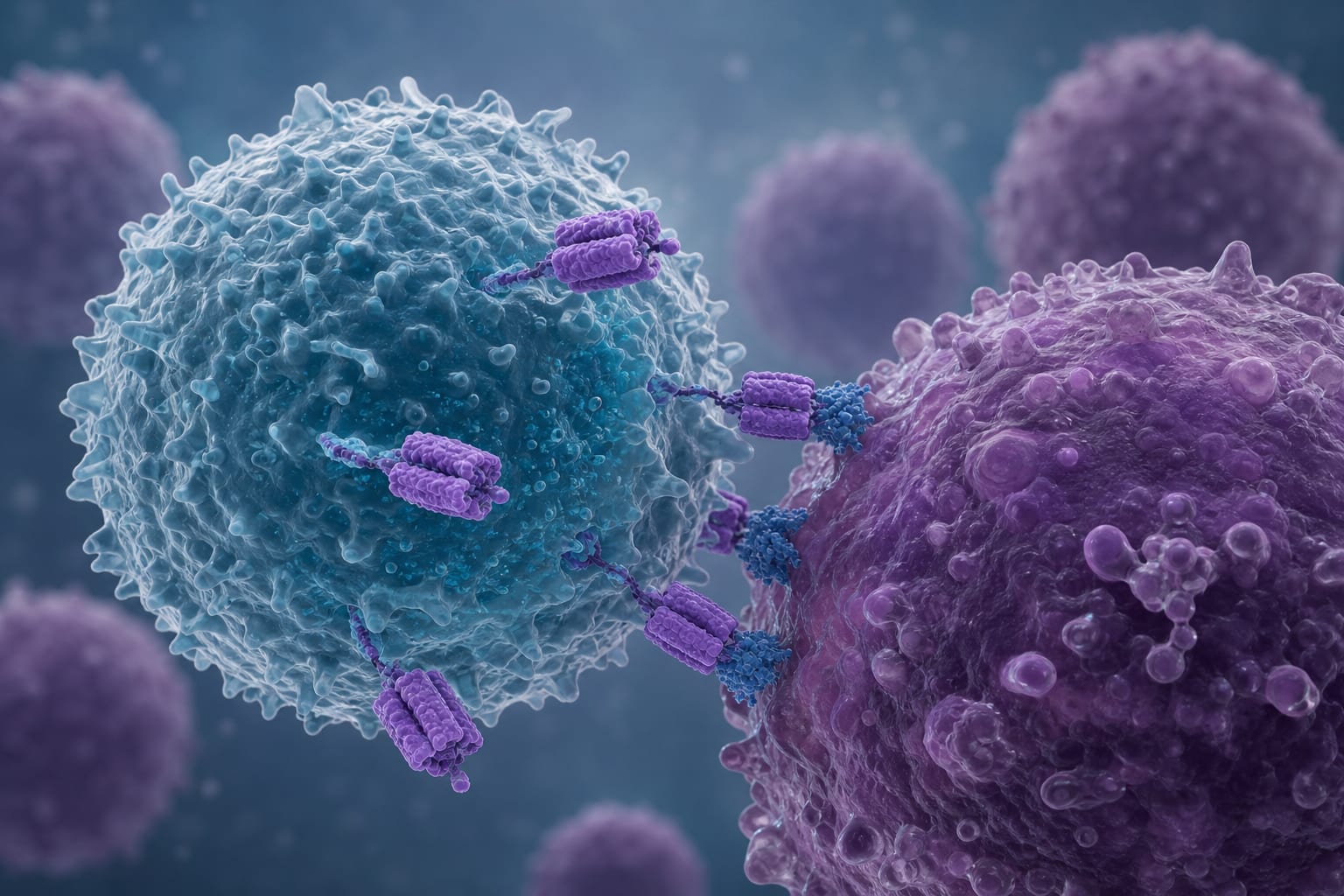
Chimeric antigen receptor (CAR) T-cell therapy has emerged as a standard treatment for r/r BCLs, particularly due to its effectiveness in achieving complete responses. However, the high cost of commercial CAR-T products limits their accessibility in many regions. The development of academic CAR-T therapies could enhance availability and affordability.

Data Highlights

OutcomeRate
Complete Response57.5%
4-Year Event-Free Survival46.2 ± 6.3%
4-Year Overall Survival67 ± 5.9%
Complete Response in Follicular Lymphoma83.3%
4-Year EFS in Follicular Lymphoma81.7 ± 9.6%
Cytokine Release Syndrome (≥ grade 3)2.6%
Neurotoxicity (ICANS ≥ grade 3)5.3%

Key Findings

  • Complete response achieved in 57.5% of all patients.
  • 4-year event-free survival rate was 46.2 ± 6.3%.
  • 4-year overall survival rate was 67 ± 5.9%.
  • 83.3% complete response rate in patients with follicular lymphoma.
  • Cytokine release syndrome occurred in 43.4% of patients, with 2.6% being grade 3 or higher.
  • Neurotoxicity (ICANS) was observed in 26.3% of patients, with 5.3% experiencing grade 3 or higher ICANS.

Clinical Implications

Clinicians should consider the safety profile and response rates when discussing treatment options with patients.

Conclusion

The study demonstrates that academic anti-CD19 CAR-T cell therapy is effective and has an acceptable safety profile for treating r/r B-cell lymphomas.

Related Resources & Content

  1. Author(s)/Org, Source, Year -- Title
  2. The ASCO Post — Responses Reported With CAR T-Cell Therapy in High-Risk NHL
  3. The ASCO Post — Early-Phase Study Explores CAR T-Cell Therapy for Relapsed or Refractory B-Cell Lymphoma
  4. Blood Cancer Journal — Phase I/II Study of Bispecific CAR-T Cell Therapy Targeting CD19 and CD20 in Patients with Relapsed or Refractory B-Cell Non-Hodgkin Lymphoma
  5. Blood Cancer Journal — Evaluation of the Safety and Effectiveness of CD22 and CD19 CAR-T Cell Therapy as a Bridging Strategy to Auto-Hematopoietic Stem Cell Transplantation for Adolescents and Young Adults with B-Cell Acute Lymphoblastic Leukemia
  6. Responses Reported With CAR T-Cell Therapy in High-Risk NHL
  7. Early-Phase Study Explores CAR T-Cell Therapy for Relapsed or Refractory B-Cell Lymphoma
  8. Phase I/II Study of Bispecific CAR-T Cell Therapy Targeting CD19 and CD20 in Patients with Relapsed or Refractory B-Cell Non-Hodgkin Lymphoma
  9. Management of relapsed or refractory large B-cell lymphoma: A British Society for Haematology Guideline
  10. Lisocabtagene Maraleucel Versus Standard of Care for Second-Line Relapsed/Refractory Large B-Cell Lymphoma: 3-Year Follow-Up From the Randomized, Phase III TRANSFORM Study
  11. Treatment of non-Hodgkin lymphoma with point-of-care manufactured CAR T cells: a dual institution, phase 1 trial - ScienceDirect

Original Source(s)

Related Content