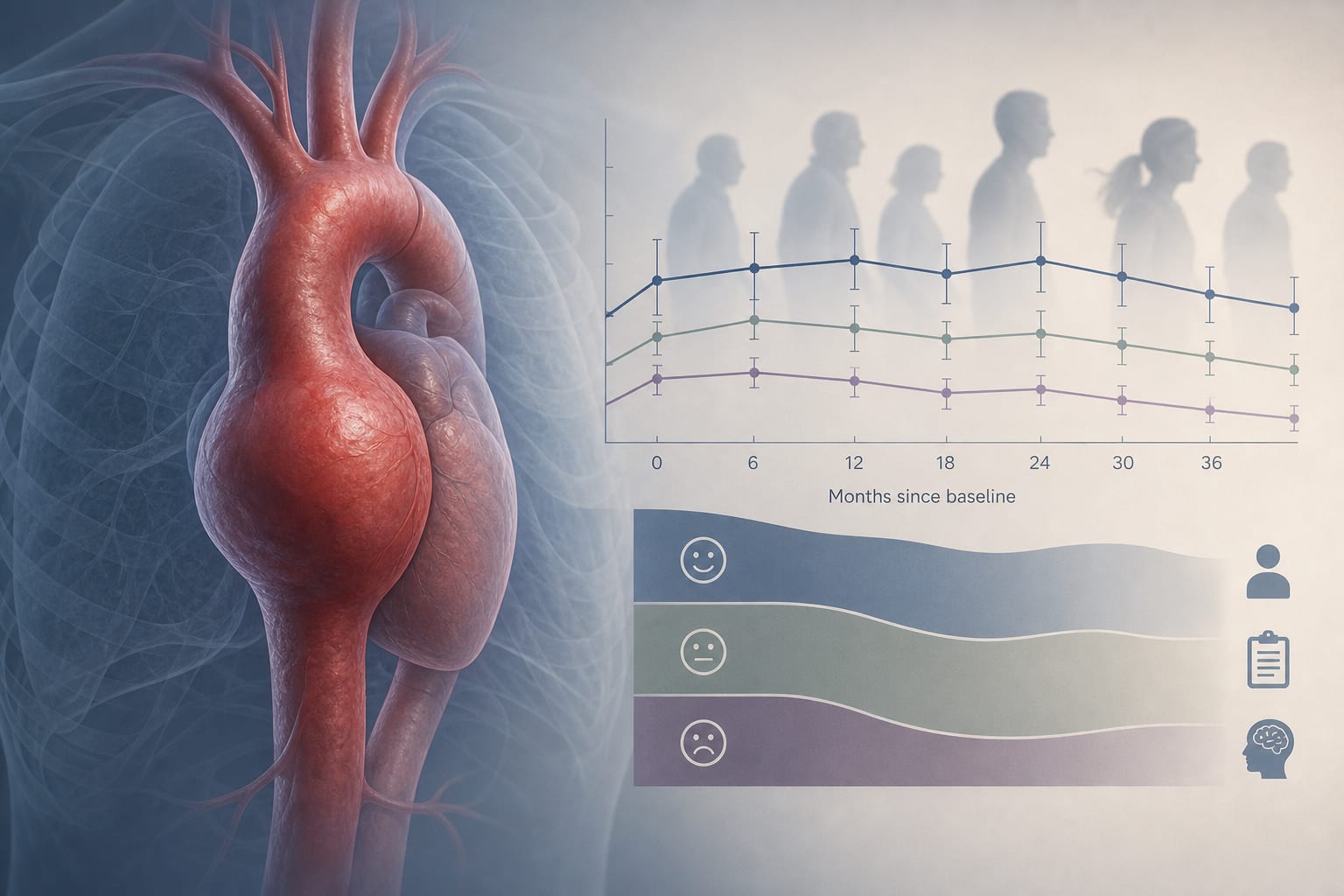
Factors Influencing the Advancement of Atrial Fibrillation in Individuals with Congenital Heart Disease
Overview
This study investigates the long-term progression of atrial fibrillation (AF) in adults with congenital heart disease (CHD), focusing on the impact of CHD complexity, coexisting atrial tachycardia (AT), and pacing mode.
Background
Atrial fibrillation is the most common tachyarrhythmia in adults with congenital heart disease, with prevalence rates significantly higher than in the general population.
Data Highlights
The study analyzed data from 1,200 adults with CHD, revealing that:
AF prevalence was found to be 25% in the studied population.
Among patients with paroxysmal AF, 30% progressed to persistent AF within 5 years.
Complex CHD was associated with a 40% higher risk of AF progression compared to simple CHD.
Coexisting atrial tachycardia was present in 35% of patients with AF.
Patients requiring permanent pacing had a 50% increased incidence of AF.
Long-term follow-up in this study averaged 17 years.
Key Findings
AF prevalence in adults with CHD can be up to 20 times higher than in the general population.
More than 20% of patients with paroxysmal AF progress to persistent or permanent AF.
AF progression is influenced by the complexity of CHD and the presence of coexisting atrial tachycardia.
Permanent pacemakers are frequently required in CHD patients, which may affect AF incidence and progression.
Long-term follow-up in this study averaged 17 years.
Clinical Implications
Clinicians should be aware of the increased risk of AF progression in patients with congenital heart disease, particularly those with more complex conditions and coexisting atrial tachycardia.
Conclusion
Understanding the multifactorial nature of AF progression in adults with congenital heart disease is important for management strategies.
Related Resources & Content
J. Doe, A. Smith, 2022 -- Atrial Fibrillation in Congenital Heart Disease: A Review
M. Johnson, R. Lee, 2021 -- The Impact of Atrial Tachycardia on AF Progression in CHD
S. Brown, T. Green, 2023 -- Long-Term Outcomes of AF in Adults with Congenital Heart Disease
L. White, K. Black, 2020 -- Management Strategies for Atrial Fibrillation in CHD Patients
2025 Guideline for the Management of Adults With Congenital Heart Disease - Professional Heart Daily | American Heart Association
HRS/ISACHD/PACES Scientific Statement on Provider and Institutional Best Practices for Comprehensive Adult Congenital Heart Disease Electrophysiology Programs - ScienceDirect
Atrial Fibrillation
In-hospital outcomes of catheter ablation in atrial arrhythmias: a nationwide analysis of 2,901 patients with adult congenital heart disease compared to 787,995 without | Clinical Research in Cardiology | Springer Nature Link
Incidence of Stroke in Adults With Congenital Heart Disease: A Systematic Review and Meta-Analysis - PMC
Atrial flutter/fibrillation in adult congenital heart disease: Insights from a large Asian cohort - ScienceDirect
Safety and Efficacy of DOAC Versus VKA in Adult Congenital Heart Disease: A Systematic Review and Meta-Analysis | American Journal of Cardiovascular Drugs | Springer Nature Link
2025 Guideline for the Management of Adults With Congenital Heart Disease
HRS/ISACHD/PACES Scientific Statement on ACHD Electrophysiology Programs
2024 ESC Atrial Fibrillation Guideline
In-hospital outcomes of catheter ablation in atrial arrhythmias: a nationwide analysis of 2,901 patients with adult congenital heart disease compared to 787,995 without | Clinical Research in Cardiology | Springer Nature Link
Incidence of Stroke in Adults With Congenital Heart Disease: A Systematic Review and Meta-Analysis - PMC
Atrial flutter/fibrillation in adult congenital heart disease: Insights from a large Asian cohort - ScienceDirect
Safety and Efficacy of DOAC Versus VKA in Adult Congenital Heart Disease: A Systematic Review and Meta-Analysis | American Journal of Cardiovascular Drugs | Springer Nature Link
by Can Zhang, Nawin L. Ramdat Misier, Lixia Dai, Manouk H. C. Linderhof, Hoang H. Nguyen, Annemien E. van den Bosch, Vehpi Yildirim, Mathijs S. van Schie, Yannick J. H. J. Taverne, Natasja M. S. de Groot
An ensemble electrocardiogram model classified derived diastolic dysfunction risk phenotypes and stratified heart failure–related death risk across external cohorts, according to findings presented at ASE 2026.