Case Report: Longitudinal analysis of local immunoregulatory mediators in a DLBCL vitreoretinal lymphoma receiving local chemotherapy - Report - MDSpire
Advertisement
Case Report: Longitudinal analysis of local immunoregulatory mediators in a DLBCL vitreoretinal lymphoma receiving local chemotherapy
Clinical Report: Longitudinal Study of Local Immune Regulatory Factors in DLBCL
Overview
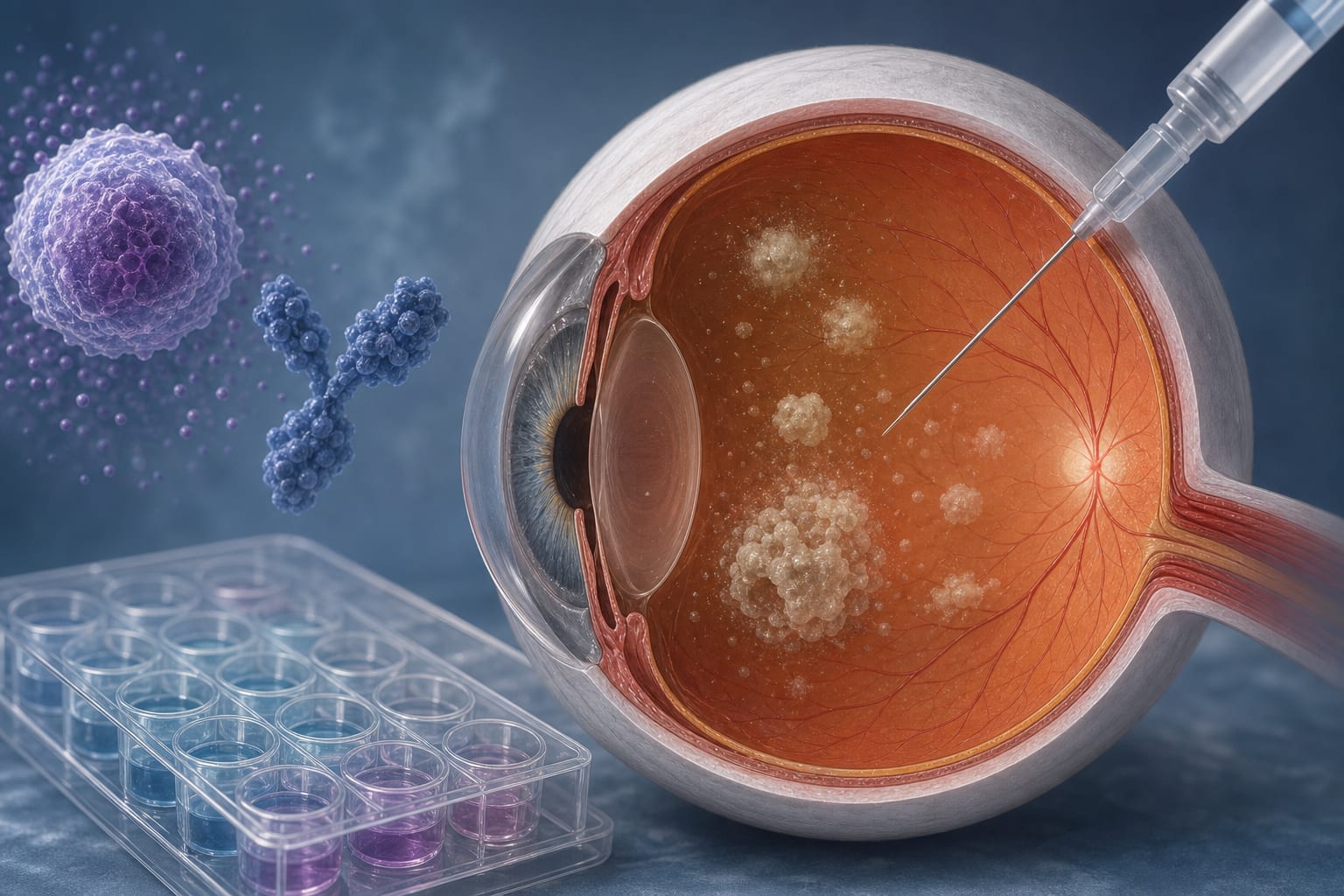
This study presents a longitudinal analysis of immune mediators in a patient with vitreoretinal lymphoma undergoing intravitreal chemotherapy. Key findings include the progressive decrease of several cytokines and persistent elevation of specific chemokines, suggesting their potential role as biomarkers for disease activity and treatment response.
Background
Vitreoretinal lymphoma (VRL) is a rare, aggressive B-cell lymphoma that primarily affects immune-privileged sites like the eye. Understanding the immune microenvironment and the role of cytokines and chemokines is crucial for developing effective treatment strategies. This study aims to elucidate the dynamics of immune mediators during local chemotherapy, potentially guiding future therapeutic approaches.
Data Highlights
No numerical data available.
Key Findings
Key cytokines IL-10, IL-6, IL-16, IL-1RA, and sIL-2R decreased progressively during therapy.
IL-10 became undetectable by day 22 of treatment.
Chemokines CXCL12 and CXCL13 declined more slowly, indicating ongoing support for tumor cells.
MCP-1 levels remained elevated, while hepatocyte growth factor (HGF) was consistently high, suggesting aggressive disease behavior.
Dynamic changes in immune mediators correlated with clinical tumor regression.
Patient-specific variability was noted in cytokine profiles, with some previously reported cytokines not elevated.
Clinical Implications
Monitoring cytokine and chemokine levels during treatment may provide valuable insights into disease activity and therapeutic response in VRL. Persistent elevation of certain mediators could inform treatment duration and identify patients at risk for aggressive disease.
Conclusion
This case study highlights the potential of intraocular immunomonitoring to enhance personalized treatment strategies for vitreoretinal lymphoma. Further research in larger cohorts is needed to validate these findings.