Clinical Report: A Giant Plexiform Neurofibroma of the Liver in NF1
Overview
This report details a rare case of a giant plexiform neurofibroma in the liver of an adolescent male with Neurofibromatosis type 1 (NF1) due to a deletion of exon 1 of the NF1 gene. The lesion's inoperable location necessitated targeted therapy with the MEK inhibitor selumetinib.
Background
Expand on the phenotypic variability and implications of large deletions in NF1.
Data Highlights
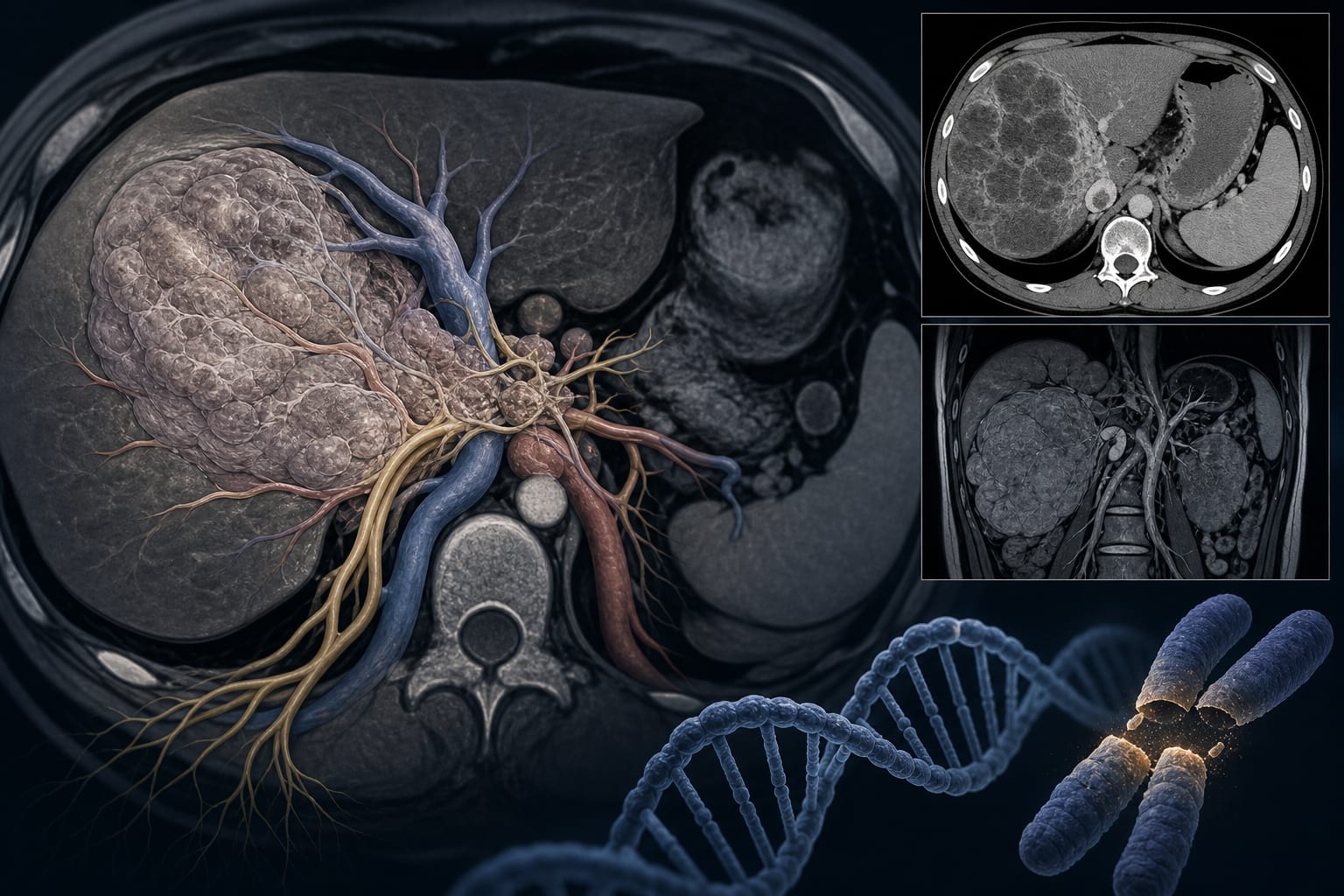
The patient presented with multiple café-au-lait macules, cutaneous neurofibromas, and headaches. Imaging studies revealed a multinodular lesion in the liver, and genetic testing confirmed a large deletion of an exon in the NF1 gene.
Key Findings
Plexiform neurofibromas are observed in up to 30% of NF1 patients and can be detected in 50% via MRI.
Large deletions of the NF1 gene are associated with severe manifestations of NF1, including extensive benign tumor growth.
The patient exhibited lesions in 7 of the 8 liver segments, indicating widespread involvement.
Targeted therapy with MEK inhibitors, such as selumetinib, is indicated for inoperable plexiform neurofibromas.
Careful monitoring and early initiation of therapy are critical in managing NF1 patients with extensive plexiform neurofibromas.
Clinical Implications
Healthcare professionals should be vigilant in monitoring NF1 patients for the development of plexiform neurofibromas, particularly those with genetic deletions. Early intervention with targeted therapies can improve outcomes in patients with inoperable tumors.
Conclusion
This case highlights the complexities of managing NF1 and the importance of genetic testing and targeted therapies in the treatment of plexiform neurofibromas.