Clinical Report: Assessment of Carbon Ion Radiotherapy's Efficacy and Safety
Overview
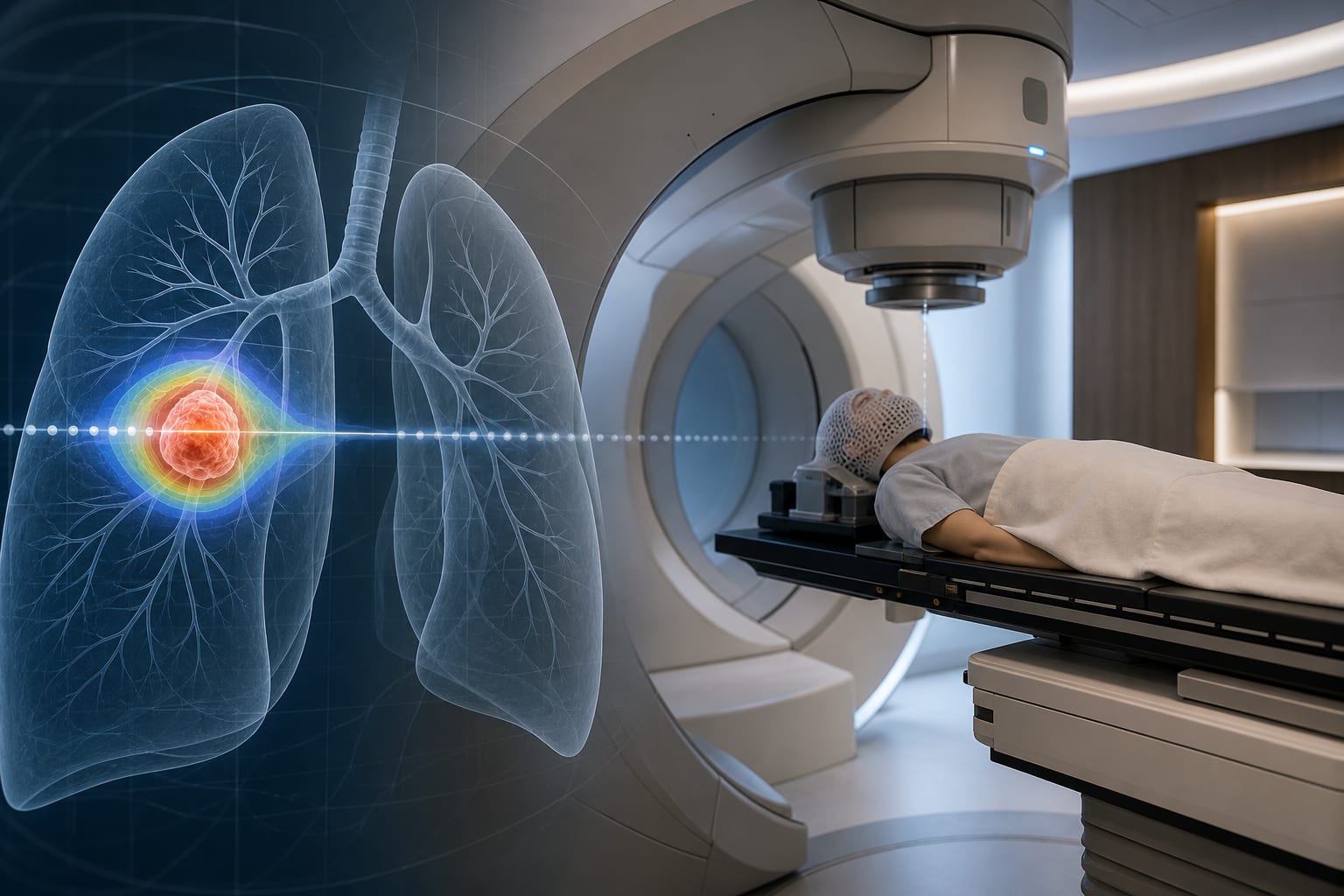
This study evaluates the efficacy and safety of carbon ion radiotherapy (CIRT) in patients with stage III non-small cell lung cancer (NSCLC).
Background
Lung cancer is the leading cause of cancer-related mortality globally, with stage III non-small cell lung cancer (NSCLC) presenting significant treatment challenges. Conventional therapies often face limitations due to adverse effects and insufficient locoregional control. Carbon ion radiotherapy (CIRT) offers a promising alternative by delivering high doses to tumors while sparing surrounding healthy tissue.
Data Highlights
Outcome
1-Year Rate
2-Year Rate
Overall Survival (OS)
85.4%
65.9%
Progression-Free Survival (PFS)
79.8%
50.8%
Local Control (LRC)
95.3%
82.9%
Key Findings
The median follow-up duration was 31.5 months.
Grade 1 radiation pneumonitis occurred in 6.1% of patients.
Grade 1 radiation esophagitis was observed in 43.9% of patients.
CIRT combined with immunotherapy was identified as an independent favorable factor for improving overall survival (OS).
The most common grade 3 or higher adverse reaction was lymphopenia (35.37%).
Clinical Implications
Clinicians should consider the adverse reactions associated with CIRT when discussing treatment options with patients.
Conclusion
Further prospective studies are needed to validate these findings and optimize treatment strategies.