Predictive models for intestinal obstruction: from clinical scores to artificial intelligence - Report - MDSpire

Predictive models for intestinal obstruction: from clinical scores to artificial intelligence

  • By

  • Zehao Liu

  • Li He

  • Qiangqiang Zhang

  • Runyu Chen

  • Zhonghu Li

  • July 15, 2026

Share

Clinical Report: Forecasting Models for Bowel Obstruction: Transitioning from Clinical Assessments to AI Technologies

Overview

This review summarizes the evolution of prediction models for intestinal obstruction, highlighting the transition from traditional clinical assessments to advanced AI technologies.

Background

Intestinal obstruction is a prevalent surgical emergency that can lead to severe complications if not promptly recognized and treated. Accurate prediction models are essential for risk stratification and guiding urgent interventions.

Data Highlights

No numerical data or trial data available in the source material.

Key Findings

  • Conventional clinical scores are transparent and inexpensive but vary in performance across different settings.
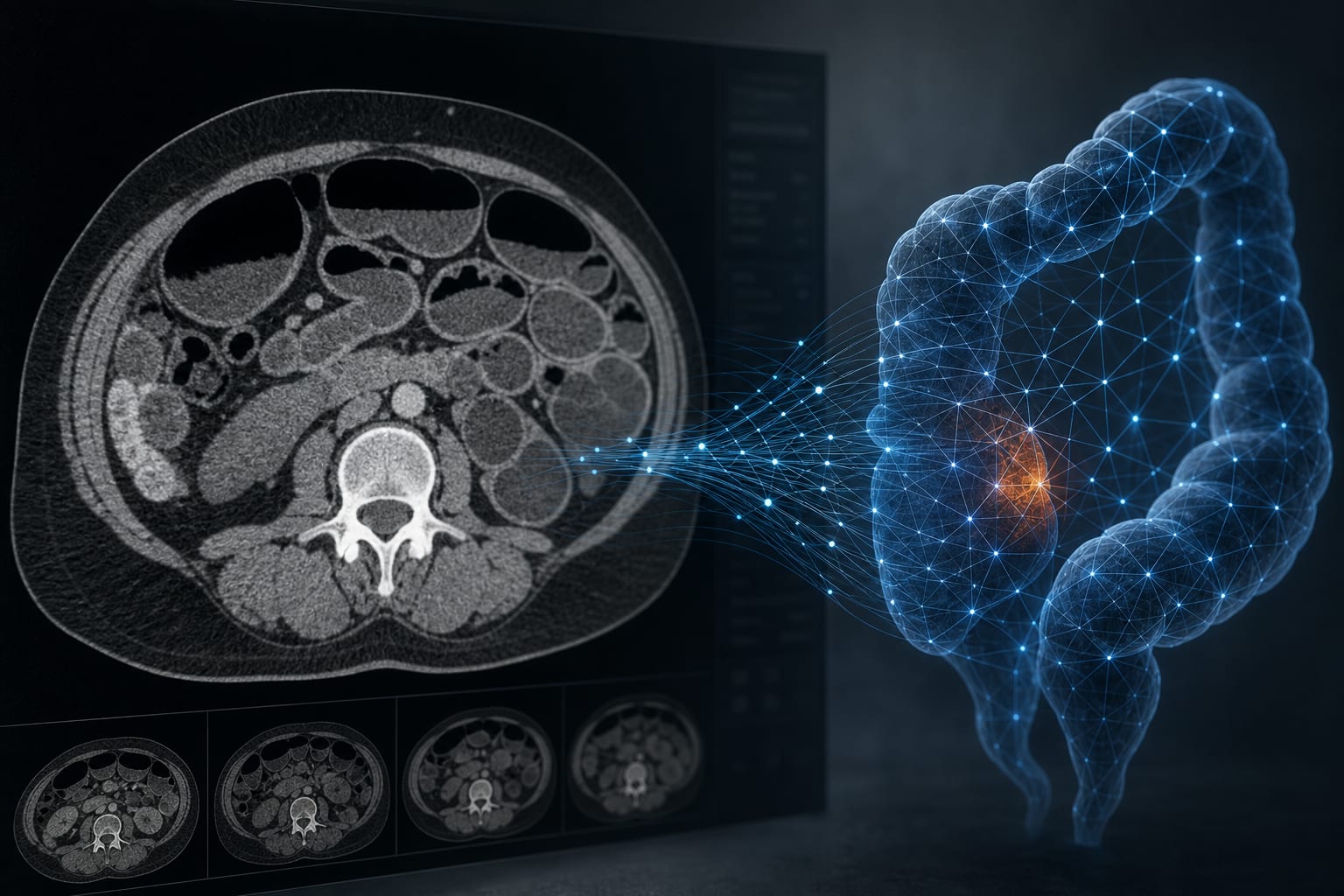
  • CT-integrated models enhance anatomical and ischemic risk assessment but rely on imaging availability and reader expertise.
  • Machine-learning and deep-learning models show high discrimination in selected datasets but often lack external validation.
  • The review proposes a three-generation framework for prediction models: bedside clinical scores, CT-integrated models, and AI-enabled systems.
  • Immediate research priorities include prospective multicenter validation and standardized endpoint definitions.

Clinical Implications

Healthcare professionals should be aware of the limitations of existing prediction models.

Conclusion

Continued research and validation are crucial for optimizing these tools in emergency surgical care.
Related Resources & Content

  1. The New Gastroenterologist, Source, 2025 -- The Role of Artificial Intelligence in Gastroenterology and Hepatology
  2. Langenbecks Archives of Surgery, Source, 2026 -- Towards clinically interpretable machine learning in emergency surgery: feature importance and insights across clinical time points in abdominal pain cases
  3. The ASCO Post, Source, 2026 -- AI Model May Predict Cancer Risk in Patients With Colitis-Associated Low-Grade Dysplasia
  4. American College of Radiology, Source, 2026 -- ACR Appropriateness Criteria® Suspected Small-Bowel Obstruction
  5. Computed tomography for diagnosis and risk stratification of small bowel obstruction: a systematic review and meta-analysis, ScienceDirect, 2026
  6. Machine Learning Predicts the Need for Surgical Intervention in Adhesive Small Bowel Obstruction, PMC, 2026
  7. the asco post — AI Model May Predict Cancer Risk in Patients With Colitis-Associated Low-Grade Dysplasia
  8. The ASCO Post — AI Model May Predict Cancer Risk in Patients With Colitis-Associated Low-Grade Dysplasia
  9. American College of Radiology ACR Appropriateness Criteria® Suspected Small-Bowel Obstruction
  10. Computed tomography for diagnosis and risk stratification of small bowel obstruction: a systematic review and meta-analysis - ScienceDirect
  11. Machine Learning Predicts the Need for Surgical Intervention in Adhesive Small Bowel Obstruction - PMC

Original Source(s)

Related Content