Clinical Report: Reevaluating Subphenotyping in ARDS
Background
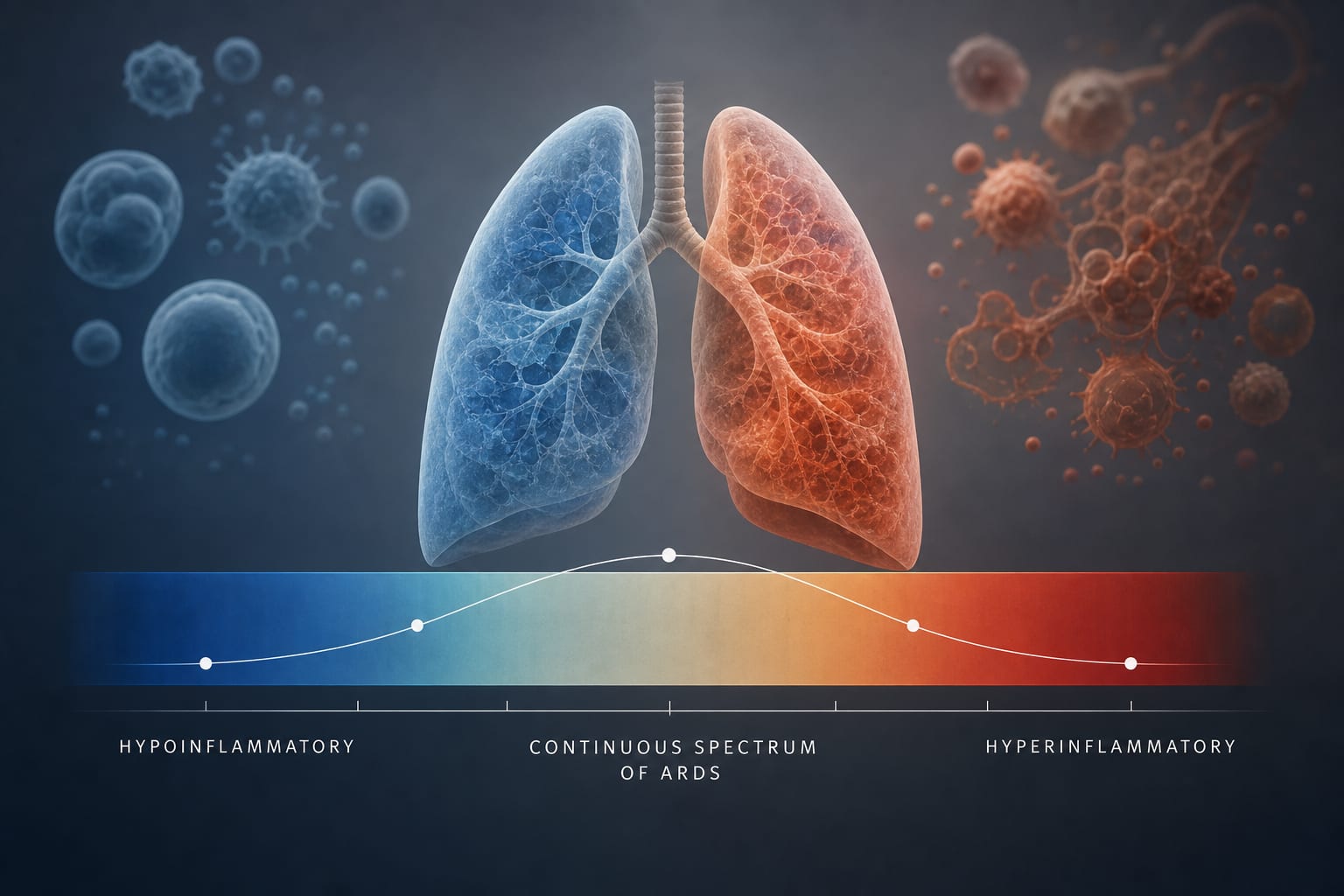
ARDS is a severe condition with a high mortality rate, primarily due to its clinical and pathophysiological diversity. The identification of hyperinflammatory and hypoinflammatory subphenotypes has provided insights into the prognostic differences among patients. However, the traditional binary classification may overlook the complexity of ARDS.
Data Highlights
No specific numerical data provided in the source material.
Key Findings
ARDS is characterized by significant clinical and biological heterogeneity.
Hyperinflammatory subphenotypes are associated with higher mortality and fewer ventilator-free days.
Patients can transition between hyperinflammatory and hypoinflammatory phenotypes over time.
Recent studies suggest that a continuous spectrum model may better capture the complexity of ARDS.
Dynamic changes in subphenotype probability provide important prognostic information.
Clinical Implications
The findings suggest that clinicians should consider a more nuanced approach to ARDS classification that accounts for within-group heterogeneity. This may improve risk stratification and inform treatment decisions, particularly in the context of evolving patient conditions.
Conclusion
Moving towards a continuous spectrum model of ARDS subphenotyping may enhance the understanding of patient variability and improve clinical outcomes. Further research is needed to validate these findings in prospective studies.