Clinical Report: Variants in MECP2 and SH3KBP1 Linked to Autism Spectrum Disorder and Immune System Abnormalities
Overview
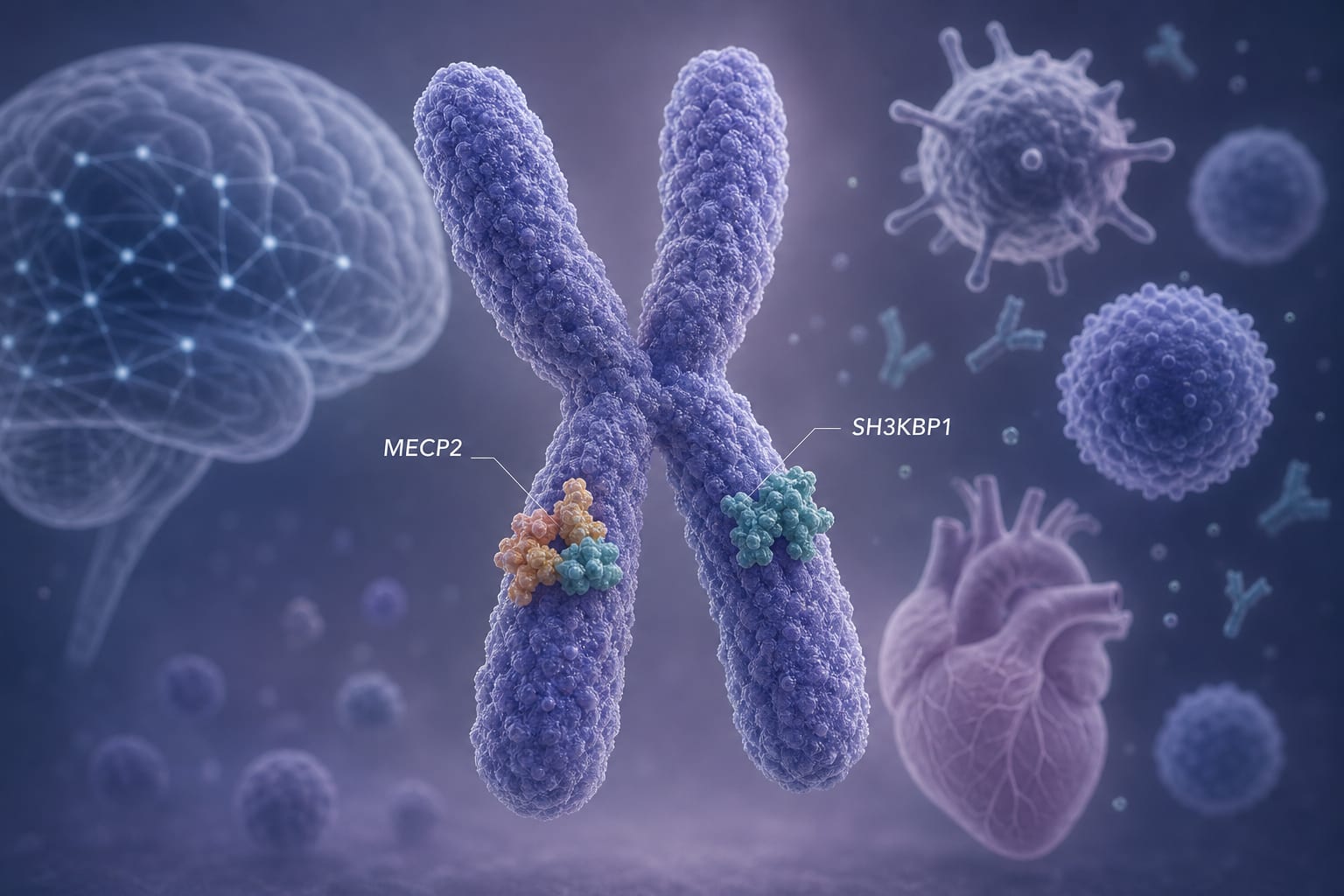
This report describes two male patients with Autism Spectrum Disorder (ASD) who also exhibit immune dysregulation and congenital cardiac anomalies. Genetic analysis revealed distinct copy number variants in the MECP2 and SH3KBP1 genes, suggesting a potential link between these variants and the observed clinical features.
Background
ASD is a complex neurodevelopmental disorder with a rising prevalence, affecting approximately 1 in 36 children in the U.S. Recent studies indicate that immune dysregulation may be present in some individuals with ASD, highlighting the need for comprehensive genetic testing and immunological evaluation in patients with atypical presentations. Understanding the genetic underpinnings of ASD can aid in better diagnosis and management of the disorder.
Data Highlights
No numerical data available in the source material.
Key Findings
Patient 1 had a duplication of the Xq28 region encompassing the MECP2 gene, consistent with MECP2 duplication syndrome.
Patient 1's clinical presentation was milder than typically described for MECP2 duplication syndrome.
Patient 2 exhibited a hemizygous deletion at Xp22.12 involving the SH3KBP1 gene, classified as a variant of uncertain significance.
Patient 2 presented with recurrent respiratory infections and impaired humoral immune responses.
Both cases emphasize the importance of genetic testing in individuals with ASD and complex systemic presentations.
Immunological evaluation should be considered for ASD patients with recurrent infections or other systemic abnormalities.
Clinical Implications
Healthcare professionals should consider comprehensive genetic testing for patients with ASD, particularly those with recurrent infections or atypical clinical features. Additionally, immunological evaluation may be warranted in select cases to identify potential underlying immune dysregulation.
Conclusion
The findings from these cases underscore the importance of recognizing the potential genetic and immunological factors in ASD. Comprehensive evaluations can lead to improved understanding and management of this heterogeneous disorder.