Clinical Report: Non-Invasive Biometric Data Collection in Autism Assessment
Overview
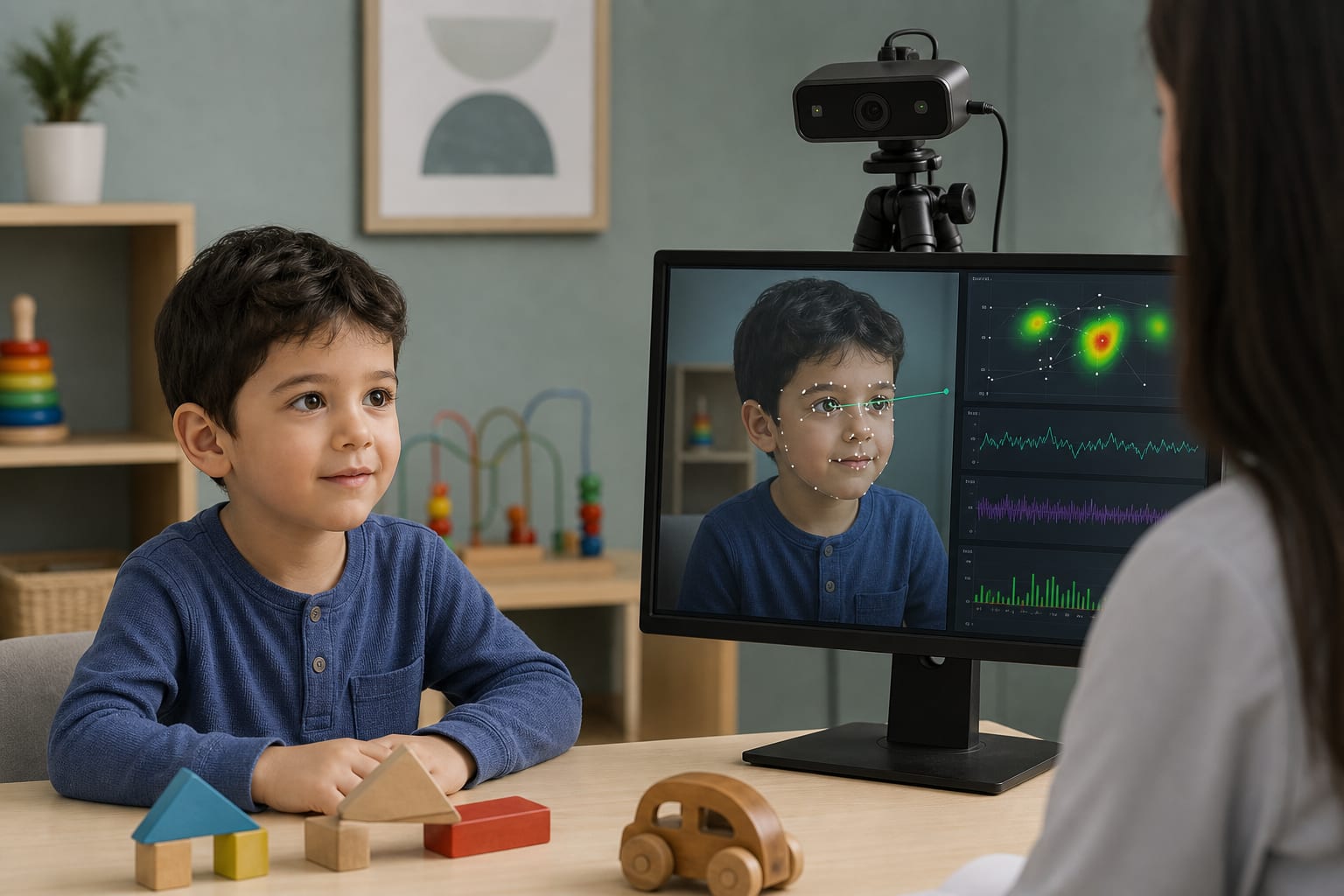
This study evaluates a machine learning tool for non-intrusive biometric data collection during autism assessments, demonstrating promising diagnostic accuracy. The tool achieved significant sensitivity and specificity in distinguishing autism spectrum disorder (ASD) from neurotypical participants.
Background
Early diagnosis of autism spectrum disorder (ASD) is crucial for timely intervention and improved outcomes. Traditional diagnostic methods are often resource-intensive and may not meet the growing demand for assessments, particularly in diverse populations. This study explores a novel approach using machine learning to enhance diagnostic accuracy and accessibility in autism evaluations.
Data Highlights
Measure
Inner Set
Hold-Out Test Set
Sensitivity (ASD vs Non-ASD)
77.8%
62.3%
Specificity (ASD vs Non-ASD)
77.8%
81.4%
Sensitivity (ASD vs NT)
82.0%
72.1%
Specificity (ASD vs NT)
82.0%
88.6%
Key Findings
The machine learning tool achieved 77.8% sensitivity and specificity in distinguishing ASD from non-ASD participants.
When distinguishing ASD from neurotypical (NT) participants, sensitivity and specificity increased to 82.0%.
In the hold-out test set, the model demonstrated 62.3% sensitivity and 81.4% specificity for ASD versus non-ASD.
Performance varied by sex, with males showing higher sensitivity and females showing higher specificity.
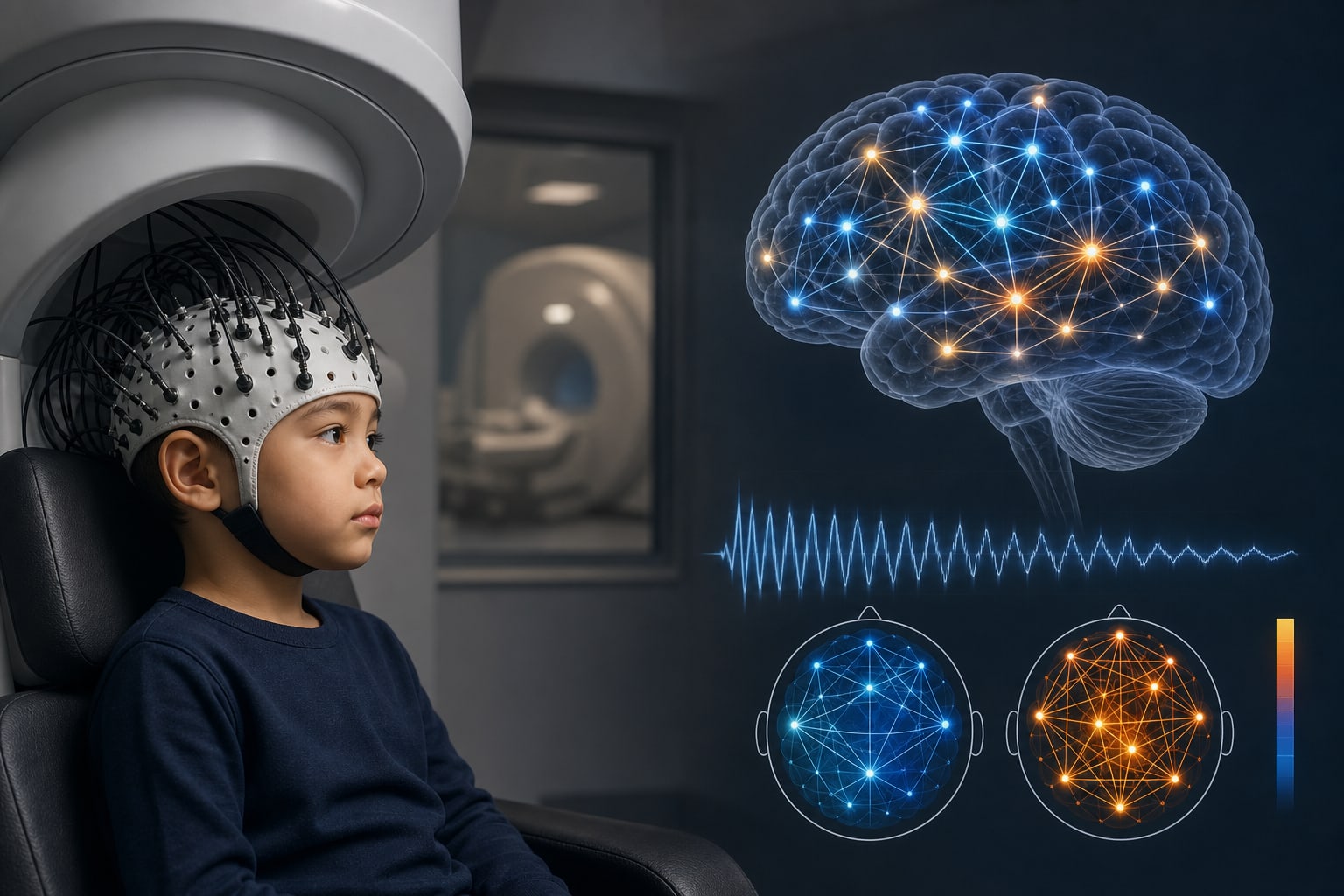
The study highlights the feasibility of using multimodal computational analysis in diverse clinical settings.
Clinical Implications
The findings suggest that machine learning tools can enhance the diagnostic process for ASD, particularly in non-specialist settings. Clinicians may consider integrating such technologies to improve assessment accuracy and reduce delays in diagnosis.
Conclusion
This study underscores the potential of non-invasive biometric data collection methods in autism assessments, paving the way for more accessible and accurate diagnostic tools.