Caution Against Overinterpretation of Results in the FENETRE Trial - Report - MDSpire

Caution Against Overinterpretation of Results in the FENETRE Trial

  • By

  • Isaiah J. Miller

  • Sally S. Ong

  • June 15, 2026

  • 0 min

Share

Warnings Against Misinterpretation of Findings from the FENETRE Study

Overview

The FENETRE trial demonstrated that community optometrist-led monitoring of quiescent neovascular age-related macular degeneration (QnAMD) is noninferior to hospital-based monitoring, with a false-negative rate of 3.8% compared to 7.8% in the hospital group. The study highlights the importance of specific training and structured pathways for optometrists to ensure safe monitoring.

Background

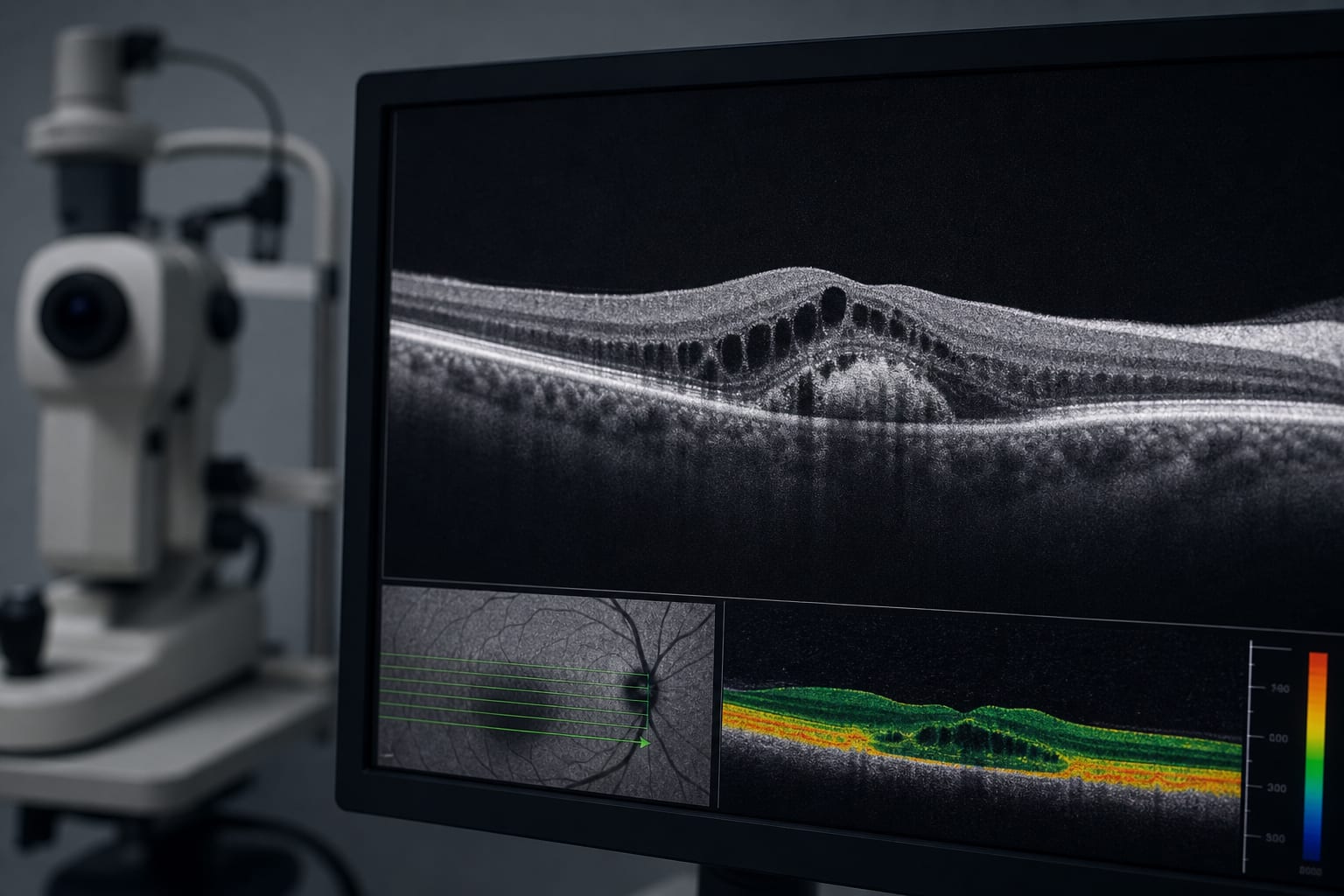
Age-related macular degeneration (AMD) is a significant cause of vision loss, with neovascular AMD (nAMD) being responsible for the majority of severe cases. The burden of monitoring and treatment for nAMD places considerable strain on healthcare systems. The FENETRE trial explores the potential for community optometrists to alleviate some of this burden through effective monitoring of patients with quiescent disease.

Data Highlights

Monitoring GroupFalse-Negative RateFalse-Positive Rate
Community Optometrists3.8%8.4%
Hospital7.8%3.5%

Key Findings

  • Community optometrists achieved a false-negative rate of 3.8% for QnAMD monitoring.
  • The hospital group had a higher false-negative rate of 7.8%.
  • False-positive rates were higher in the community group at 8.4% compared to 3.5% in the hospital group.
  • 16% of patients in community clinics were classified as 'suspicious,' indicating diagnostic uncertainty.
  • Training and accreditation for optometrists were essential for the study's outcomes.
  • Direct application of the FENETRE model to other healthcare systems requires careful consideration.

Clinical Implications

The findings indicate that appropriate training and a structured monitoring pathway are essential for community optometrists to monitor patients with QnAMD safely.

Conclusion

The FENETRE trial indicates that community optometrist-led monitoring can be an alternative to hospital-based care for QnAMD, provided that specific training and protocols are followed.

Related Resources & Content

  1. Sharma et al., FENETRE Study, 2024 -- Warnings Against Misinterpretation of Findings from the FENETRE Study
  2. Frontiers in Neurology — Safety evaluation of Tofersen in amyotrophic lateral sclerosis based on the FAERS database
  3. JAMA Cardiology — EMPEROR-Preserved Risk Model and Outcomes in the FINEARTS-HF Trial: A Prespecified Secondary Analysis of
  4. Drug Safety — Effective Practices for Signal Detection: Insights from IMI PROTECT
  5. Brain — Iatrogenic Injury in Patients with Functional Neurological Disorder
  6. Age-Related Macular Degeneration Preferred Practice Pattern® - Ophthalmology
  7. Ranibizumab for Neovascular Age-Related Macular Degeneration | New England Journal of Medicine
  8. FENETRE study: quality-assured follow-up of quiescent neovascular age-related macular degeneration by non-medical practitioners: study protocol and statistical analysis plan for a randomised controlled trial - PMC

Original Source(s)

Related Content