Immune-excluded and immune-suppressive tumor microenvironments: mechanisms, spatial biomarkers, and therapeutic rewiring - Report - MDSpire

Immune-excluded and immune-suppressive tumor microenvironments: mechanisms, spatial biomarkers, and therapeutic rewiring

  • By

  • Bo Wang

  • Haixin Ding

  • Yutong Li

  • Xue Zhao

  • Pengling Ge

  • May 22, 2026

  • 0 min

Share

Clinical Report: Tumor Microenvironments and Immune Resistance Mechanisms

Overview

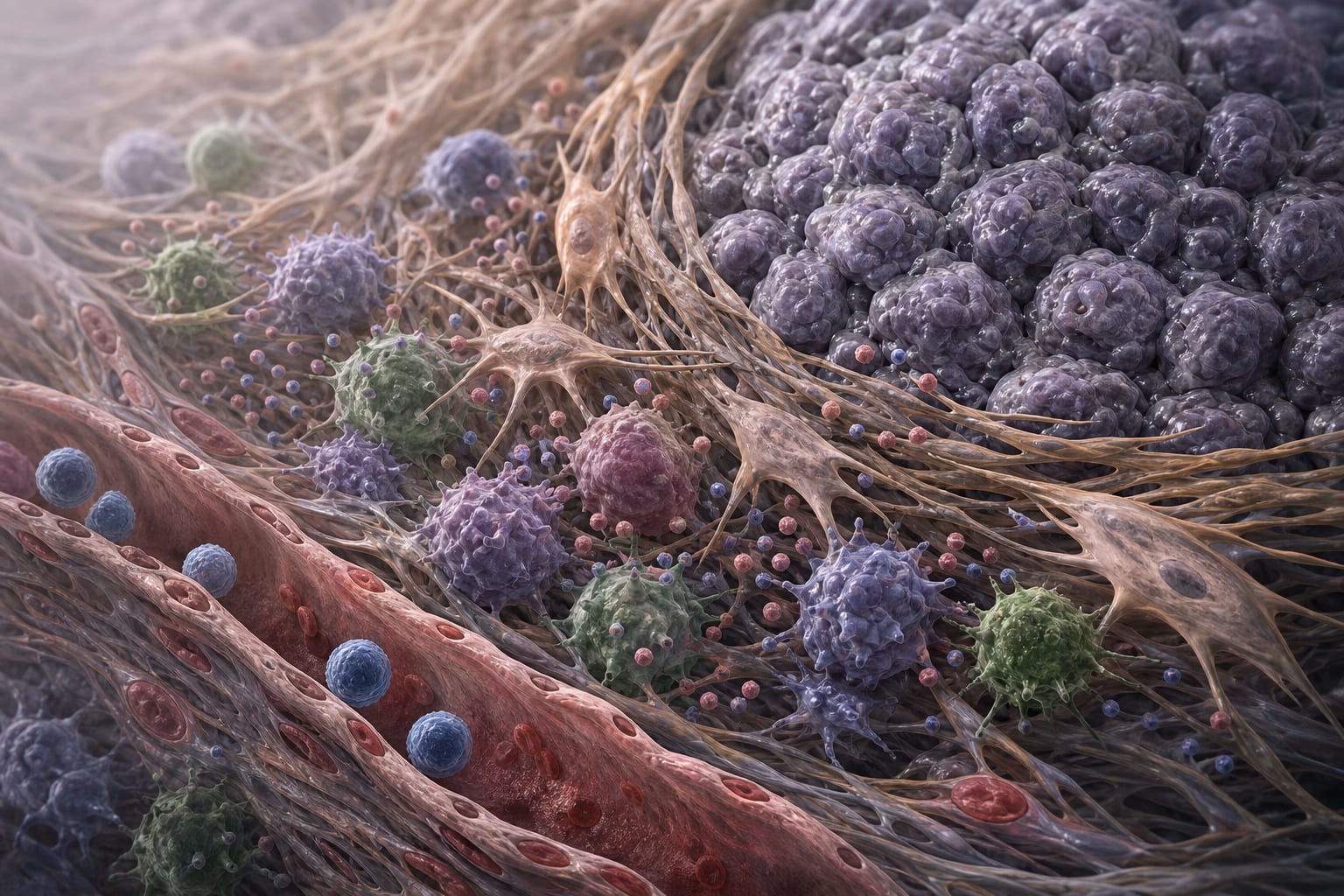
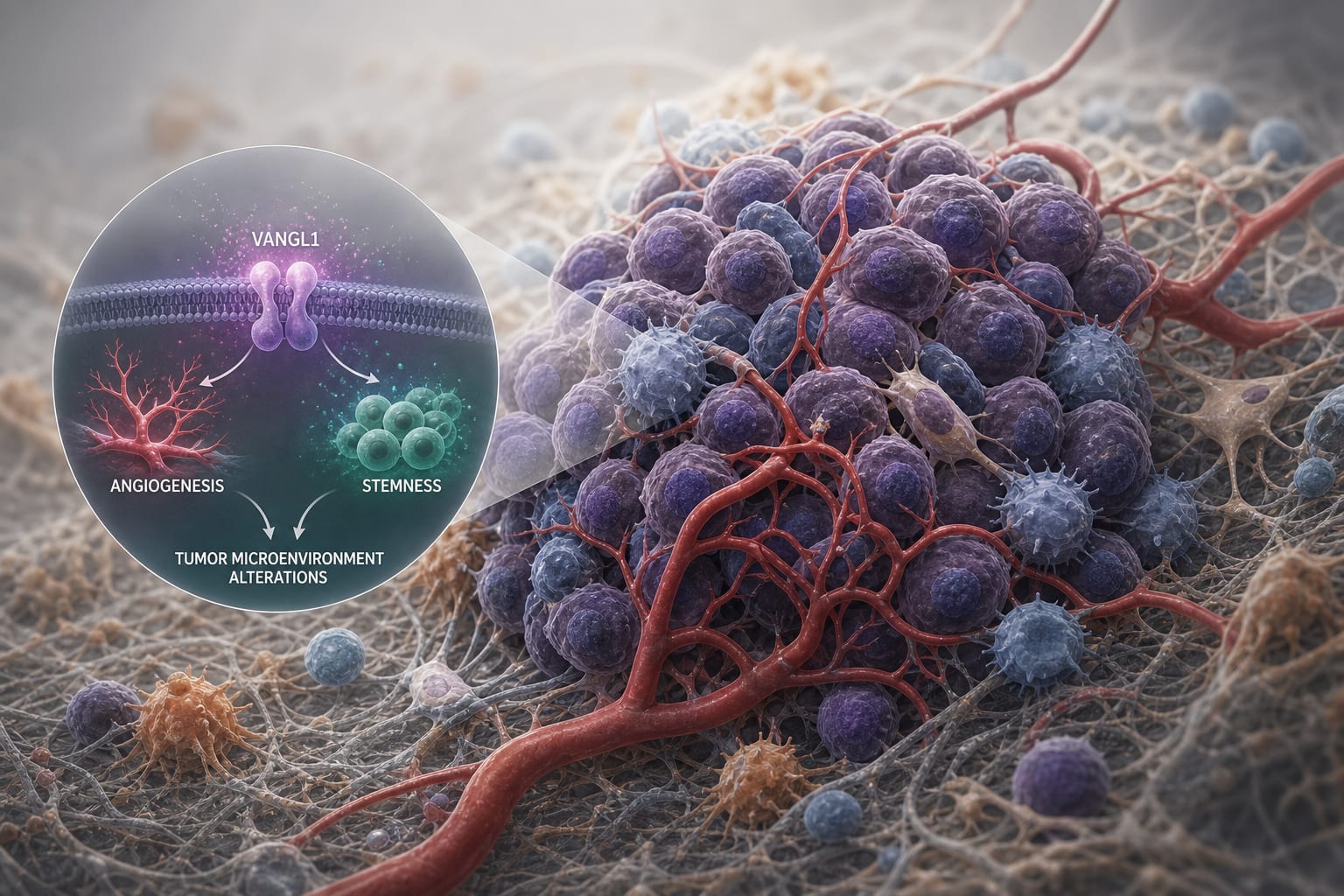
This report reviews the mechanisms underlying immune exclusion and suppression in tumor microenvironments (TMEs), highlighting their impact on the efficacy of immunotherapy. The findings suggest that spatially organized TMEs play a critical role in determining patient responses to treatment.

Background

The effectiveness of immune checkpoint inhibitors is often limited by the presence of immune-excluded or immune-suppressive TMEs in solid tumors. Understanding the biological architecture of these TMEs is crucial for improving therapeutic outcomes. This review synthesizes recent evidence on the factors contributing to immune resistance, emphasizing the need for innovative strategies to enhance antitumor immunity.

Data Highlights

No numerical data or trial data presented in the article.

Key Findings

  • Immune-excluded TMEs prevent T-cell infiltration despite their presence at the tumor margin.
  • Immune-suppressive TMEs restrain immune cell function through inhibitory cytokines and suppressive myeloid populations.
  • Stromal remodeling and metabolic stress are key factors contributing to immune resistance.
  • Spatially resolved technologies can identify resistance modules, aiding in patient stratification.
  • Future therapies should integrate spatial biomarkers and combination strategies to enhance immune responses.

Clinical Implications

Clinicians should consider the spatial organization of the TME when evaluating treatment options for patients with solid tumors. Incorporating spatial biomarkers into clinical practice may improve patient stratification and inform therapeutic decision-making.

Conclusion

The review underscores the importance of understanding TMEs in the context of immunotherapy, highlighting the need for targeted strategies to overcome immune resistance. Progress in this area could lead to more effective treatments for patients with solid tumors.

Related Resources & Content

  1. Frontiers in Immunology, 2026 -- The Immune Landscape of Melanoma Microenvironmental Crosstalk
  2. Frontiers in Immunology, 2026 -- Microfluidic chips for decoding cancer-immune crosstalk in immunotherapy
  3. Journal of Neuro-Oncology, 2025 -- Altering the glioma microenvironment through laser interstitial thermal therapy: underlying mechanisms and clinical significance
  4. Frontiers in Immunology, 2026 -- Immunoscore and beyond: evolution and clinical integration of immune contexture-based biomarkers across solid tumours
  5. Society for Immunotherapy of Cancer (SITC) consensus statement on essential biomarkers for immunotherapy clinical protocols - PubMed
  6. Treatment Patterns and Survival Outcomes Among Patients With Hepatocellular Carcinoma | Oncology | JAMA Network Open | JAMA Network
  7. Quantifying and interpreting biologically meaningful spatial signatures within tumor microenvironments | npj Precision Oncology
  8. Society for Immunotherapy of Cancer (SITC) consensus statement on essential biomarkers for immunotherapy clinical protocols - PubMed
  9. Treatment Patterns and Survival Outcomes Among Patients With Hepatocellular Carcinoma | Oncology | JAMA Network Open | JAMA Network
  10. Quantifying and interpreting biologically meaningful spatial signatures within tumor microenvironments | npj Precision Oncology

Original Source(s)

Related Content