Distinct prognostic value of aspartate-to-alanine aminotransferase ratio (AAR) in traumatic brain injury versus hemorrhagic stroke: a cohort study of 1,069 patients - Report - MDSpire
Advertisement
Distinct prognostic value of aspartate-to-alanine aminotransferase ratio (AAR) in traumatic brain injury versus hemorrhagic stroke: a cohort study of 1,069 patients
Prognostic Implications of Aspartate-to-Alanine Aminotransferase Ratio in TBI
Overview
This study evaluates the prognostic significance of the aspartate aminotransferase-to-alanine aminotransferase ratio (AAR) in traumatic brain injury (TBI) compared to hemorrhagic stroke. Elevated AAR is a strong predictor of unfavorable outcomes in TBI, particularly with increasing injury severity, while showing no significant prognostic value in intracerebral hemorrhage or aneurysmal subarachnoid hemorrhage.
Background
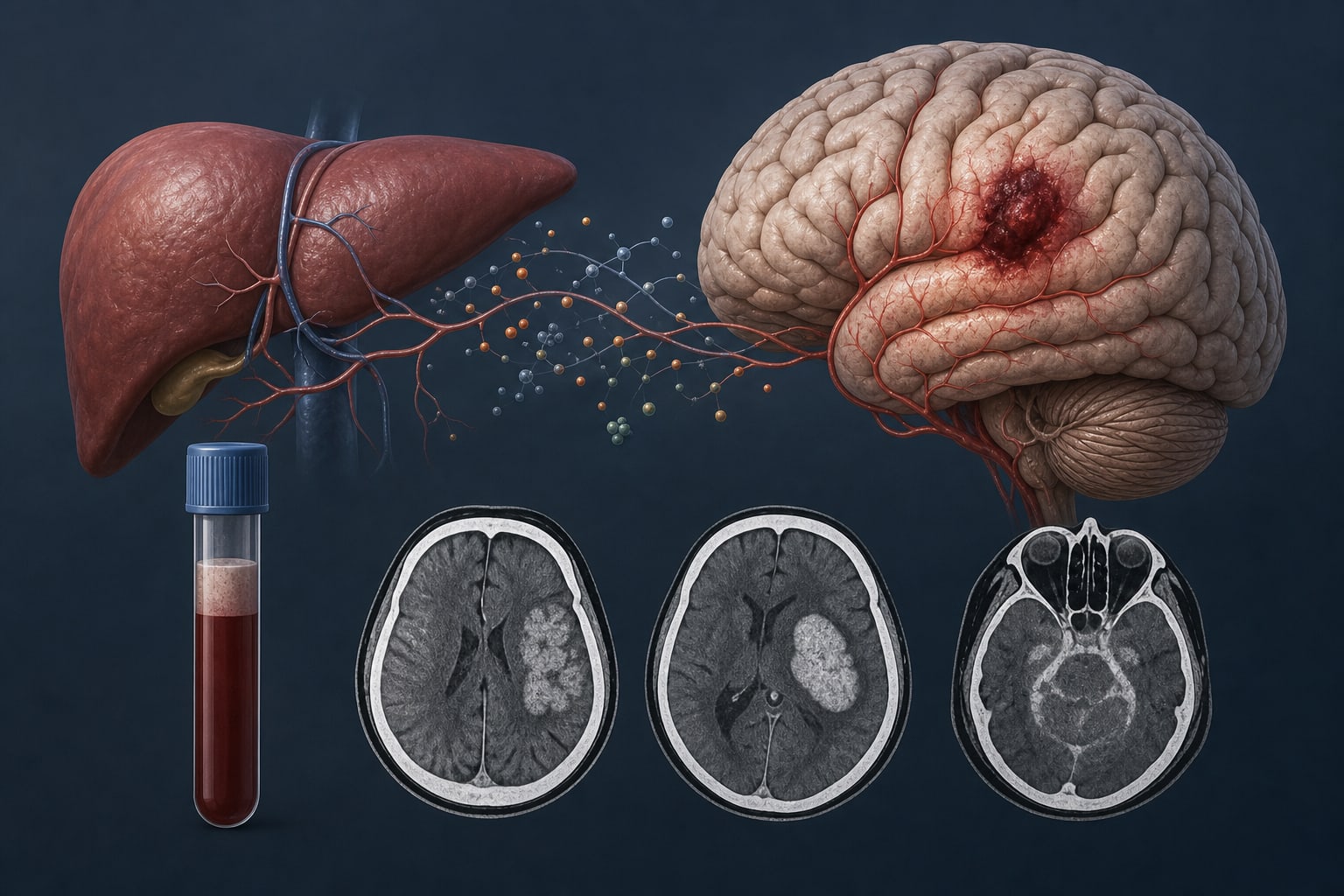
Acute brain injury encompasses various conditions, including TBI, intracerebral hemorrhage (ICH), and aneurysmal subarachnoid hemorrhage (aSAH), each with distinct pathophysiological mechanisms. Understanding the prognostic value of liver biomarkers like AAR could enhance risk stratification and management in these patients. The liver-brain axis plays a crucial role in outcomes following acute brain injury, highlighting the need for effective prognostic tools.
Data Highlights
{'severe_TBI': {'P-value': 'Add P-value for clarity.'}, 'overall_cohort': {'P-value': 'Add P-value for clarity.'}}
Key Findings
Unfavorable outcomes occurred in 39.3% of patients in the cohort.
Higher AAR is associated with poor outcomes across the overall cohort.
In TBI, elevated AAR is a robust independent predictor of unfavorable outcomes.
No significant prognostic value of AAR was found in ICH or aSAH.
A significant dose–response relationship exists between AAR and unfavorable outcomes.
Clinical Implications
The findings suggest that AAR can be a valuable prognostic marker in TBI, aiding in risk assessment and management strategies. However, clinicians should be cautious in applying AAR as a prognostic tool in hemorrhagic stroke due to its lack of predictive value in these conditions.
Conclusion
The study underscores the heterogeneous prognostic value of AAR across different types of acute brain injury, emphasizing the need for tailored approaches in clinical practice.