Hemodynamic Complexity of Patent Ductus Arteriosus Management in Preterm Infants - Report - MDSpire

Hemodynamic Complexity of Patent Ductus Arteriosus Management in Preterm Infants

  • By

  • Marjorie M. Makoni

  • June 9, 2026

  • 0 min

Share

Clinical Report: Complex Hemodynamic Considerations in Managing PDA in Premature Infants

Overview

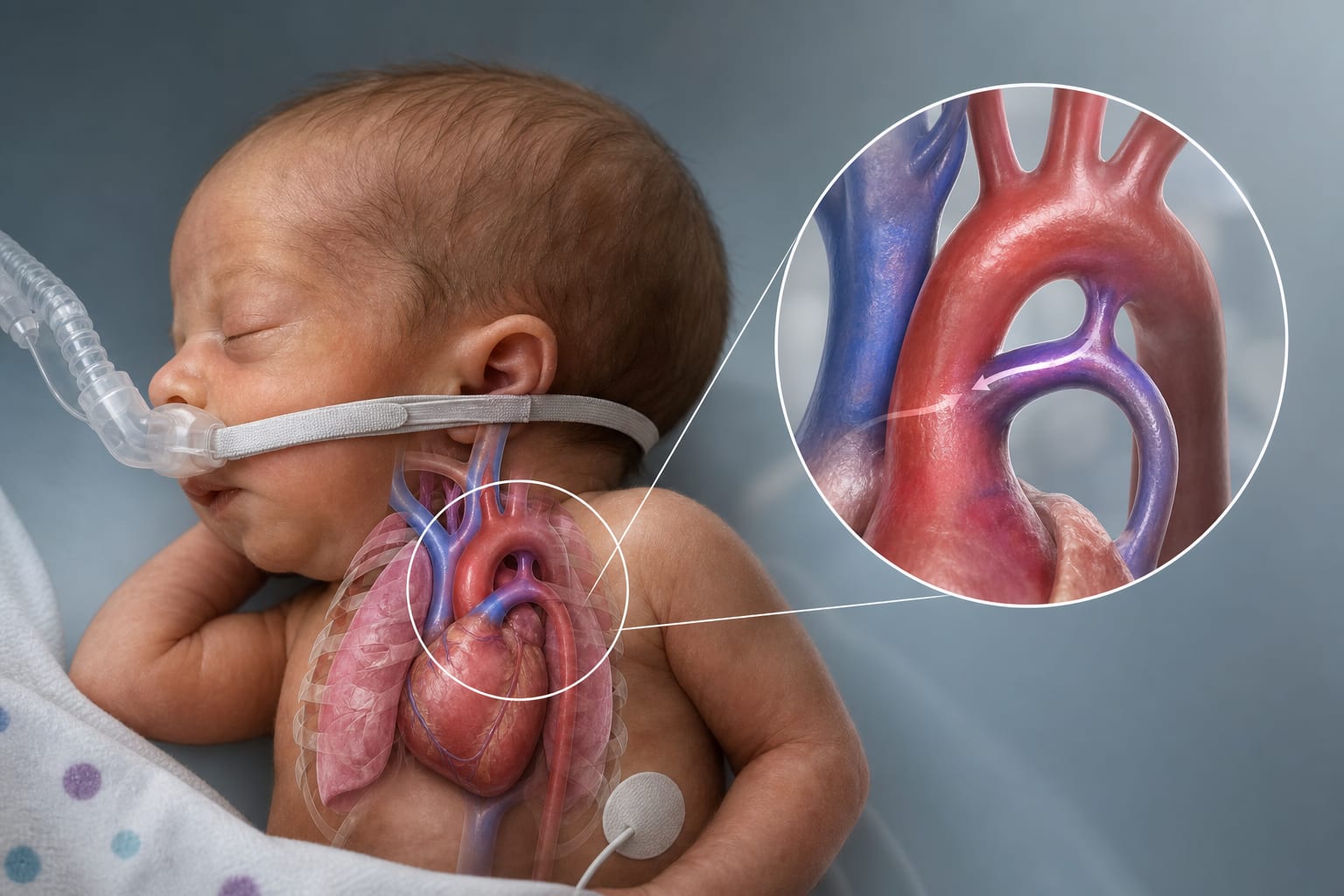
A multicenter study evaluated the effectiveness of four pharmacological regimens for managing patent ductus arteriosus (PDA) in preterm infants, revealing a 42.3% treatment failure rate and no significant differences in closure effectiveness.

Background

Patent ductus arteriosus (PDA) is a common condition in preterm infants that can lead to significant morbidity and mortality. Understanding the hemodynamic implications of PDA is crucial for effective management.

Data Highlights

Pharmacological RegimenTreatment Failure RateMortality Odds Ratio (AOR)BPD Odds Ratio (AOR)NEC Odds Ratio (AOR)
Standard-dose ibuprofen42.3%---
Adjustable-dose ibuprofen----
Indomethacin--1.91-
Acetaminophen-1.37--

Key Findings

  • 42.3% treatment failure rate in managing PDA among preterm infants.
  • No significant differences in closure effectiveness across four pharmacological regimens.
  • Acetaminophen use was associated with increased mortality odds (AOR, 1.37).
  • Indomethacin was linked to increased BPD odds (AOR, 1.91).
  • 41.6% of infants required repeated medical therapy, and 4.1% underwent definitive interventional closure.

Clinical Implications

Clinicians should consider the individual physiological context when managing PDA in preterm infants, as treatment responses can vary significantly. The findings suggest a need for careful selection of pharmacological regimens and highlight the importance of echocardiographic assessment in guiding treatment decisions.

Conclusion

The study underscores the complexity of PDA management in preterm infants and the necessity for individualized treatment approaches based on hemodynamic considerations.

Related Resources & Content

  1. Mitra et al., Pediatrics, 2023 -- Complex Hemodynamic Considerations in Managing PDA in Premature Infants
  2. Pediatric Cardiology — Stenting Techniques for Maintaining Ductal Blood Flow: Historical Perspectives and Future Directions
  3. Frontiers in Cardiovascular Medicine — Physiology-guided bilateral pulmonary artery banding in high-risk neonates: early hemodynamic and perfusion outcomes
  4. Pediatric Cardiology — Effects of Prematurity on Health Outcomes and Survival Rates in Newborns Diagnosed with Dextro-transposition of the Great Arteries
  5. Pediatric Cardiology — Guidelines for Preventing and Managing Complications During Transcatheter Closure of Patent Ductus Arteriosus with the Amplatzer Piccolo Occluder in Infants with Extremely Low Birth Weight
  6. Expectant Management vs Medication for Patent Ductus Arteriosus in Preterm Infants: The PDA Randomized Clinical Trial
  7. Patent Ductus Arteriosus in Preterm Infants | Pediatrics | American Academy of Pediatrics
  8. Procedural closure of the patent ductus arteriosus in preterm infants: a clinical practice guideline - PubMed

Original Source(s)

Related Content