Do Fitness Trackers Have the Ability to Forecast Injuries?
-
By
-
Anna Zucker
-
August 26, 2026
Clinical Report: Do Fitness Trackers Have the Ability to Forecast Injuries?
Overview
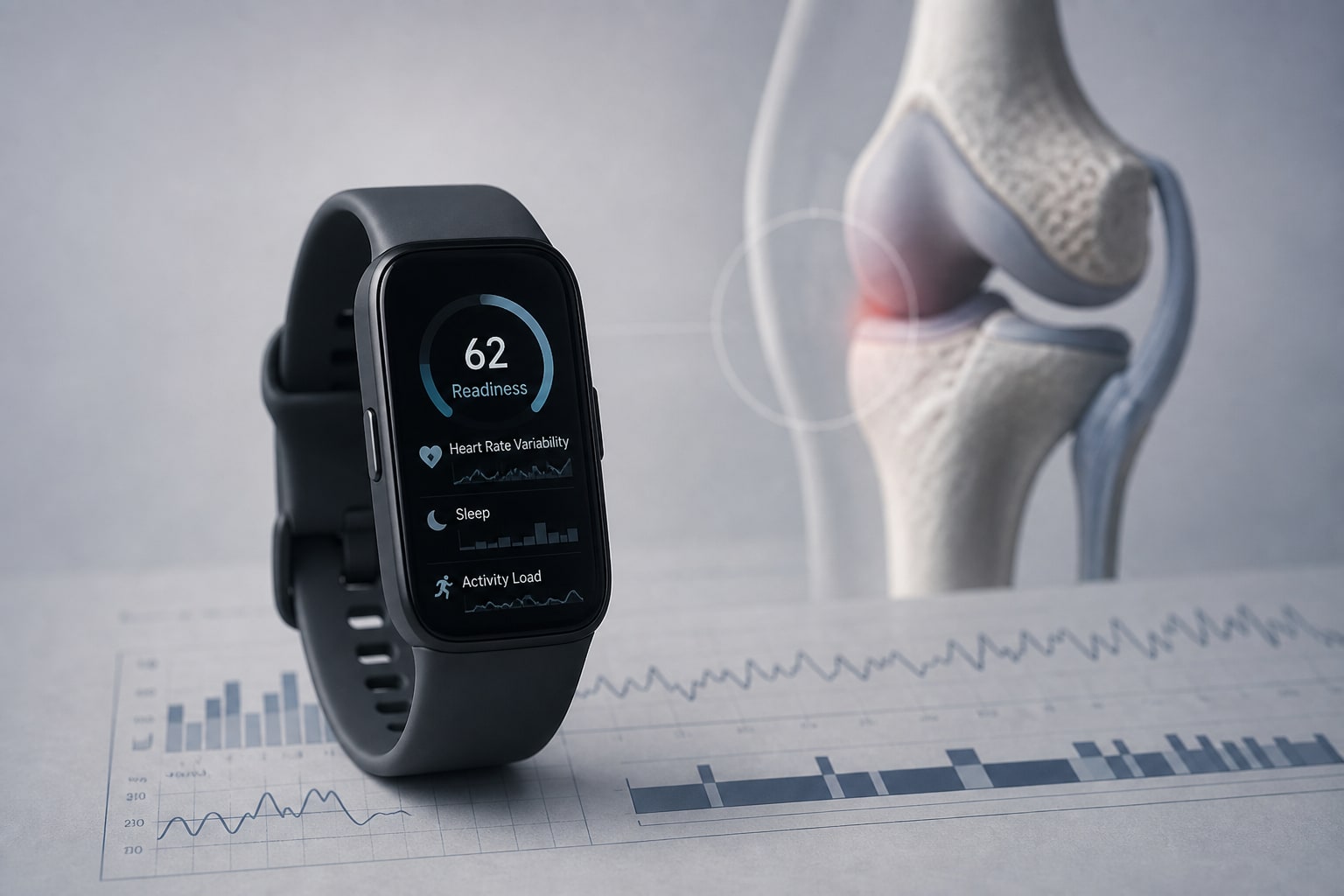
Wearable fitness devices provide a 'readiness' score that is marketed as a predictor of injury risk. Research indicates these scores do not directly forecast injuries, although they can help identify patterns over time.
Background
The use of wearable fitness devices has surged, with over one-third of US adults utilizing them to monitor health metrics. These devices often provide a 'readiness score' based on heart rate variability, sleep, and workload, which users rely on to guide their training.
Data Highlights
No numerical data or trial data available in the source material.
Key Findings
- Readiness scores from wearables do not directly predict injury risk.
- Heart rate variability (HRV), sleep, and workload metrics are used to derive readiness scores.
- Longitudinal tracking of HRV can support the perception of fatigue and symptom onset.
- Spikes in training load are significant risk factors for running-related injuries.
- Sleep is considered the strongest indicator of injury risk among the metrics assessed.
- Consistency in HRV readings is more informative than isolated values.
Clinical Implications
Clinicians should consider trends in HRV, sleep, and workload when assessing injury risk.
Conclusion
While wearable fitness devices offer valuable data, their readiness scores should be interpreted with caution, emphasizing the importance of a holistic approach to injury risk assessment.
Related Resources & Content
- npj Digital Medicine, 2026 -- Integrative Machine Learning Approaches for Predicting Running-Related Injuries
- MDSpire News, 2026 -- Wearable Trackers: These Activity Metrics Drive Calorie Burn
- Frontiers in Digital Health, 2026 -- A Prototype Smartwatch for Monitoring Dynamic, Compound and Plyometric Exercises in Cancer Prehabilitation: A Development and Validation Study
- Performance Technologies Guidelines - NCAA.org, 2026 -- Performance Technologies Recommendations
- Sport Sciences for Health, 2026 -- Sleep quality and training load as determinants of musculoskeletal injury risk in adolescent athletes: a systematic review and meta-analysis
- the pathologist — Can Insoles Detect Disease Early?
- Performance Technologies Guidelines - NCAA.org - The Official Website of the NCAA
- Sleep quality and training load as determinants of musculoskeletal injury risk in adolescent athletes: a systematic review and meta-analysis | Sport Sciences for Health | Springer Nature Link
- Injury Prediction and Risk Modelling in Team Sports Using Artificial Intelligence and Sensor-Based Monitoring: A Scoping Review - PubMed
Based on findings from:
Can Your Fitness Tracker Actually Predict an Injury?
Anna Zucker. Journal Of Medical Internet Research, 2026.
https://www.jmir.org/2026/1/e109935
This content is an AI-generated, fully rewritten summary based on a published scholarly article. It does not reproduce the original text and is not a substitute for the original publication. Readers are encouraged to consult the source for full context, data, and methodology.