Development of a prediction model for infant hospitalisation and death using clinical features assessed by community health workers during routine postnatal home visits in Dhaka, Bangladesh - Report - MDSpire
Conexiant’s news site is now MDSpire News. Learn more
Advertisement
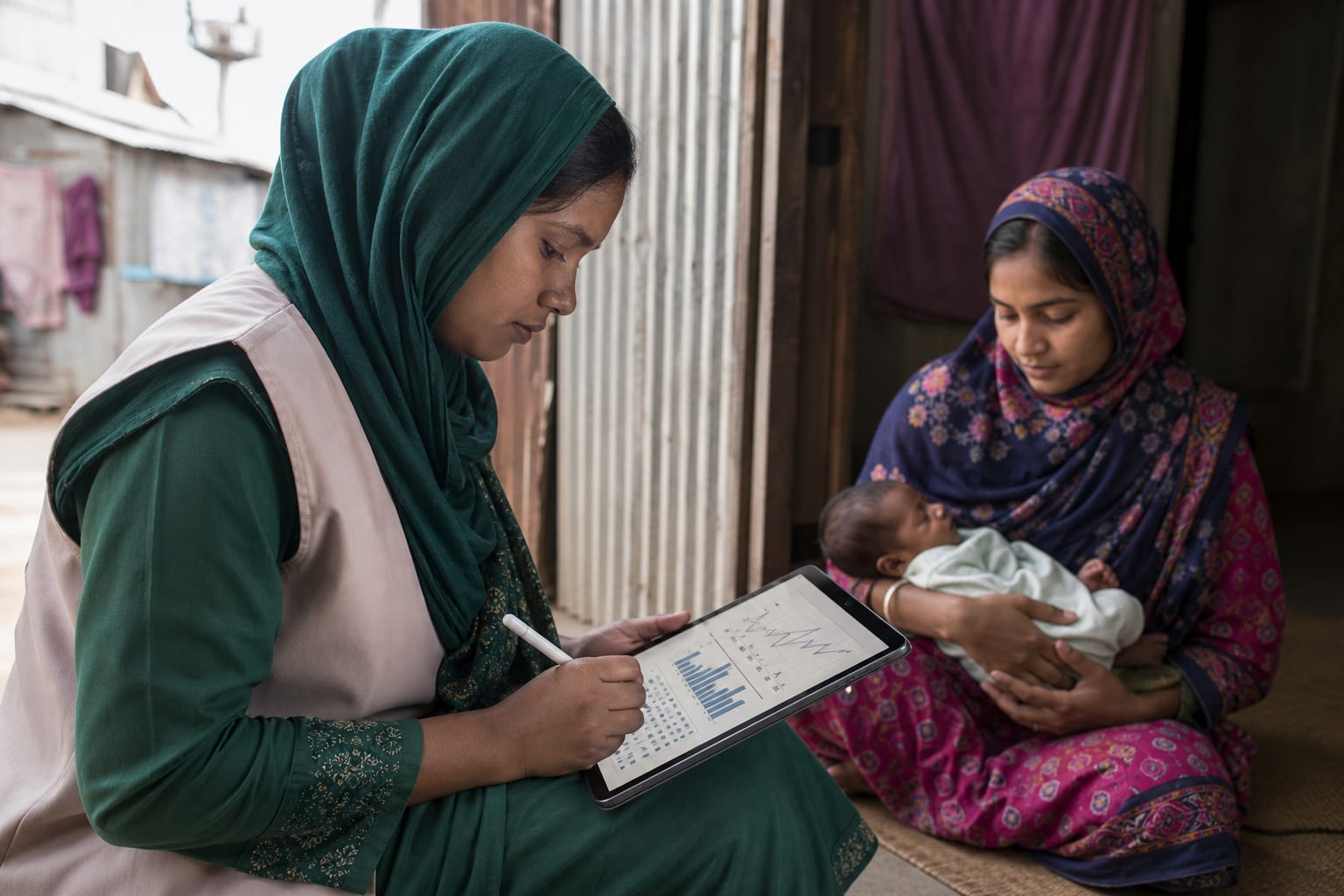
Creation of a predictive model for infant hospitalization and mortality based on clinical indicators evaluated by community health workers during standard postnatal home visits in Dhaka, Bangladesh
Clinical Report: Predictive Model for Infant Hospitalization and Mortality
Overview
This study developed a predictive model for infant hospitalization and mortality using clinical indicators assessed by community health workers during home visits in Dhaka, Bangladesh. The findings indicate that incorporating aggregative features and machine learning did not significantly enhance predictive performance compared to traditional models based on baseline and visit-specific clinical features.
Background
Infant mortality remains a critical global health issue, particularly in low- and middle-income countries where infections are a leading cause. The WHO recommends specific danger signs for identifying sick infants, but these may lack sensitivity. Improved predictive models could enhance early identification and referral of at-risk infants.
Data Highlights
Model
C-statistic
95% CI
Best-performing Cox model
0.71
0.68 to 0.75
Cox model with WHO danger signs
0.70
0.67 to 0.74
WHO danger signs alone
0.56
0.54 to 0.60
Random forest model
0.69
0.64 to 0.73
Key Findings
Among 1906 infants, 176 (9.2%) experienced hospitalization or death.
The best-performing Cox model included three baseline covariates and four visit-specific clinical features.
The addition of four visit-specific features improved predictive performance over WHO danger signs alone.
Random forest models did not outperform the Cox model based on baseline and visit-specific features.
Aggregative features did not enhance prediction compared to traditional models.
Clinical Implications
The study indicates that enhancing the WHO danger signs algorithm with additional clinical features may improve the identification of infants needing referral.
Conclusion
The findings highlight the integration of visit-specific clinical features into existing predictive frameworks for identifying at-risk infants.
by Alastair Fung, Marimuthu Sappani, Cole Heasley, Chun-Yuan Chen, Shaun K Morris, Peter J Gill, Diego G Bassani, Davidson H Hamer, Prakesh S Shah, S M Abdul Gaffar, Sultana Yeasmin, Shafiqul A Sarker, Shamima Sultana, Joseph Beyene, Daniel E Roth