Augmented reality-based fine arts education experiences and adolescents’ perceived reduction in depressive symptoms: a self-report study of associations with psychological resilience, rumination, and emotional regulation - Report - MDSpire
Advertisement
Augmented reality-based fine arts education experiences and adolescents’ perceived reduction in depressive symptoms: a self-report study of associations with psychological resilience, rumination, and emotional regulation
Clinical Report: Exploring the Impact of Augmented Reality Fine Arts Education
Overview
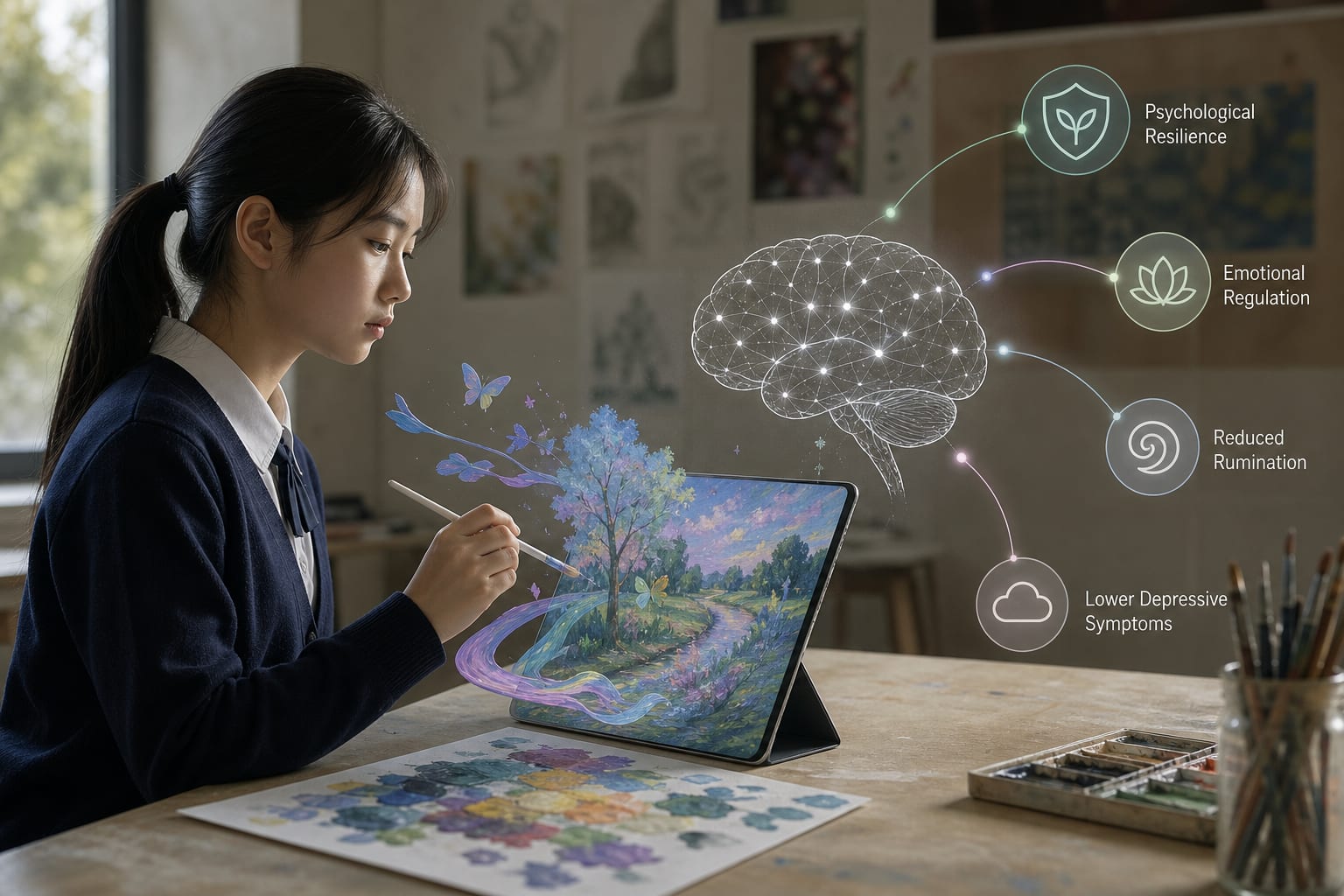
This study examines the associations between adolescents' experiences with augmented reality (AR) fine arts education and their self-reported depressive symptoms, psychological resilience, rumination, and emotional regulation.
Background
Adolescent depressive symptoms are a growing mental health concern, particularly in China, where societal changes impact youth well-being. Innovative educational approaches, such as AR in fine arts education, may provide supportive contexts for enhancing adolescents' psychological health.
Data Highlights
The study utilized post-course self-report questionnaire data from 518 Chinese adolescents to assess the relationships between AR-based fine arts education experiences and various psychological outcomes.
Key Findings
AR-based fine arts education experiences were positively associated with perceived reduction in depressive symptoms.
These experiences correlated with increased psychological resilience among adolescents.
Perceived reduction in rumination was linked to both AR experiences and psychological resilience.
Emotional regulation was positively associated with perceived reduction in depressive symptoms.
The study supports a correlational model linking AR education with psychological perceptions in adolescents.
Clinical Implications
The findings suggest that incorporating AR into fine arts education may enhance adolescents' emotional expression and psychological resources. Educators and mental health professionals should consider innovative educational technologies as potential tools for supporting adolescent mental health.
Conclusion
Further research is needed to explore the associations between AR-based fine arts education and psychological outcomes for adolescents.
In a survey of 420 Italian adults, psychological distress showed stronger associations than autistic traits with problematic internet and mobile phone use, although both were associated with higher digital-use scores.