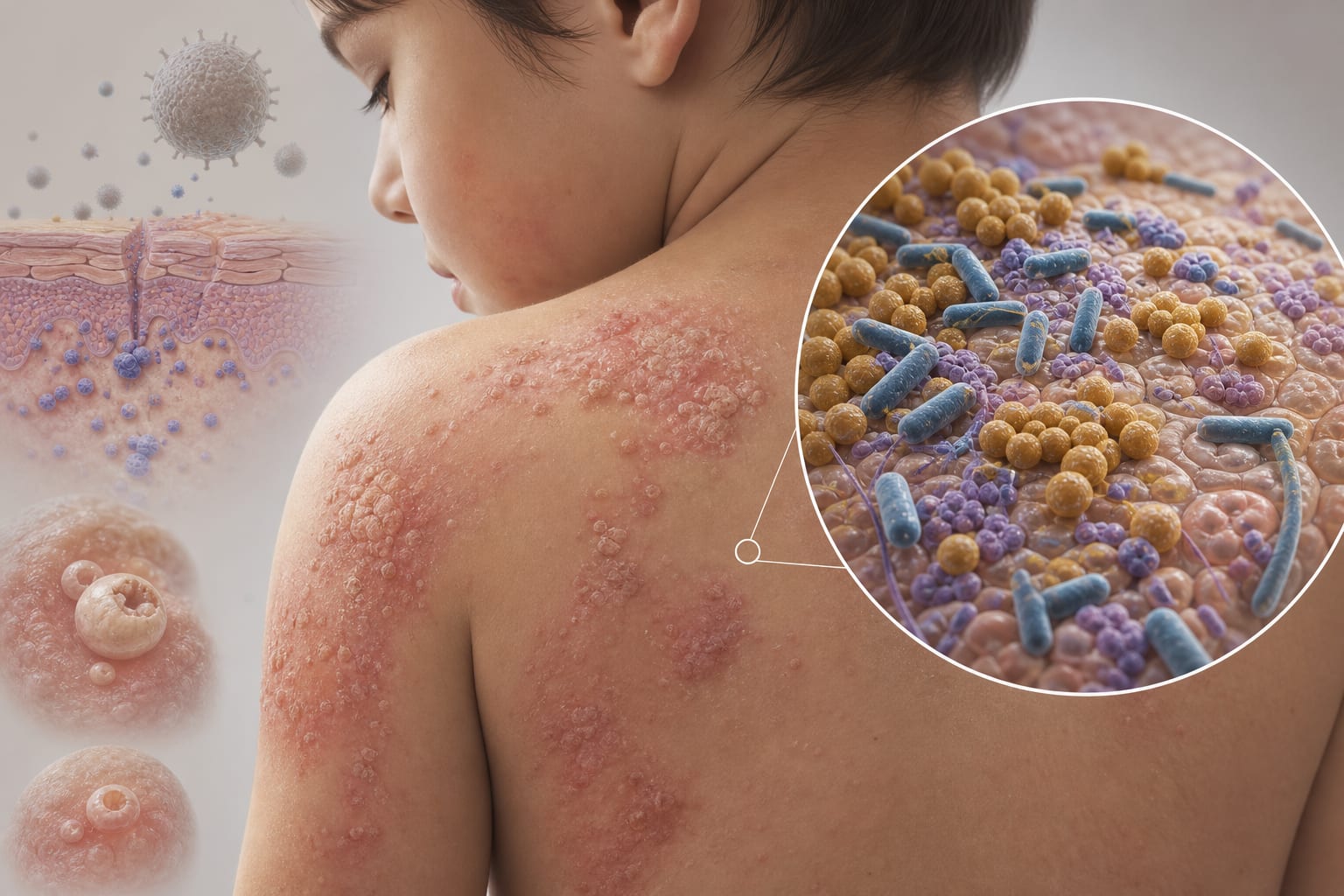
Clinical Report: Non-invasive Identification of Pediatric Atopic Dermatitis
Overview
This study investigates the gut microbiota and metabolomic profiles in children with mild-to-moderate atopic dermatitis (AD) compared to healthy controls. Significant differences in microbial richness and specific taxa were identified.
Background
Atopic dermatitis (AD) is a prevalent chronic skin condition affecting 15-20% of children globally, leading to significant quality of life impacts. Understanding the role of gut microbiota in AD pathogenesis may provide insights into the condition.
Data Highlights
Finding
Value
Gut microbial richness
Increased in AD patients
Distinct β-diversity
R²=0.025, P=0.017
Combined biomarker panel AUC
0.941
Accuracy of biomarker panel
84.6%
Differentially accumulated metabolites
68 identified
Key Findings
Mild-moderate AD patients showed increased gut microbial richness and distinct β-diversity compared to controls.
Bacteroidota was enriched, while Actinomycetota was depleted in AD patients.
At genus level, Parabacteroides and Klebsiella increased, whereas Bifidobacterium decreased in AD.
68 differentially accumulated metabolites were identified, primarily involved in lipid and nucleotide metabolism.
Clinical Implications
The findings suggest that gut microbiota profiling may serve as a non-invasive diagnostic tool for pediatric AD. Further research is needed to validate these biomarkers and explore their potential role in guiding treatment strategies.
Conclusion
This study highlights the distinct gut microbiota dysbiosis and metabolic alterations associated with mild-to-moderate pediatric AD.