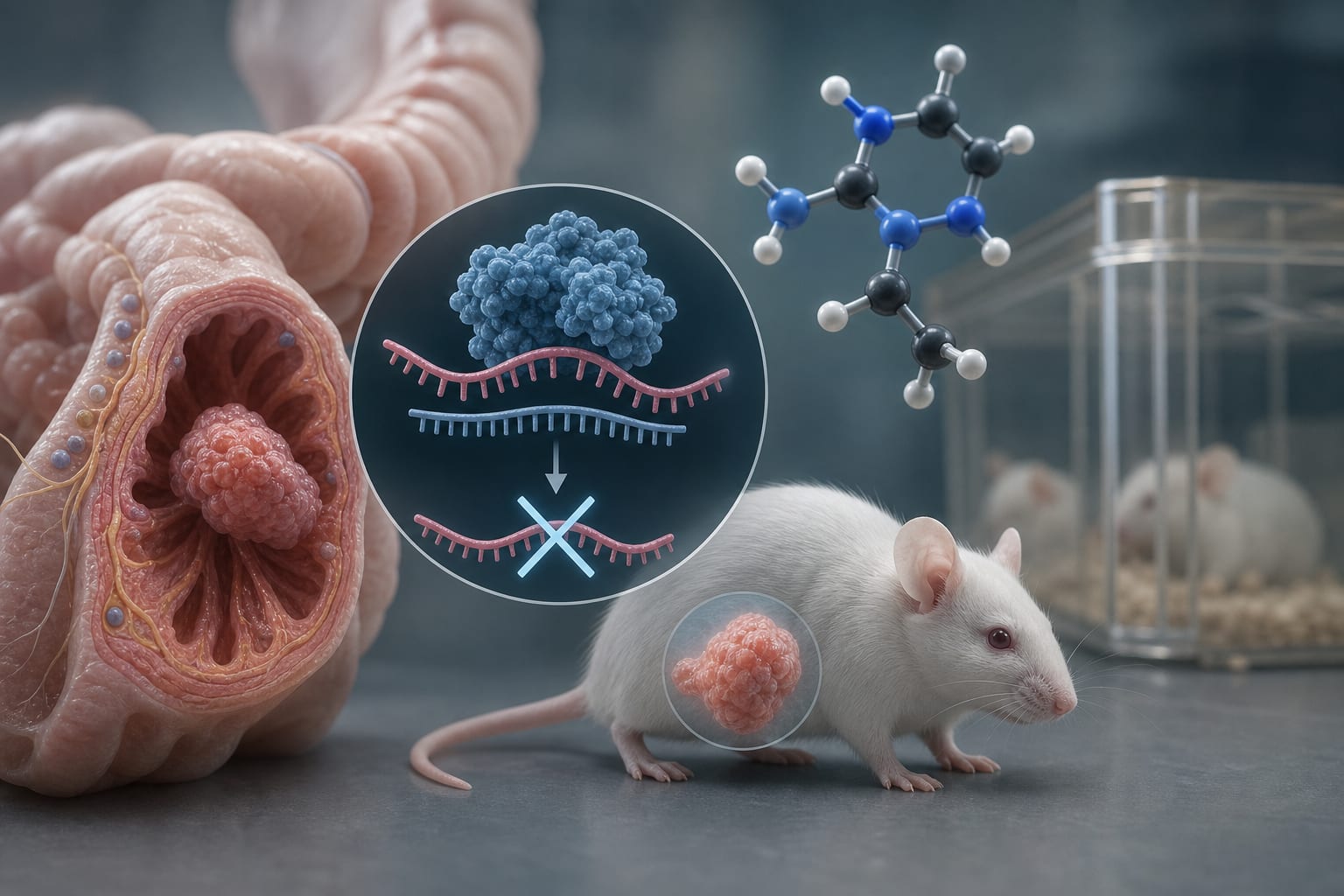
Clinical Report: Metformin Suppresses Growth of Small Intestinal Neuroendocrine Tumors
Overview
This study investigates the effects of metformin on small intestinal neuroendocrine tumors (SI-NETs) in animal models, demonstrating a significant reduction in tumor growth. The research also explores the miRNA expression profiles associated with metformin treatment.
Background
Small intestinal neuroendocrine tumors (SI-NETs) are the most common tumors of the small intestine, often presenting with metastases at diagnosis. Current treatment options are limited, highlighting the need for novel therapies. Metformin, primarily used for type 2 diabetes, has shown potential anticancer effects in preclinical studies.
Data Highlights
Group
Mean Tumor Volume (mm³) ± SD
CNDT2.5 Control
113.3 ± 27.08
CNDT2.5 Metformin
75.22 ± 25.44
GOT1 Control
108.78 ± 22.94
GOT1 Metformin
91.45 ± 22.92
Key Findings
Metformin treatment resulted in a significant reduction in tumor volume in SI-NET xenografts.
In the CNDT2.5 cell line, mean tumor volume decreased from 113.3 mm³ to 75.22 mm³ with metformin treatment.
In the GOT1 cell line, mean tumor volume decreased from 108.78 mm³ to 91.45 mm³ with metformin treatment.
MicroRNA modulation may play a role in the anticancer effects of metformin in SI-NETs.
Clinical Implications
Further research is needed to elucidate the mechanisms of action of metformin in SI-NETs.
Conclusion
Metformin demonstrates significant anti-tumor effects in SI-NET models.