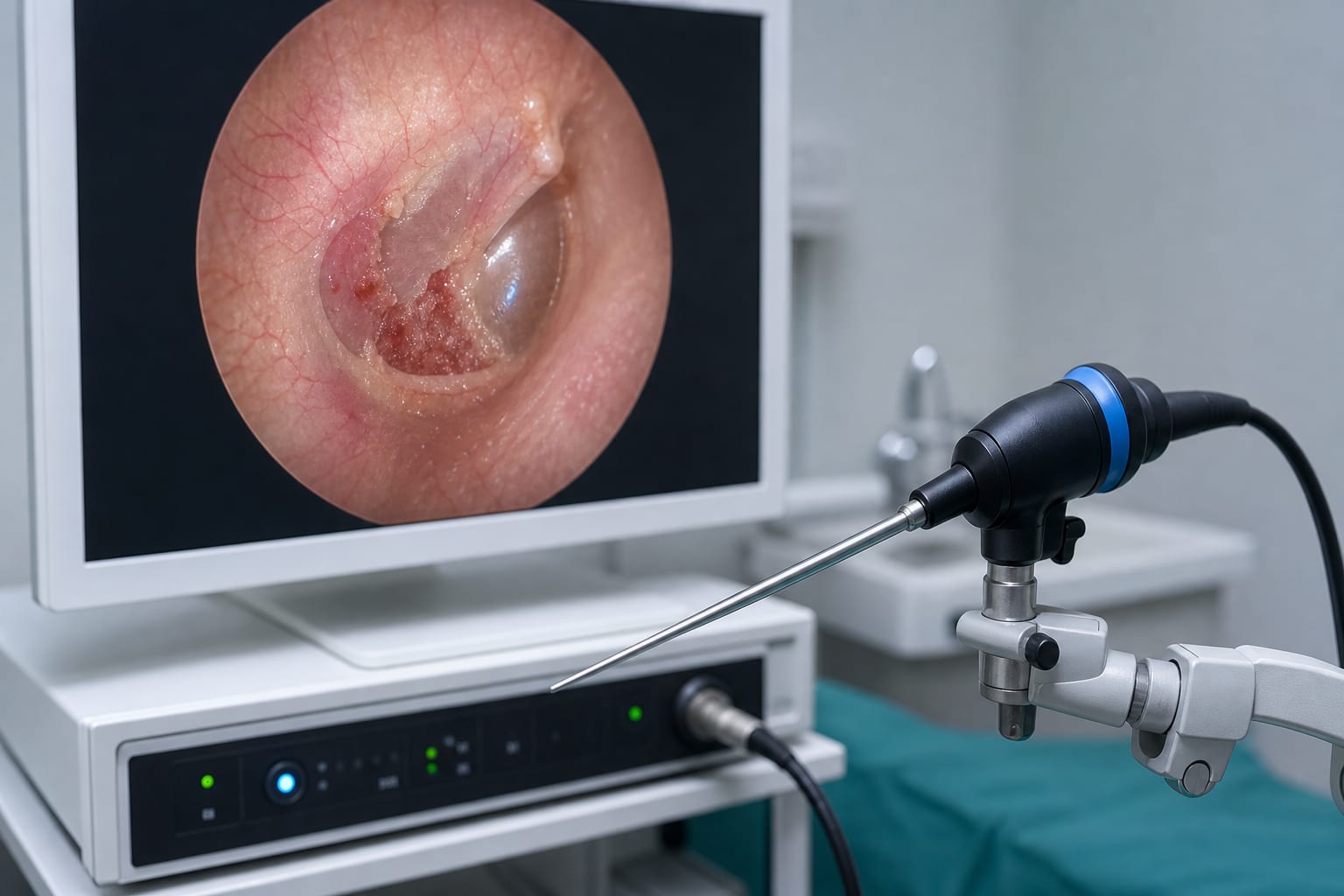
Clinical Report: Evaluation of Strategies for Managing Complications Following Otoendoscopic Tympanoplasty
Overview
This report summarizes the incidence and management strategies for complications following otoendoscopic tympanoplasty in 770 patients. A total of 142 ears experienced complications.
Background
Tympanoplasty is a critical surgical intervention for chronic middle ear diseases, yet complications can significantly impact patient outcomes. This study provides insights into the types and management of complications encountered post-surgery.
Data Highlights
Complication
Incidence
Surgical area infection
17 ears
Poor tympanic membrane healing
31 ears
Myringitis
27 ears
Exposed bone wall at incision site
44 ears
Granulation hyperplasia
20 ears
Stenosis of external auditory canal
3 ears
Key Findings
Postoperative complications occurred in 142 ears, with an overall incidence of 16.9%.
Exposed bone wall at the incision site was the most common complication, affecting 44 ears.
Individualized treatment strategies were employed for each type of complication.
Complications included surgical area infection, poor tympanic membrane healing, myringitis, granulation hyperplasia, and external auditory canal stenosis.
Clinical Implications
The findings highlight the importance of regular follow-up and individualized management strategies for complications following tympanoplasty. Clinicians should be aware of the specific complications and their management to improve patient outcomes.
Conclusion
Otoendoscopic tympanoplasty can lead to various complications, necessitating effective management strategies. Continued research and standardized reporting can enhance understanding and treatment of these complications.