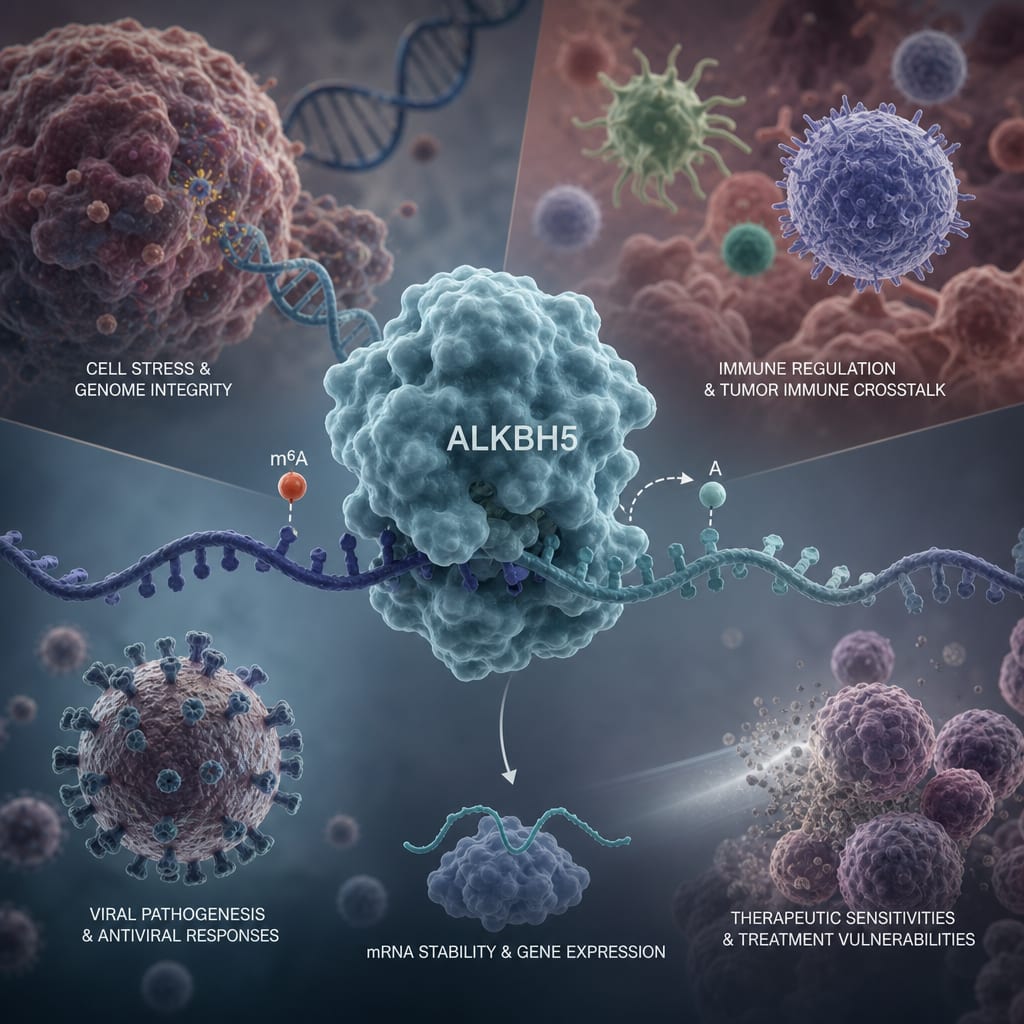
Clinical Report: Context-Specific Roles of ALKBH5 in Health and Disease
Overview
ALKBH5, an m6A RNA demethylase, plays a critical role in regulating RNA metabolism and influences various biological processes, including immune modulation, viral pathogenesis, and treatment sensitivities. Its context-dependent functions highlight its potential as a therapeutic target in cancer and infectious diseases, particularly in enhancing immune responses and modulating viral latency.
Background
The regulation of m6A RNA modification is crucial for maintaining RNA stability and influencing gene expression. ALKBH5's involvement in cellular stress responses, such as DNA damage repair, immune function, including T-cell differentiation, and viral interactions underscores its significance in both health and disease. Understanding its diverse roles can inform therapeutic strategies and improve patient outcomes in oncology and infectious diseases.
Data Highlights
No numerical data presented in the article; consider summarizing qualitative findings.
Key Findings
['ALKBH5 regulates RNA metabolism, impacting cellular stress adaptation and genome stability.', 'It influences immune cell function, including T-cell development and tumor-immune interactions.', 'ALKBH5 can enhance antiviral defense or promote viral latency, depending on the context.', 'In cancer, ALKBH5 expression is associated with tumor aggressiveness and treatment responses.', 'Emerging data link ALKBH5 biology to immunotherapy outcomes in hepatocellular carcinoma and non-small cell lung cancer.']
Clinical Implications
ALKBH5 represents a promising target for therapeutic intervention, particularly in cancers and viral infections. Understanding its context-dependent roles may enhance the efficacy of existing treatments and guide the development of novel therapies, such as combination therapies that target ALKBH5 alongside traditional treatments.
Conclusion
The multifaceted roles of ALKBH5 in regulating RNA metabolism and immune responses position it as a critical player in health and disease, warranting further investigation as a potential therapeutic target, especially in the context of personalized medicine.