Chemogenetic activation of cholinergic intrinsic cardiac ganglia improves border zone oxygenation and reduces arrhythmias during acute local ischemia - Report - MDSpire
Conexiant’s news site is now MDSpire News. Learn more
Advertisement
Stimulation of Cholinergic Neurons in Intrinsic Cardiac Ganglia Enhances Oxygenation in Border Zones and Mitigates Arrhythmias During Acute Local Ischemia
Clinical Report: Stimulation of Cholinergic Neurons Enhances Oxygenation
Overview
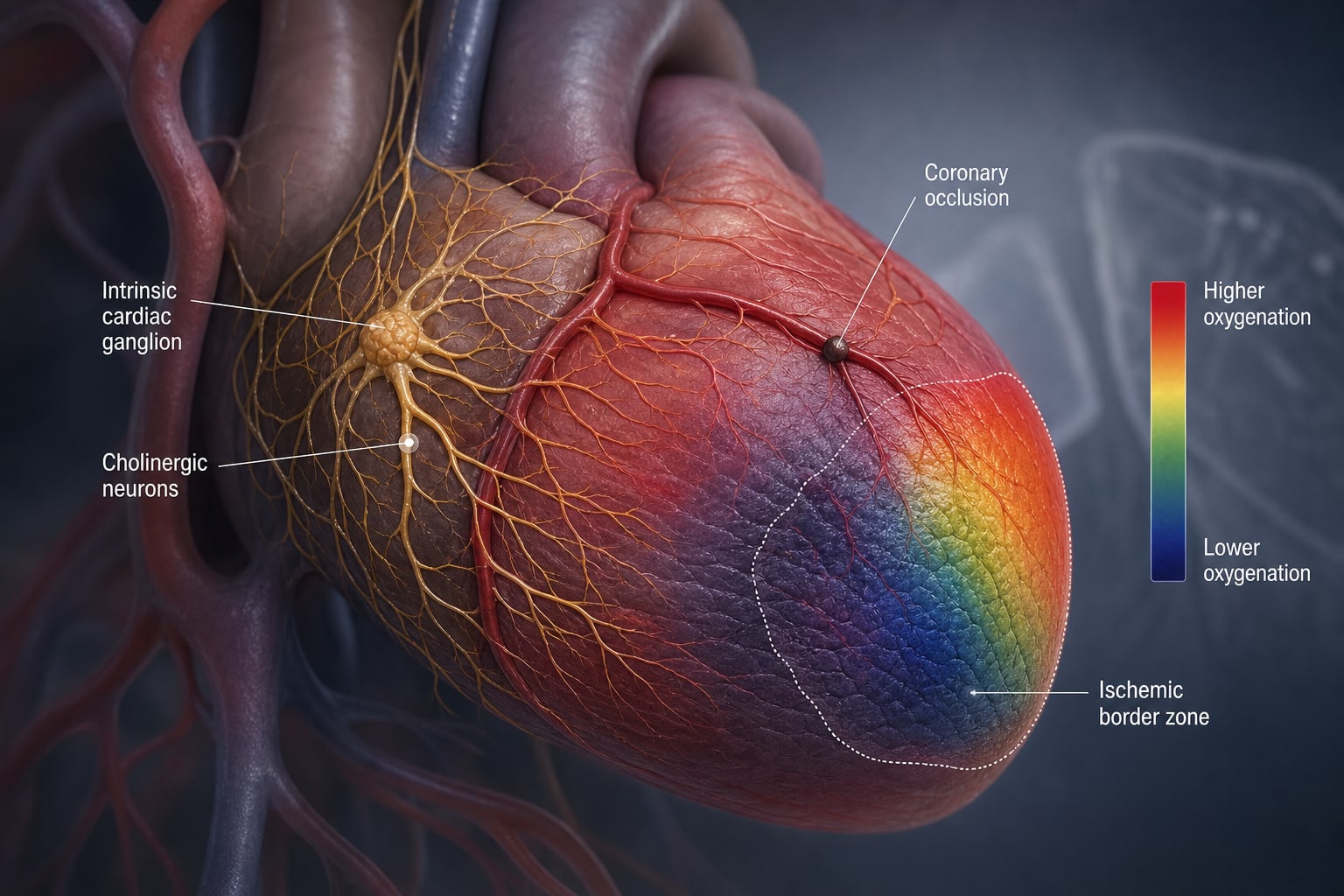
Selective activation of cholinergic neurons in the intrinsic cardiac ganglia significantly improved oxygenation in ischemic border zones and reduced arrhythmias during acute local ischemia in a rat model. These findings suggest a potential therapeutic target for early intervention in acute myocardial infarction.
Background
Acute myocardial infarction (MI) is a leading cause of morbidity and mortality, with arrhythmias presenting a significant risk during the critical early hours post-event. Current treatments focus on reperfusion and pharmacological management, often initiated after a delay. Enhancing cardiac parasympathetic activity through targeted stimulation of cholinergic neurons may offer a novel approach to mitigate arrhythmias and improve outcomes in this vulnerable time frame.
Data Highlights
Parameter
Before Activation
After Activation
PR Interval (ms)
39.13 ± 6.17
42.46 ± 6.87
Arrhythmia Incidence
0.9398 ± 0.5063
0.5727 ± 0.3103
Ischemic Border Zone pO2 (mmHg)
42.13 ± 49.82
82.25 ± 66.87
Key Findings
Cholinergic ICG activation prolonged the PR interval, indicating altered conduction.
Arrhythmia incidence was significantly reduced following cholinergic ICG activation.
Ischemic border zone oxygenation improved markedly after stimulation.
NADH fluorescence decreased, suggesting enhanced mitochondrial oxidation in the ischemic zone.
Effects were negated by the muscarinic antagonist atropine, confirming a muscarinic-dependent mechanism.
Clinical Implications
The findings support the potential for targeted cholinergic stimulation as a therapeutic strategy in acute MI management. This approach may enhance myocardial oxygenation and reduce arrhythmias, warranting further investigation in clinical settings.
Conclusion
Selective stimulation of cholinergic neurons in the intrinsic cardiac ganglia presents a promising avenue for improving outcomes in acute myocardial ischemia. Further studies are needed to explore its clinical applicability.