Key Considerations for Physician-Modified Endografts in Aortic Repair
Overview
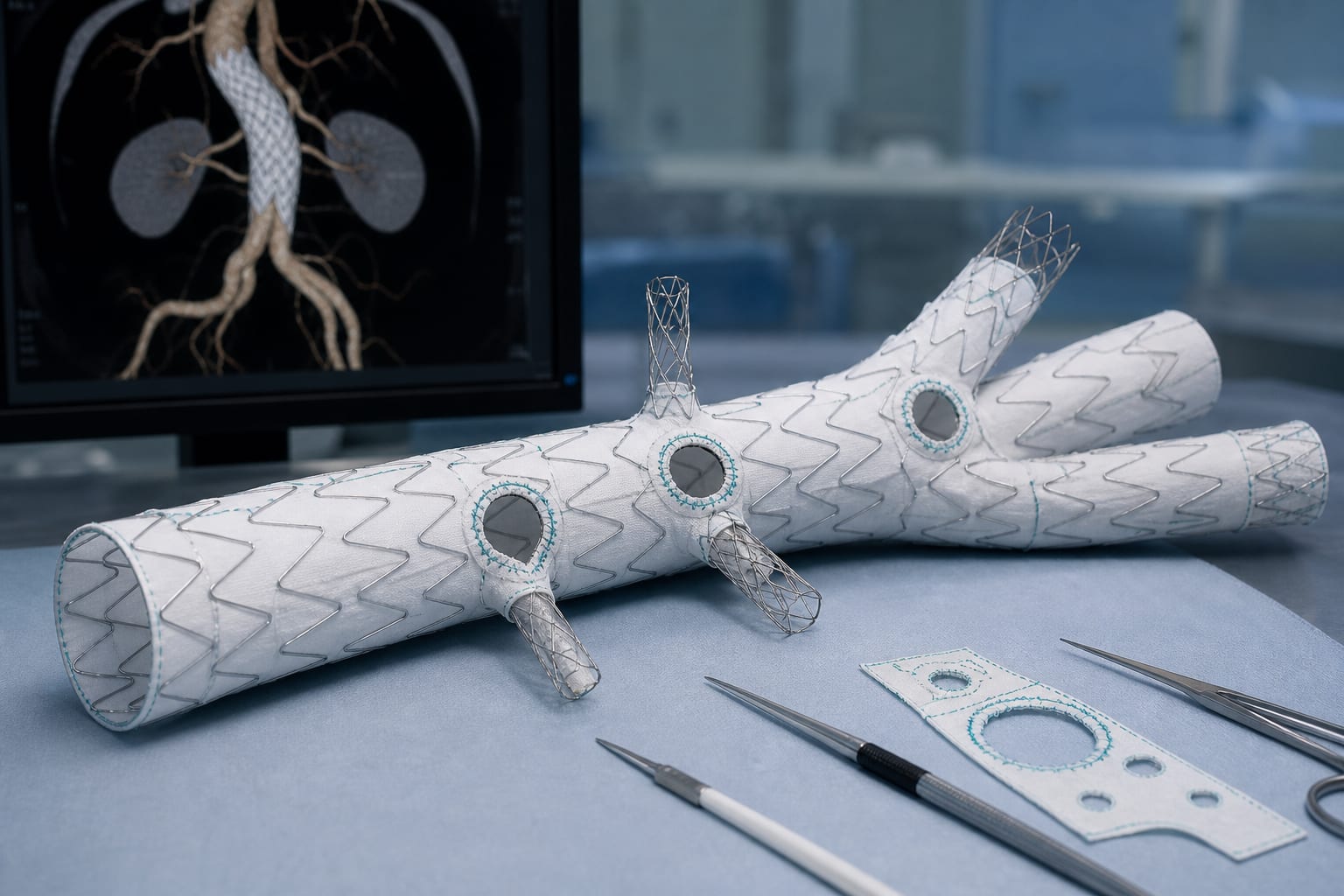
Physician-modified endografts (PMEGs) provide an alternative for patients who cannot use custom-made devices (CMDs) for complex endovascular aortic repair. This report outlines the implementation of PMEGs.
Background
The management of complex aortic conditions often requires tailored solutions, particularly when CMDs are not feasible due to time or availability constraints. PMEGs allow for customization of endografts, which is critical for urgent cases. However, the technical demands of PMEGs necessitate expertise and standardized practices to ensure patient safety and procedural success.
Data Highlights
No specific numerical data provided in the source material.
Key Findings
PMEGs should be performed in specialized aortic centers with sufficient procedural volume and expertise.
Distinct skills are required for PMEG that differ from those used for CMDs.
Correct fenestration positioning is crucial for successful outcomes.
Operator and institutional experience correlate with improved procedural efficiency and reduced complication rates.
Variability exists in PMEG practices, highlighting the need for standardized workflows.
Clinical Implications
Healthcare providers should ensure that PMEG procedures are conducted in high-volume centers with the necessary expertise. Training and proctoring are essential for operators to navigate the complexities of PMEGs effectively.
Conclusion
The success of PMEGs depends on specialized training, experience, and adherence to best practices.