Clinical Report: Advancements in Osteoporosis Treatment Using Chinese Herbal Monomers
Background
Osteoporosis is a significant public health concern, particularly among aging populations, leading to increased fracture risk and associated morbidity. Current treatments primarily rely on Western medications, which may have limitations in efficacy and safety.
Data Highlights
No numerical data or trial data provided in the source material.
Key Findings
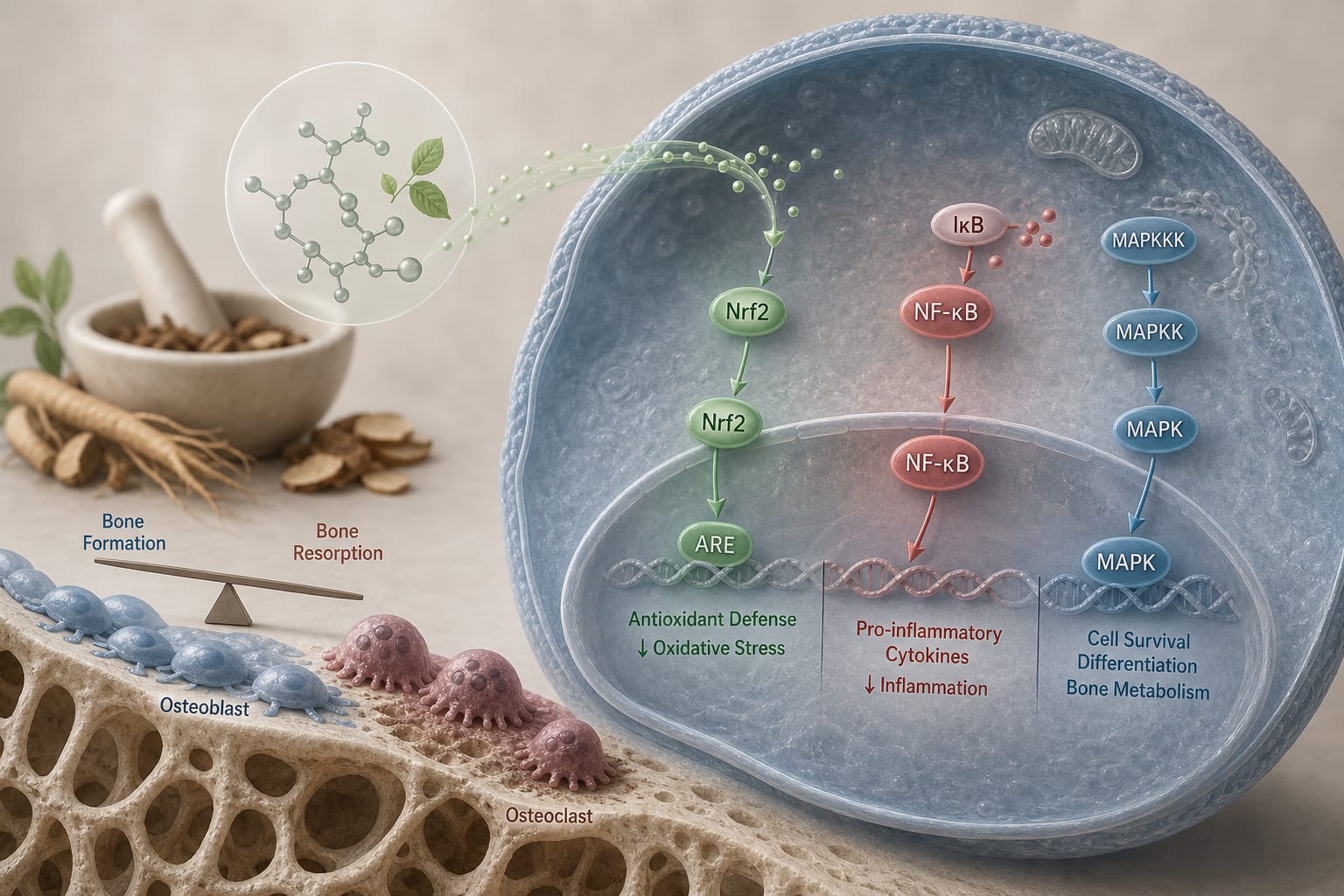
The Nrf2, NF-κB, and MAPK pathways are crucial in regulating bone metabolism and oxidative stress.
Chinese herbal monomers can modulate these pathways.
Current treatments for osteoporosis often involve antiresorptive drugs and anabolic agents, which may have adverse effects.
TCM emphasizes individualized treatment based on syndrome differentiation.
Research indicates that TCM can address the complexities of osteoporosis.
Clinical Implications
The findings suggest that TCM could provide a complementary approach to osteoporosis management, particularly for patients who may not respond well to conventional therapies. Clinicians may consider integrating TCM strategies to enhance patient care and address the multifaceted nature of osteoporosis.
Conclusion
The exploration of TCM in osteoporosis treatment highlights the complexity of the disease's pathophysiology.