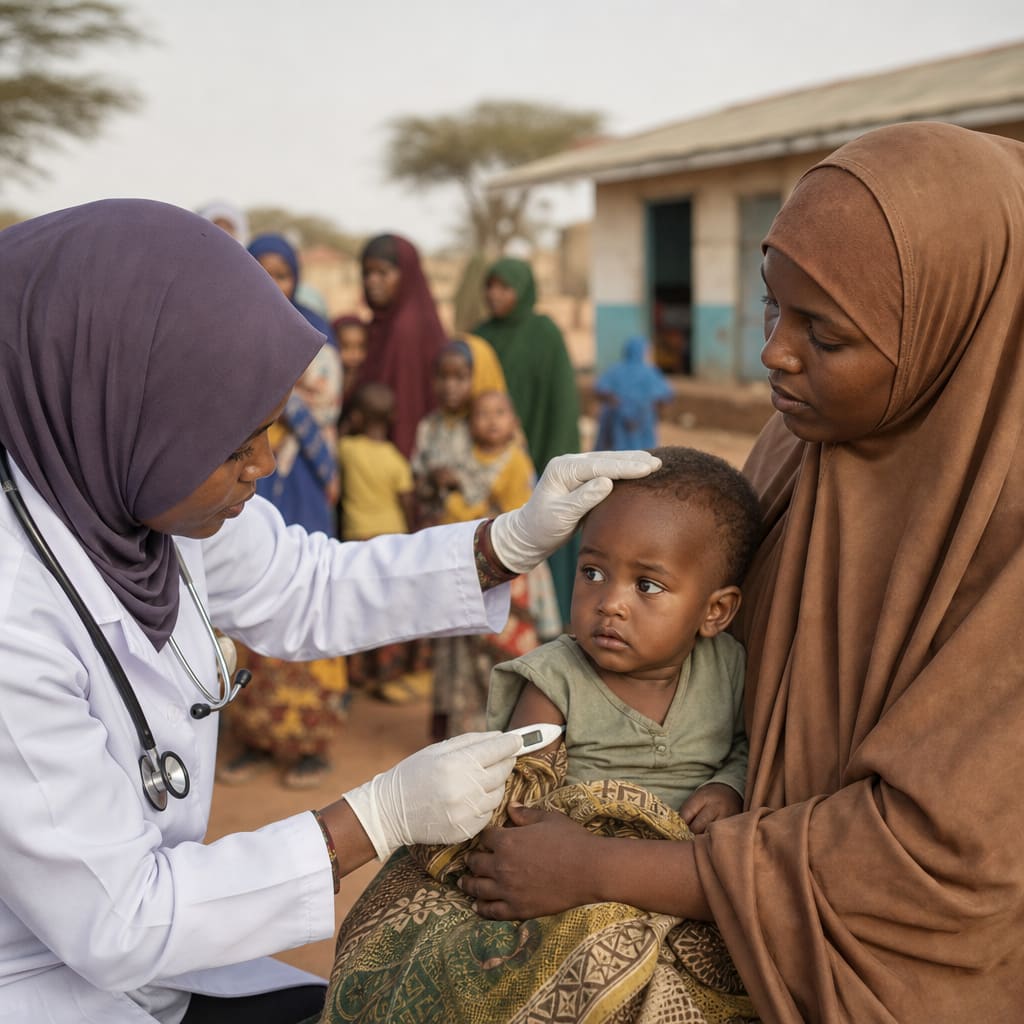
Prevalence and determinants of fever, diarrhea, and acute respiratory infection among children aged 5–59 months in Somaliland, 2020: insights from a nationwide survey
-
By
-
Abdilaahi Yusuf Nuh
-
May 4, 2026
-
0 min
Clinical Report: Assessment of Fever, Diarrhea, and ARIs in Somaliland Children
Overview
This study assesses the prevalence and determinants of fever, diarrhea, and acute respiratory infections (ARIs) among children aged 5 to 59 months in Somaliland. Key findings indicate that younger age, geographic location, and access to healthcare significantly influence the occurrence of these illnesses.
Background
Acute respiratory infections, diarrhea, and fever are major contributors to childhood morbidity in low- and middle-income countries, including Somaliland. Understanding the prevalence and determinants of these conditions is crucial for developing targeted public health interventions. The findings from this study highlight the ongoing public health challenges faced by children in Somaliland, particularly in rural and nomadic populations.
Data Highlights
| Condition | Prevalence |
|---|---|
| Fever | 6.07% |
| Diarrhea | 4.75% |
| Acute Respiratory Infection | 3.66% |
Key Findings
- Child age significantly affects the odds of illness; children aged ≥25 months have lower odds of diarrhea (AOR = 0.53), fever (AOR = 0.53), and ARI (AOR = 0.37).
- Regional variations exist, with children in Togdheer showing lower odds of diarrhea (AOR = 0.30), fever (AOR = 0.30), and ARI (AOR = 0.29) compared to Maroodi-Jeeh.
- A nomadic lifestyle is associated with decreased odds of diarrhea (AOR = 0.48), fever (AOR = 0.49), and ARI (AOR = 0.58) compared to rural living.
- Access to healthcare is a protective factor against diarrhea (AOR = 0.43) and fever (AOR = 0.44), but not for ARI (AOR = 0.81).
- Vaccination status did not significantly correlate with the prevalence of diarrhea, fever, or ARI.
Clinical Implications
Healthcare providers should focus on improving access to healthcare services and addressing regional disparities to reduce childhood morbidity from these illnesses. Interventions should particularly target younger children and consider the impact of lifestyle and geographic factors.
Conclusion
The study underscores the need for targeted public health strategies to address the high burden of childhood illnesses in Somaliland, particularly among vulnerable populations. Continued efforts are essential to improve child health outcomes in the region.
References
- Open Forum Infectious Diseases, 2023 -- Epidemiology and Outcomes of Pediatric Fever in a Rural District of Southern Mozambique: 17 Years of Morbidity Surveillance
- Nature Medicine, 2023 -- Predicting referral need for febrile children in low-resource community settings in South and Southeast Asia
- Open Forum Infectious Diseases, 2023 -- Geospatial Mapping of Pediatric Febrile Illness in Uganda to Inform Precision Public Health Interventions
- Open Forum Infectious Diseases, 2023 -- Shigellosis in Nairobi's Informal Settlements: Analyzing Risk Factors and Patterns of Antimicrobial Resistance
- NCBI Bookshelf, 2023 -- Guideline on management of pneumonia and diarrhoea in children up to 10 years of age
- PMC, 2023 -- Management of chest indrawing pneumonia in children aged 2–59 months by community-level workers compared to standard care on clinical outcomes: systematic review and meta-analysis
- Table 1, Key domains and resulting recommendations for the management of pneumonia in children, December 2023 - Guideline on management of pneumonia and diarrhoea in children up to 10 years of age - NCBI Bookshelf
- Management of chest indrawing pneumonia in children aged 2–59 months by community-level workers compared to standard care on clinical outcomes: systematic review and meta-analysis - PMC
- CONTENTS Executive Summary Introduction Key result
This content is an AI-generated, fully rewritten summary based on a published scholarly article. It does not reproduce the original text and is not a substitute for the original publication. Readers are encouraged to consult the source for full context, data, and methodology.