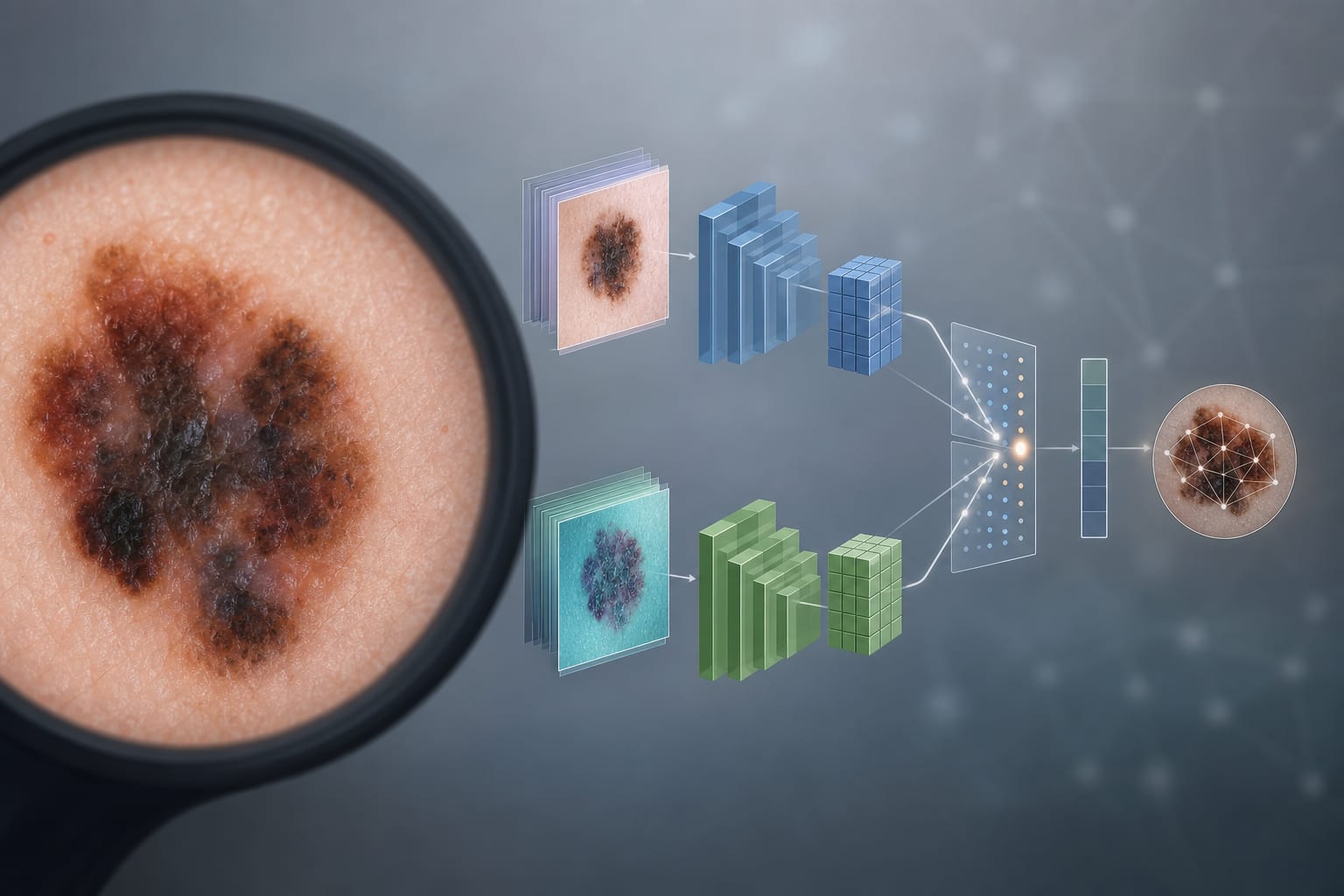
The parallel ridge pattern (PRP) is identified as the most reliable dermoscopic feature for diagnosing acral lentiginous melanoma, exhibiting high specificity but incomplete sensitivity. Approximately 20% of melanomas do not display this pattern, highlighting the need for a multi-feature evaluation approach.
Background
Acral melanoma, a subtype of melanoma that occurs on non-hairy surfaces, poses diagnostic challenges due to its atypical presentation. Accurate identification of malignant acral lesions is crucial for timely intervention, as this cancer type is often diagnosed at later stages. Understanding dermoscopic features that differentiate malignant from benign lesions can significantly impact patient outcomes.
Data Highlights
Feature
Melanomas (%)
Benign Nevi (%)
Parallel Ridge Pattern
79.6
0.6
Multicomponent Patterns
45.8
5.0
Parallel Furrow Pattern
8.9
51.8
Latticelike Pattern
2.7
13.0
Fibrillar Patterns
19.0
14.9
Key Findings
The parallel ridge pattern was present in 79.6% of acral melanomas and 0.6% of benign acral nevi.
Multicomponent patterns were observed in 45.8% of melanomas compared to 5.0% of benign nevi.
High specificity was noted for benign lesions with parallel furrow (91.1%) and latticelike patterns (97.3%).
Approximately 20% of acral lentiginous melanomas did not exhibit the parallel ridge pattern.
Fibrillar patterns showed similar rates in both melanoma and benign nevi, challenging their classification as benign indicators.
There is a need for further research on dermoscopic features in diverse populations, particularly among patients with darker skin types.
Clinical Implications
Clinicians should prioritize the parallel ridge and multicomponent patterns when evaluating acral lesions for potential melanoma. However, they must remain vigilant, as no single dermoscopic feature guarantees a melanoma diagnosis, necessitating a comprehensive clinical assessment.
Conclusion
The findings underscore the importance of a multi-feature approach in the dermoscopic evaluation of acral lesions, enhancing diagnostic accuracy and patient care.