Programmed cell death ligand 1 in correlation with BRAFV600E mutation, molecular characteristics and biological behavior in ameloblastoma - Report - MDSpire
Advertisement
Programmed cell death ligand 1 in correlation with BRAFV600E mutation, molecular characteristics and biological behavior in ameloblastoma
Clinical Report: Association of PD-L1 with BRAFV600E Mutation in Ameloblastoma
Overview
Revise to specify the clinical relevance of CD8+ T cell infiltration in relation to PD-L1 expression.
Background
Ameloblastoma is a prevalent odontogenic tumor with a high recurrence rate and potential for malignant transformation. The BRAFV600E mutation is commonly found in AM, suggesting a role in tumor pathogenesis and potential targeted therapies. Understanding the immune microenvironment, particularly PD-L1 expression, may inform treatment strategies and improve patient outcomes.
Data Highlights
Parameter
Findings
PD-L1 Positive Cases
42/50 (84%)
BRAF Mutation Positive
41/50 (82%)
PD-L1 Positivity in BRAF Positive
38/41 (92.68%)
Correlation p-value
0.003
CD8+ T Cell Infiltration and DFS
HR = 0.112, p = 0.041
Key Findings
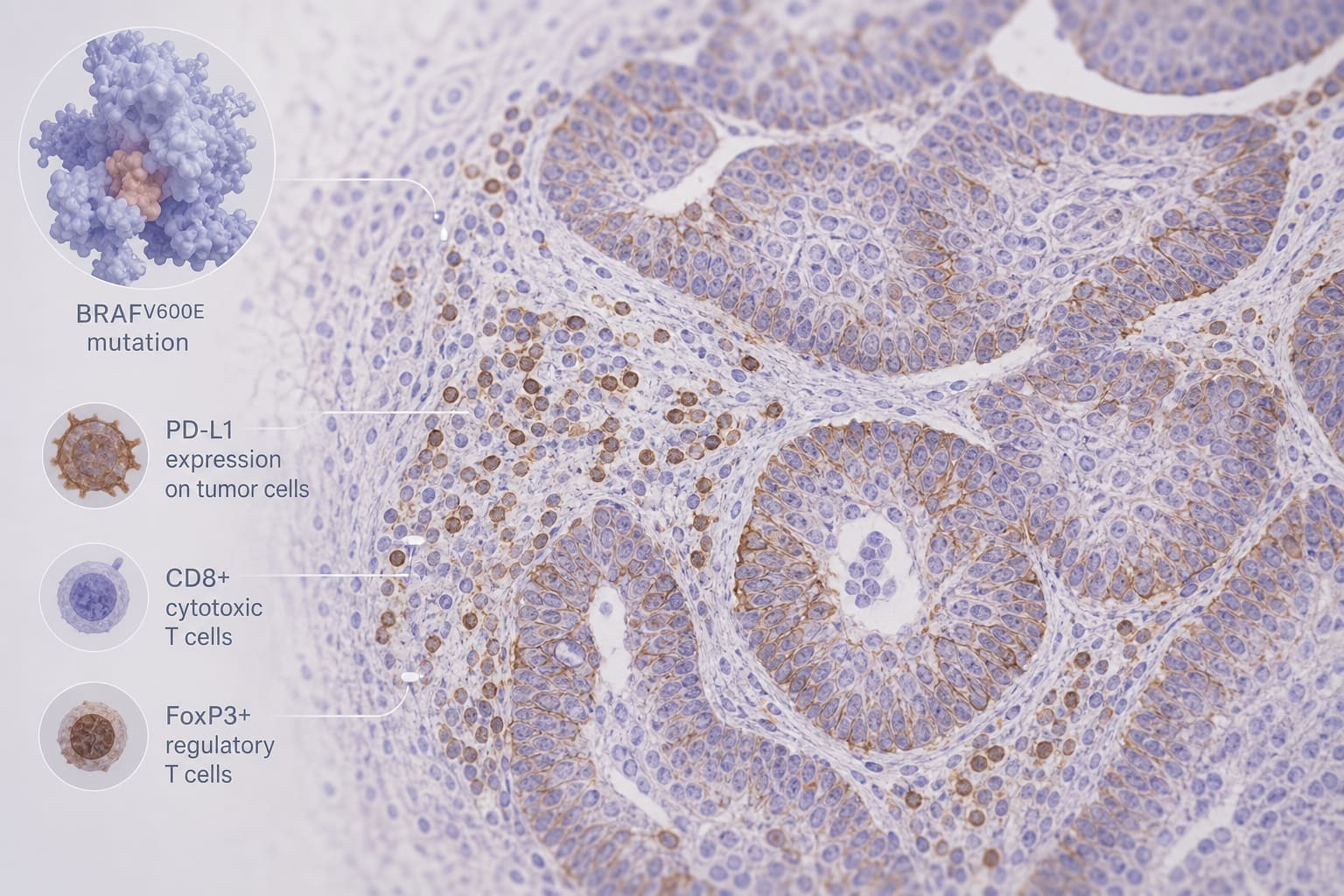
84% of AM patients showed PD-L1 positivity.
92.68% of BRAF mutation-positive cases were PD-L1 positive (p = 0.003).
No significant correlation between PD-L1 and CD8+ T cells or FoxP3+ cells.
High CD8+ T cell infiltration is associated with improved disease-free survival (HR = 0.112, p = 0.041).
PD-L1 expression does not correlate with major clinicopathological parameters of AM.
Clinical Implications
The high prevalence of PD-L1 expression in BRAFV600E-mutated AM suggests that PD-L1 may serve as a potential therapeutic target. Additionally, assessing CD8+ T cell infiltration could provide prognostic information regarding disease-free survival, guiding treatment decisions.
Conclusion
The findings highlight the significant association between PD-L1 expression and the BRAFV600E mutation in ameloblastoma, with implications for targeted therapy and immunotherapy. Further studies are warranted to validate these results in larger cohorts.
Researchers found gene therapy produced the highest modeled health benefit, but haploidentical stem cell transplantation offered better value at current prices