Red Blood Cell Transfusion Characteristics and Morbidity or Mortality in Very-Low-Birth-Weight Infants - Report - MDSpire

Red Blood Cell Transfusion Characteristics and Morbidity or Mortality in Very-Low-Birth-Weight Infants

  • By

  • Jeanne E. Hendrickson

  • Rebecca J. Birch

  • Elizabeth A. K. Rowley

  • Martha Sola-Visner

  • Brian R. Branchford

  • Xuxin Chen

  • Brian Custer

  • Robert A. DeSimone

  • Daniel W. Bougie

  • Erika M. Edwards

  • Ruchika Goel

  • Jerome Gottschall

  • Eldad A. Hod

  • Morvarid Moayeri

  • Nareg H. Roubinian

  • Oliver Karam

  • Jeffrey J. VanWormer

  • Elizabeth F. Stone

  • Naomi L. C. Luban

  • Cassandra D. Josephson

  • Ravi M. Patel

  • NHLBI Recipient Epidemiology Donor Evaluation Study–IV–Pediatric (REDS-IV-P)

  • Alan E. Mast

  • Lisa Baumann Kreuziger

  • Elliott P. Vichinsky

  • Bryan R. Spencer

  • Bruce S. Sachais

  • Kathy Chapman

  • Philip J. Norris

  • Mars Stone

  • Paul M. Ness

  • Steve H. Kleinman

  • June 24, 2026

  • 0 min

Share

Characteristics of Red Blood Cell Transfusions and Associated Morbidity or Mortality in Infants with Very Low Birth Weight

Overview

This study investigates the characteristics of red blood cell transfusions in very low birth weight infants and their association with serious morbidity and mortality.

Background

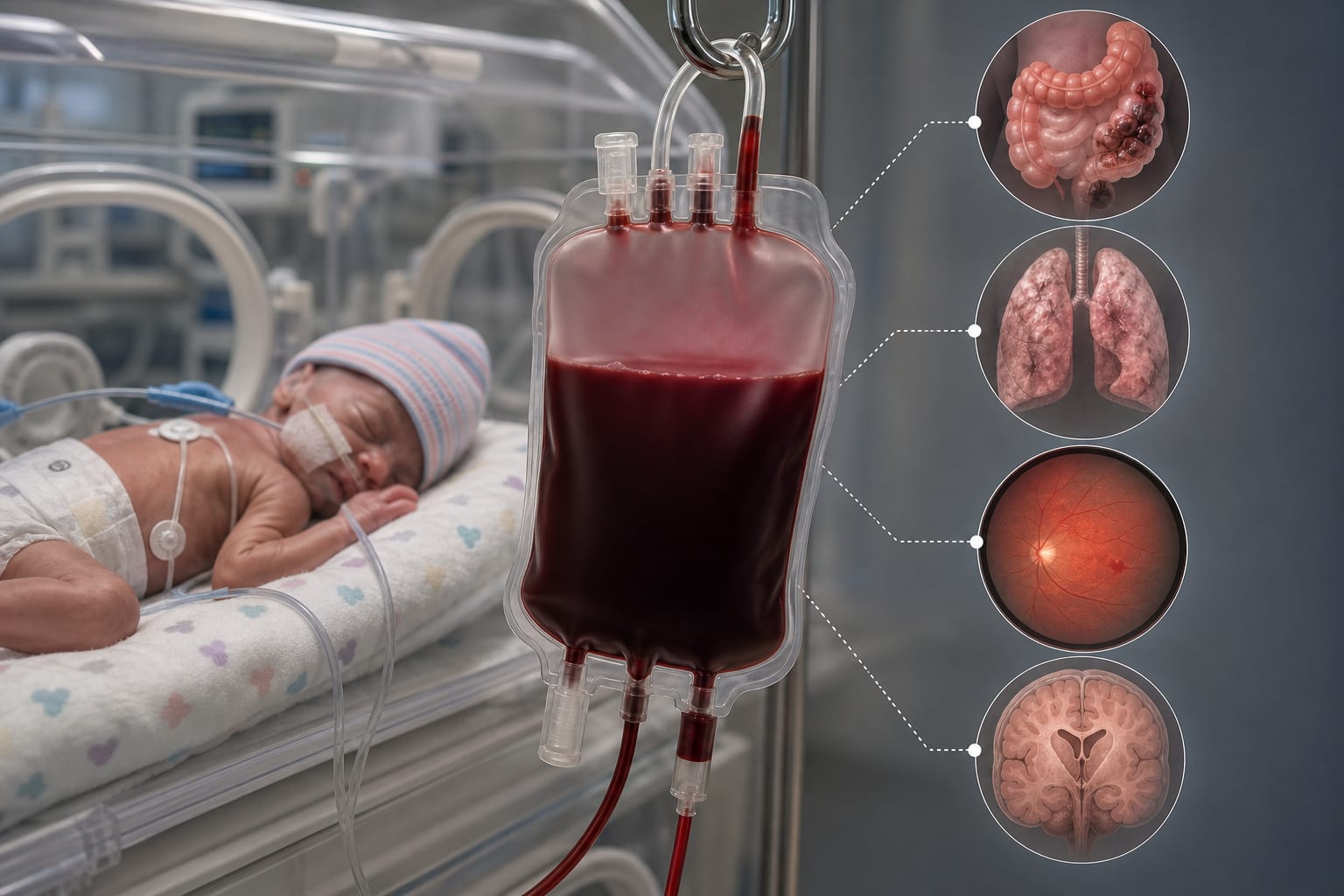
Red blood cell transfusions are frequently administered to very low birth weight (VLBW) infants, with over half receiving such transfusions. While lifesaving, these transfusions can lead to complications such as necrotizing enterocolitis and bronchopulmonary dysplasia, as noted in previous studies. Understanding the relationship between transfusion characteristics and outcomes is crucial for improving care in this vulnerable population.

Data Highlights

No numerical data or trial data was provided in the source material.

Key Findings

  • The study evaluated transfusion characteristics in VLBW infants to identify associations with morbidity and mortality.
  • Transfusion characteristics included blood donor attributes, RBC unit attributes, pretransfusion hemoglobin levels, and transfusion volumes.
  • The primary outcome was a composite measure of serious adverse events, including IVH, NEC, sepsis, BPD, ROP, or death.
  • The study followed VLBW infants from birth until death, discharge, or 90 days of life.
  • Data linkage was performed using multiple databases to ensure comprehensive analysis of transfusion impacts.

Clinical Implications

Clinicians should be aware of the potential risks associated with red blood cell transfusions in VLBW infants.

Conclusion

The findings highlight the importance of understanding the characteristics of red blood cell transfusions and their impact on morbidity and mortality in VLBW infants.

Related Resources & Content

  1. Frontiers in Pediatrics, 2026 -- Impact of red blood cell transfusion and transfusion strategies on clinical outcomes in extremely low gestational age neonates
  2. BMJ Paediatrics Open, 2021 -- Association of red blood cell transfusions with bronchopulmonary dysplasia in preterm infants: a retrospective cohort study
  3. Intensive Care Medicine, 2008 -- Duration of Red Blood Cell Storage Does Not Influence Outcomes in Critically Ill Pediatric Patients
  4. Clinical Practice Guideline for Red Blood Cell Transfusion Thresholds in Very Preterm Neonates, JAMA Network Open, 2023
  5. Effects of Liberal vs Restrictive Transfusion Thresholds on Survival and Neurocognitive Outcomes in Extremely Low-Birth-Weight Infants: The ETTNO Randomized Clinical Trial, PMC, 2020
  6. Science Update: Blood transfusions for preterm infants not associated with risk for necrotizing enterocolitis, NIH, 2024
  7. Intensive Care Medicine — Physiological determinants and the red blood cells transfusion decision-making process in non-bleeding critically ill patients: a comprehensive narrative review
  8. Clinical Practice Guideline for Red Blood Cell Transfusion Thresholds in Very Preterm Neonates | Pediatrics | JAMA Network Open | JAMA Network
  9. Effects of Liberal vs Restrictive Transfusion Thresholds on Survival and Neurocognitive Outcomes in Extremely Low-Birth-Weight Infants: The ETTNO Randomized Clinical Trial - PMC
  10. Science Update: Blood transfusions for preterm infants not associated with risk for necrotizing enterocolitis, NIH-funded study suggests | NICHD - Eunice Kennedy Shriver National Institute of Child Health and Human Development

Original Source(s)

Related Content