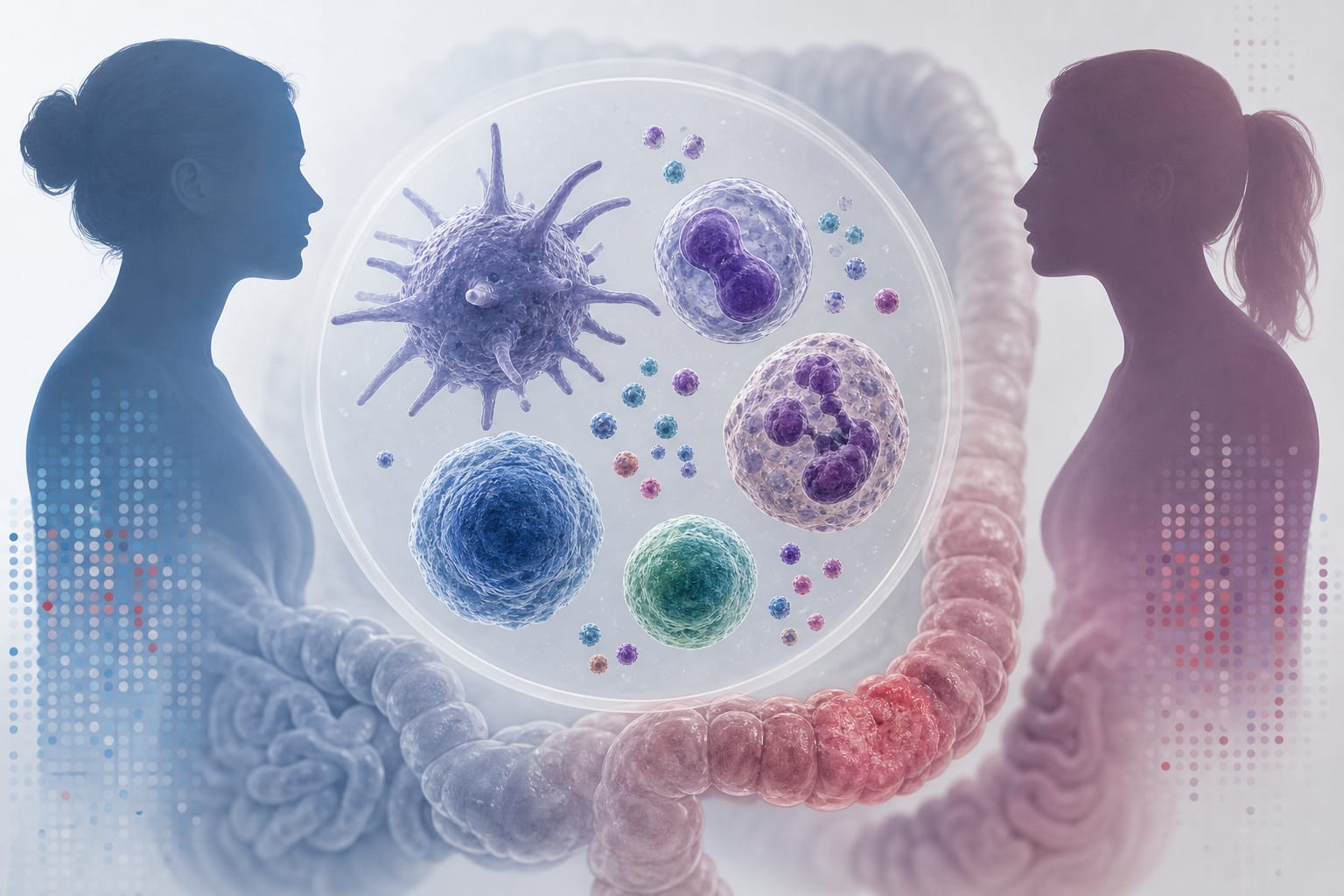
Gender-specific Peripheral Immune Characteristics in Ulcerative Colitis: Associations with Fatigue
Overview
This study investigates the peripheral immune profiles in ulcerative colitis (UC) and their association with fatigue, highlighting gender-specific differences. Findings indicate that immune dysregulation correlates with fatigue severity differently in males and females.
Background
Ulcerative colitis is a chronic inflammatory bowel disease that significantly impacts patients' quality of life, with fatigue being a common and debilitating symptom. Understanding the immune mechanisms underlying fatigue can inform targeted management strategies. Gender differences in immune responses and fatigue severity necessitate further exploration to optimize treatment approaches.
Active UC is associated with elevated neutrophils and classical monocytes.
Fatigue severity correlates with specific immune subsets in a sex-dependent manner.
Males show an inverse relationship between fatigue and classical monocytes, while females correlate fatigue with NK cells and Tregs.
Fatigue scores are higher in female UC patients compared to males.
Immune dysregulation persists even during remission, indicating ongoing systemic imbalance.
Clinical Implications
Clinicians should consider gender-specific immune profiles when assessing fatigue in UC patients. Tailoring fatigue management strategies based on these immune characteristics may enhance patient outcomes and quality of life.
Conclusion
The study underscores the importance of understanding gender-specific immune responses in ulcerative colitis, particularly regarding fatigue. This knowledge can guide personalized treatment approaches for managing fatigue in affected individuals.