Operationalizing Digital Health Equity in Artificial Intelligence–Enabled Patient Decision Aids for Older Adults: Mixed Methods Study - Report - MDSpire

Operationalizing Digital Health Equity in Artificial Intelligence–Enabled Patient Decision Aids for Older Adults: Mixed Methods Study

  • By

  • Cindy Yue Tian

  • Xiaochen Yang

  • Kailu Wang

  • Annie Wai-Ling Cheung

  • Jonathan Chun-Hei Ma

  • Canjie Lu

  • Jasmine Cheuk-Ying Yu

  • Crystal Ying Chan

  • Jiamin Chen

  • Kun Ouyang

  • Ivan Wai-Kiu Lin

  • Tim Hung-Cheong Pang

  • Shi Zhao

  • Yingwei Wang

  • Eliza Lai-Yi Wong

  • June 29, 2026

  • 0 min

Share

Implementing Digital Health Equity in AI-Driven Decision Support Tools

Overview

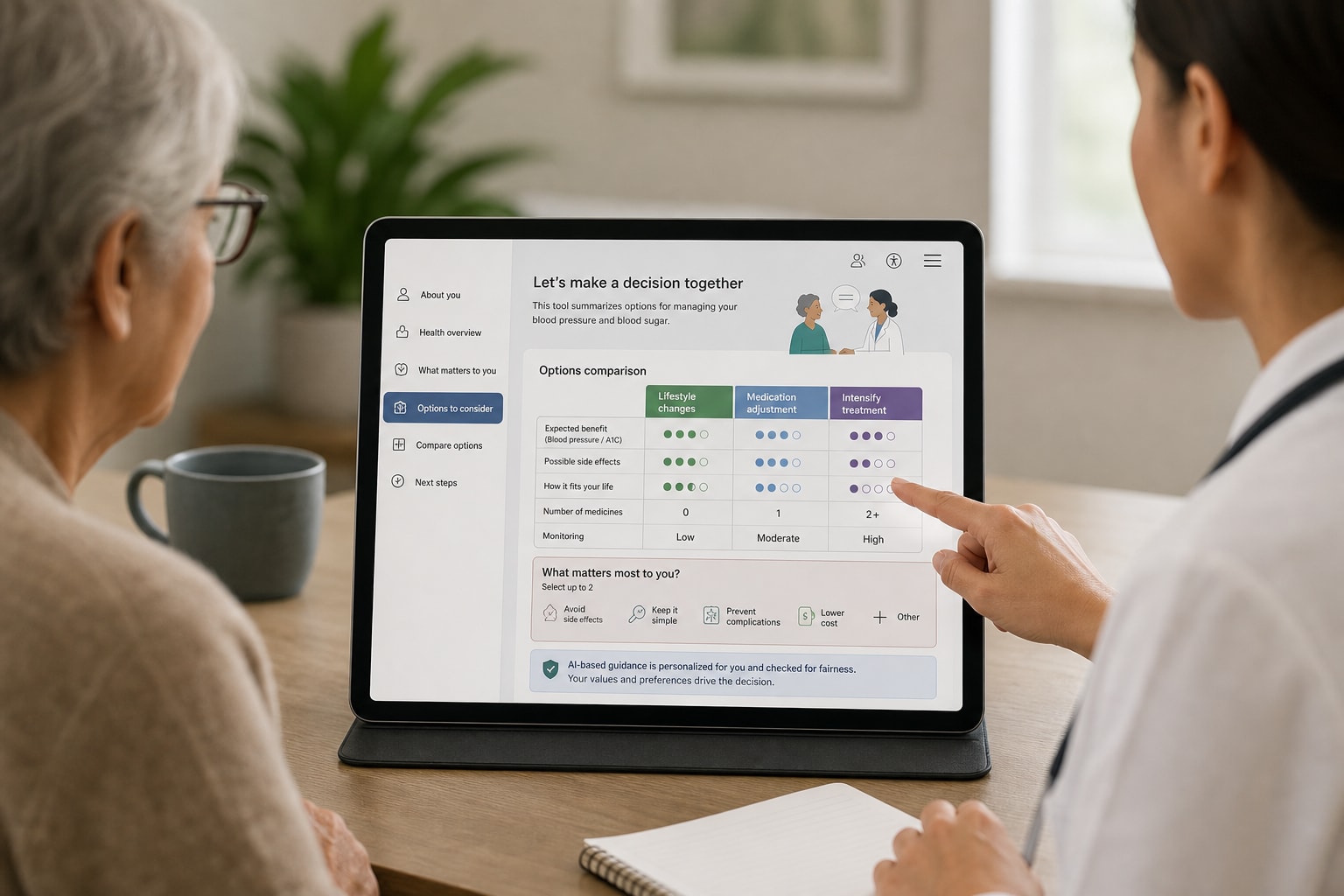
This study explores the development of AI-enabled patient decision aids (AI-PDAs) tailored for older adults with chronic diseases. It identifies specific equity-related determinants and actionable strategies to ensure these tools are accessible and beneficial for diverse aging populations.

Background

Chronic diseases significantly impact morbidity and mortality, necessitating effective management strategies that incorporate patient values. Shared decision-making (SDM) is essential in this context, yet older adults face unique challenges such as limited digital literacy and access to technology. Addressing these challenges is crucial to prevent widening digital inequities among older populations.

Data Highlights

No numerical data or trial results were provided in the source material.

Key Findings

  • AI-PDAs can enhance shared decision-making by personalizing patient support.
  • Older adults often have limited digital literacy, affecting their engagement with AI-PDAs.
  • Equitable design of AI-PDAs is necessary to ensure fair access and usability for diverse older populations.
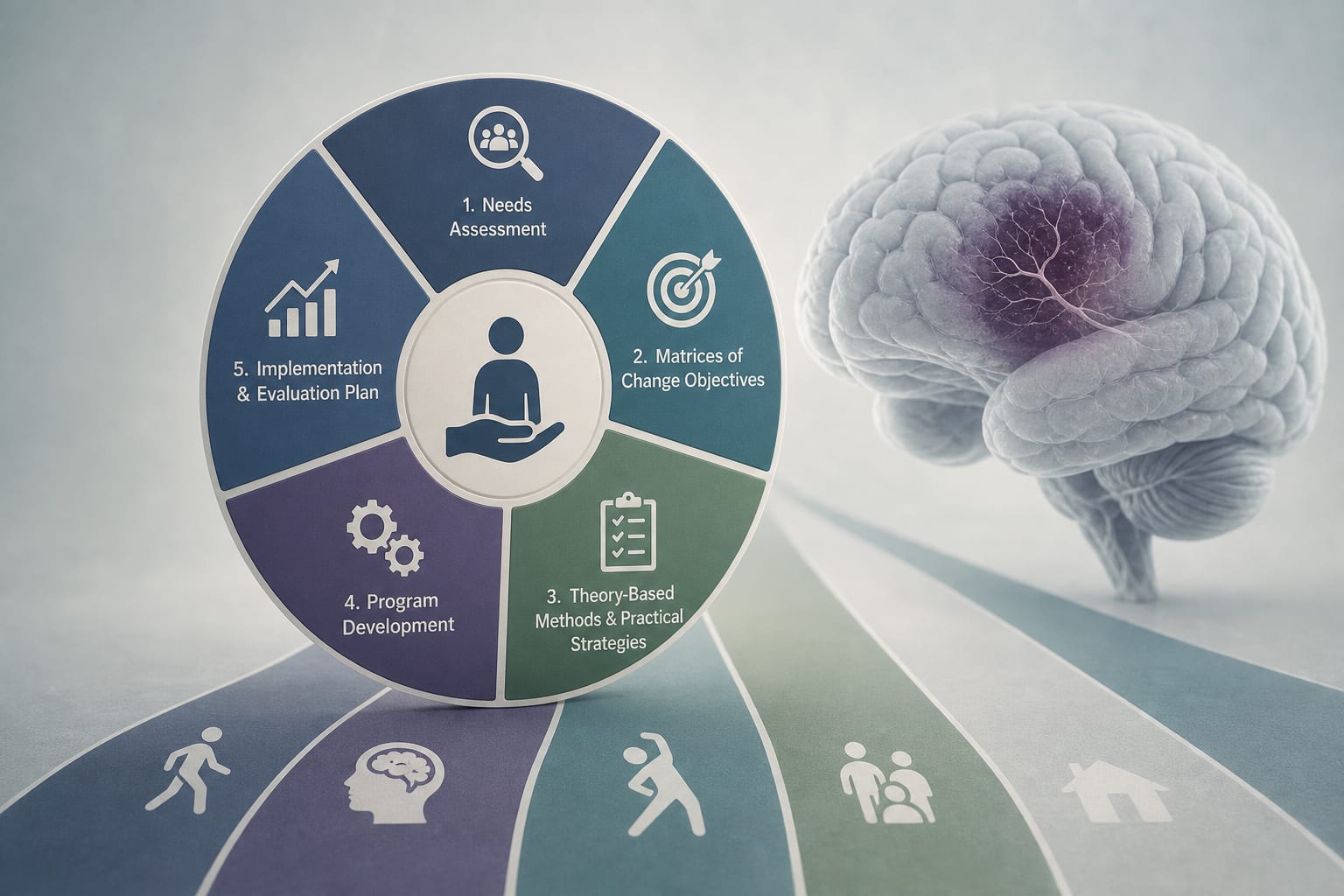
  • The Digital Health Equity Framework (DHEF) can guide the development of these tools.
  • Stakeholder interviews revealed specific equity determinants impacting the design of AI-PDAs, including access to technology and varying levels of digital literacy.

Clinical Implications

Healthcare providers should consider the diverse needs of older adults when implementing AI-PDAs.

Conclusion

The study highlights the need for developing AI-PDAs that are equitable and tailored to the needs of older adults.

Related Resources & Content

  1. Author(s)/Org, Source, Year -- Title
  2. Frontiers in Digital Health, 2026 -- Perspectives on healthcare artificial intelligence policy from health equity professionals: findings from an interview study
  3. Journal of Medical Internet Research (JMIR), 2026 -- A Proposed Participatory Framework for Explainable AI in mHealth: Mixed Methods Study Integrating User and Stakeholder Requirements
  4. Frontiers in Digital Health, 2026 -- Artificial intelligence and digital health equity: a post-pandemic evidence synthesis and implementation safeguards framework
  5. American Diabetes Association, Standards of Care in Diabetes, 2026 -- Clinical Guidelines
  6. American College of Cardiology/American Heart Association, 2025 -- Guideline for the Prevention, Detection, Evaluation and Management of High Blood Pressure in Adults
  7. Agency for Healthcare Research and Quality -- Implementation Tools and Resources for Shared Decision Making
  8. U.S. Department of Health and Human Services, 2024 -- Final rule under ACA Section 1557
  9. Office of the National Coordinator for Health Information Technology -- HTI-1 Final Rule
  10. World Health Organization -- Ethics and governance of artificial intelligence for health: Guidance on large multi-modal models
  11. Standards of Care in Diabetes | ADA Clinical Guidelines
  12. 2025 AHA/ACC/AANP/AAPA/ABC/ACCP/ACPM/AGS/AMA/ASPC/NMA/PCNA/SGIM Guideline for the Prevention, Detection, Evaluation and Management of High Blood Pressure in Adults: A Report of the American College of Cardiology/American Heart Association Joint Committee on Clinical Practice Guidelines
  13. Implementation Tools and Resources for Shared Decision Making | Agency for Healthcare Research and Quality
  14. FOR IMMEDIATE RELEASE
  15. HTI-1 Final Rule - ONC - Office of the National Coordinator for Health Information Technology
  16. Ethics and governance of artificial intelligence for health: Guidance on large multi-modal models
  17. Evidence- and Consensus-Based
  18. Effectiveness of AI-driven interventions in glycemic control: A systematic review and meta-analysis of randomized controlled trials - ScienceDirect
  19. Electronic Health Record Intervention and Deprescribing for Older Adults: A Randomized Clinical Trial | Electronic Health Records | JAMA | JAMA Network
  20. Data absenteeism in digital health technology research for older adults: a systematic review | BMC Digital Health | Springer Nature Link

Original Source(s)

Related Content