Essential Guide to Sunscreen: Understanding Sun Protection
-
By
-
Gregory A. Ugoh
-
Henry W. Lim
-
June 1, 2026
Clinical Report: Essential Guide to Sunscreen: Understanding Sun Protection
Overview
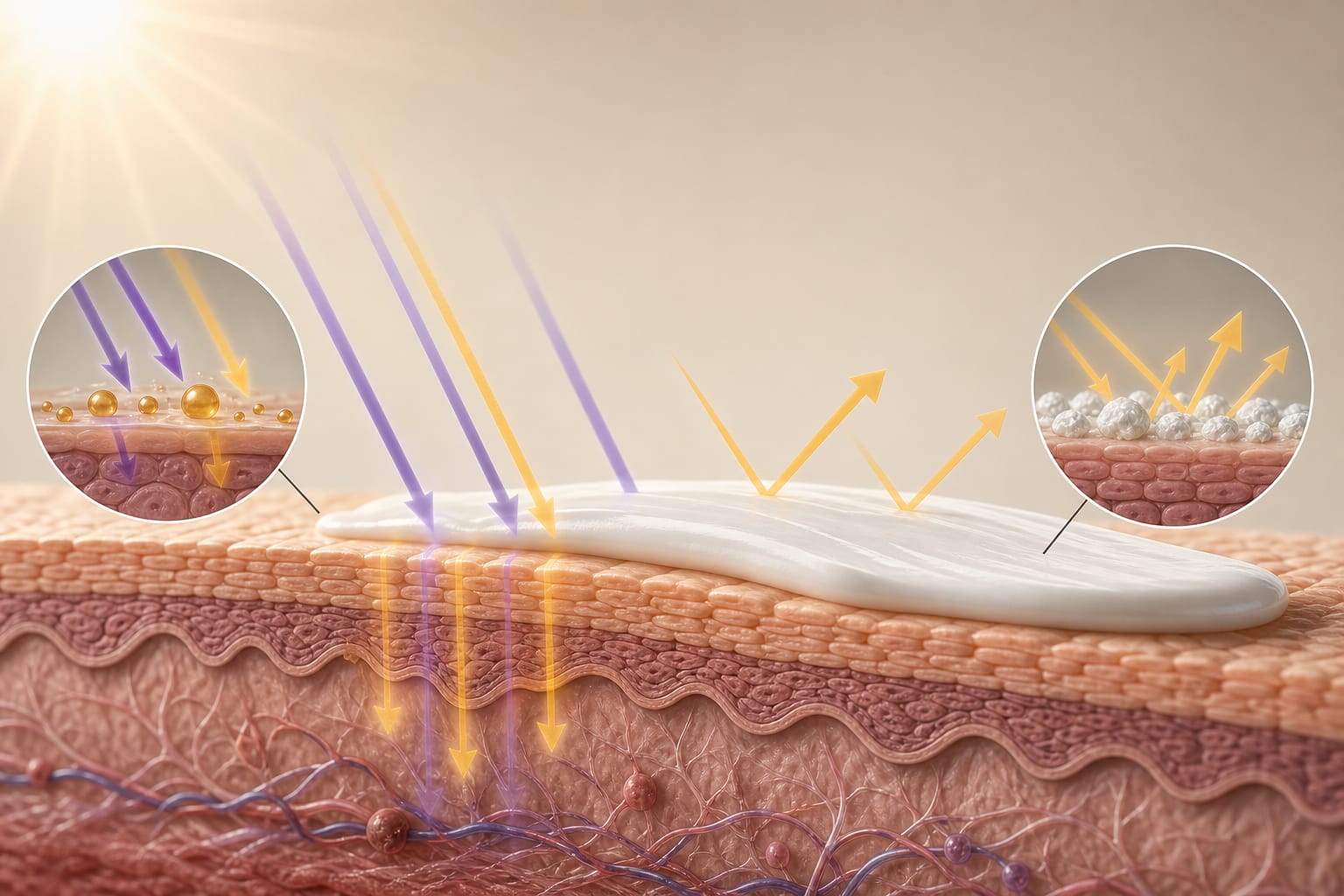
This report provides a comprehensive overview of sunscreen types, application methods, and the importance of sun protection. It emphasizes the necessity of using broad-spectrum sunscreen to prevent skin damage and skin cancer.
Background
Sunscreen plays a critical role in protecting the skin from harmful UV radiation, which can lead to skin cancer and premature aging. With various formulations available, understanding the differences between chemical and mineral sunscreens is essential for effective sun protection. Proper application and reapplication are vital for maximizing the protective benefits of sunscreen.
Data Highlights
No numerical data provided in the source material.
Key Findings
- Two main types of sunscreen exist: chemical (organic) and mineral (inorganic).
- SPF ratings indicate the level of protection against UV-B rays, with SPF 30 blocking approximately 97% of these rays.
- Regular reapplication of sunscreen is crucial, especially after swimming or sweating.
- Water-resistant sunscreens provide protection for up to 80 minutes in water.
- Tinted sunscreens can help reduce visible light exposure, which is beneficial for darker skin tones.
Clinical Implications
Healthcare professionals should educate patients on the importance of using broad-spectrum sunscreen with an SPF of 30 or higher. Emphasizing proper application techniques and the need for regular reapplication can significantly enhance sun protection efforts.
Conclusion
Sunscreen is a vital component of skin cancer prevention strategies. Understanding its types, proper usage, and the importance of reapplication can lead to better patient outcomes.
Related Resources & Content
- FDA Commissioner Margaret A. Hamburg’s Statement on the Surgeon General’s Call to Action to Prevent Skin Cancer, The ASCO Post, 2014 -- FDA Commissioner Margaret A. Hamburg’s Statement
- Sunscreen Costs Vary Up to 36-Fold, conexiant -- Sunscreen Costs Vary Up to 36-Fold
- Create Sunwear Interest, Optometric Management -- Create Sunwear Interest
- American Academy of Dermatology Statement on the Importance of Sun Protection, American Academy of Dermatology -- Statement on Sun Protection
- Optometric Management — LEADING OFF: O.D.s Provide Tips To Educate Parents on the Importance of Children’s Sunwear
- How to select a sunscreen
- American Academy of Dermatology Statement on the Importance of Sun Protection
- Reduced Melanoma After Regular Sunscreen Use: Randomized Trial Follow-Up | Journal of Clinical Oncology
Based on findings from:
Sun Protection 101—Your Guide to Sunscreen
Gregory A. Ugoh, Henry W. Lim. Jama Dermatology, 2026.
https://jamanetwork.com/journals/jamadermatology/fullarticle/2847421
This content is an AI-generated, fully rewritten summary based on a published scholarly article. It does not reproduce the original text and is not a substitute for the original publication. Readers are encouraged to consult the source for full context, data, and methodology.