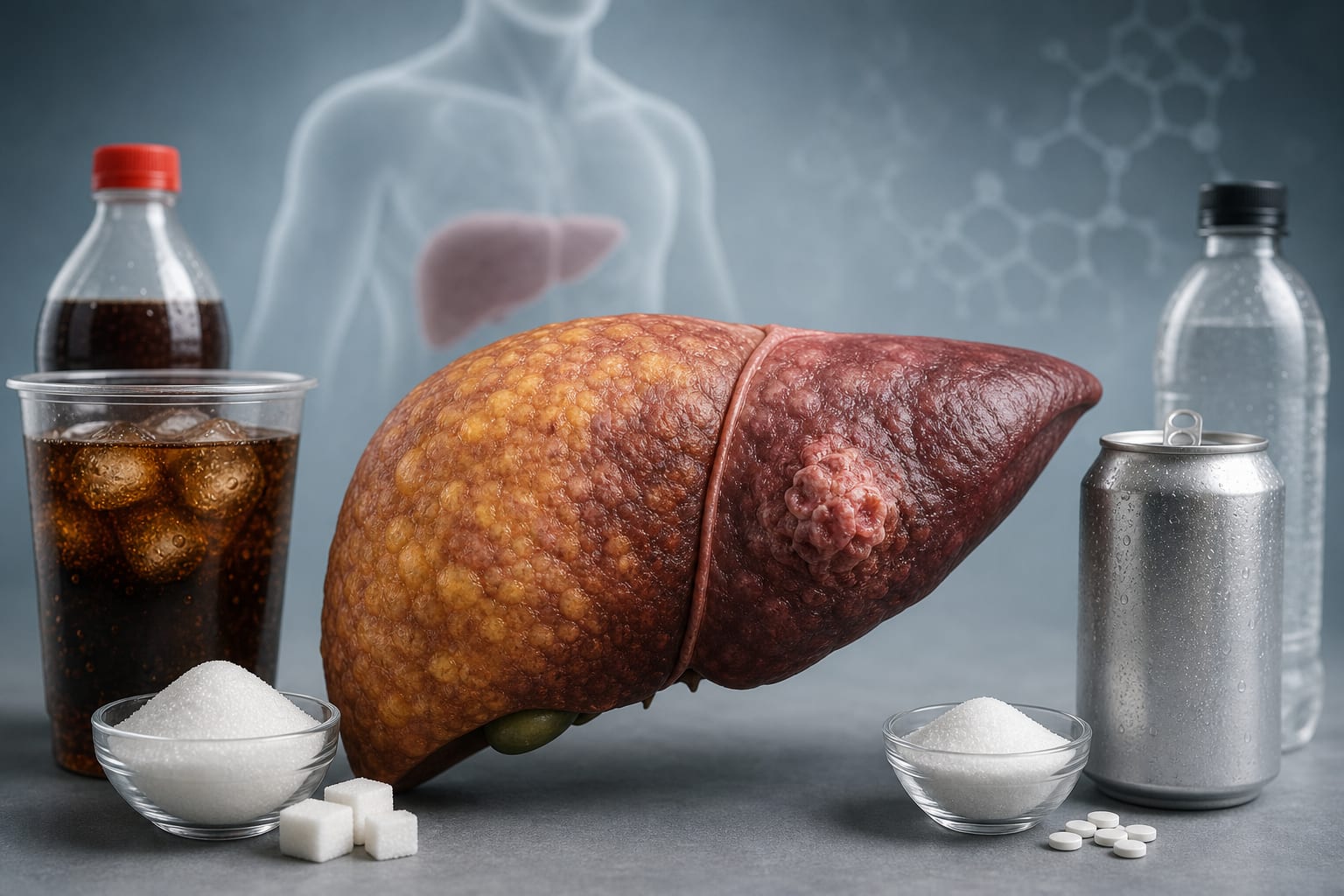
Examining the Relationship Between Sugar-Sweetened and Artificially Sweetened Drinks and Liver Cancer Risk
-
By
-
Daniel Clayton-Chubb
-
Andrew T. Chan
-
June 10, 2026
Clinical Report: Examining the Relationship Between Sugar-Sweetened and Artificially Sweetened Drinks and Liver Cancer Risk
Overview
This study investigates the association between sugar-sweetened beverages (SSB) and artificially sweetened beverages (ASB) with liver cancer risk. Findings indicate that increased SSB consumption correlates with higher incidences of hepatocellular carcinoma and intrahepatic cholangiocarcinoma, while ASB did not show a significant association.
Background
Liver cancer is a significant public health issue, with rising mortality rates globally. The increasing prevalence of metabolic disorders, such as metabolic dysfunction–associated steatotic liver disease (MASLD), is shifting the epidemiology of liver cancer. Understanding dietary factors, particularly beverage consumption, is crucial in assessing liver cancer risk.
Data Highlights
| Beverage Type | Association with Liver Cancer | Hazard Ratio (95% CI) |
|---|---|---|
| SSB | Hepatocellular carcinoma | 1.10 (1.03-1.18) |
| SSB | Intrahepatic cholangiocarcinoma | 1.15 (1.00-1.32) |
| ASB | No significant association | N/A |
Key Findings
- Increased SSB intake is associated with a higher risk of hepatocellular carcinoma (HCC) and intrahepatic cholangiocarcinoma (ICC).
- A 1-beverage/day increase in SSB consumption correlates with a hazard ratio of 1.10 for HCC and 1.15 for ICC.
- No significant association was found between ASB and liver cancer risk.
- The association between SSB and liver cancer persists even after adjusting for obesity and type 2 diabetes.
- Higher SSB consumption is linked to metabolic dysregulation, which may contribute to liver cancer susceptibility.
Clinical Implications
Healthcare professionals should consider the implications of SSB consumption in patients at risk for liver cancer. While ASB may be perceived as healthier alternatives, this study suggests they are not associated with increased liver cancer risk.
Conclusion
The findings reinforce the association between SSB consumption and liver cancer risk, while indicating that ASB may not be a significant risk factor. Further research is needed to explore the underlying mechanisms of these associations.
Related Resources & Content
- McGlynn et al, Sugar-Sweetened and Artificially Sweetened Beverages and Risk of Liver Cancer and Chronic Liver Disease Mortality, 2023 -- Examining the Relationship Between Sugar-Sweetened and Artificially Sweetened Drinks and Liver Cancer Risk
- The ASCO Post — Does Daily Consumption of Sugar-Sweetened Beverages Increase the Risk of Liver Disease Among Postmenopausal Women?
- The New Gastroenterologist — Are Diet Beverages More Detrimental to Liver Health Compared to Sugary Beverages?
- The New Gastroenterologist — Do Low-Calorie Beverages Pose Greater Risks to Liver Health Compared to Sugary Drinks?
- The ASCO Post — New Study Shows Sugar-Sweetened Drinks May Increase Risk of Cancer Mortality
- Does Daily Consumption of Sugar-Sweetened Beverages Increase the Risk of Liver Disease Among Postmenopausal Women?
- Are Diet Beverages More Detrimental to Liver Health Compared to Sugary Beverages?
- Do Low-Calorie Beverages Pose Greater Risks to Liver Health Compared to Sugary Drinks?
- EASL Clinical Practice Guidelines on the management of hepatocellular carcinoma - ScienceDirect
- Sugar-Sweetened and Artificially Sweetened Beverages and Risk of Liver Cancer and Chronic Liver Disease Mortality - PMC
- Aspartame hazard and risk assessment results released
Based on findings from:
Sugar-Sweetened and Artificially Sweetened Beverages and Liver Cancer—A Hard Look at Soft Drinks
Daniel Clayton-Chubb, Andrew T. Chan. Jama Network Open, 2026.
https://jamanetwork.com/journals/jamanetworkopen/fullarticle/2850141
This content is an AI-generated, fully rewritten summary based on a published scholarly article. It does not reproduce the original text and is not a substitute for the original publication. Readers are encouraged to consult the source for full context, data, and methodology.