Triangular posterior pericardiectomy and postoperative outcomes after coronary artery bypass grafting - Report - MDSpire

Triangular posterior pericardiectomy and postoperative outcomes after coronary artery bypass grafting

  • By

  • Dawid Imiełowski

  • Piotr Feusette

  • Andrzej Tukiendorf

  • Marek Cisowski

  • June 25, 2026

  • 0 min

Share

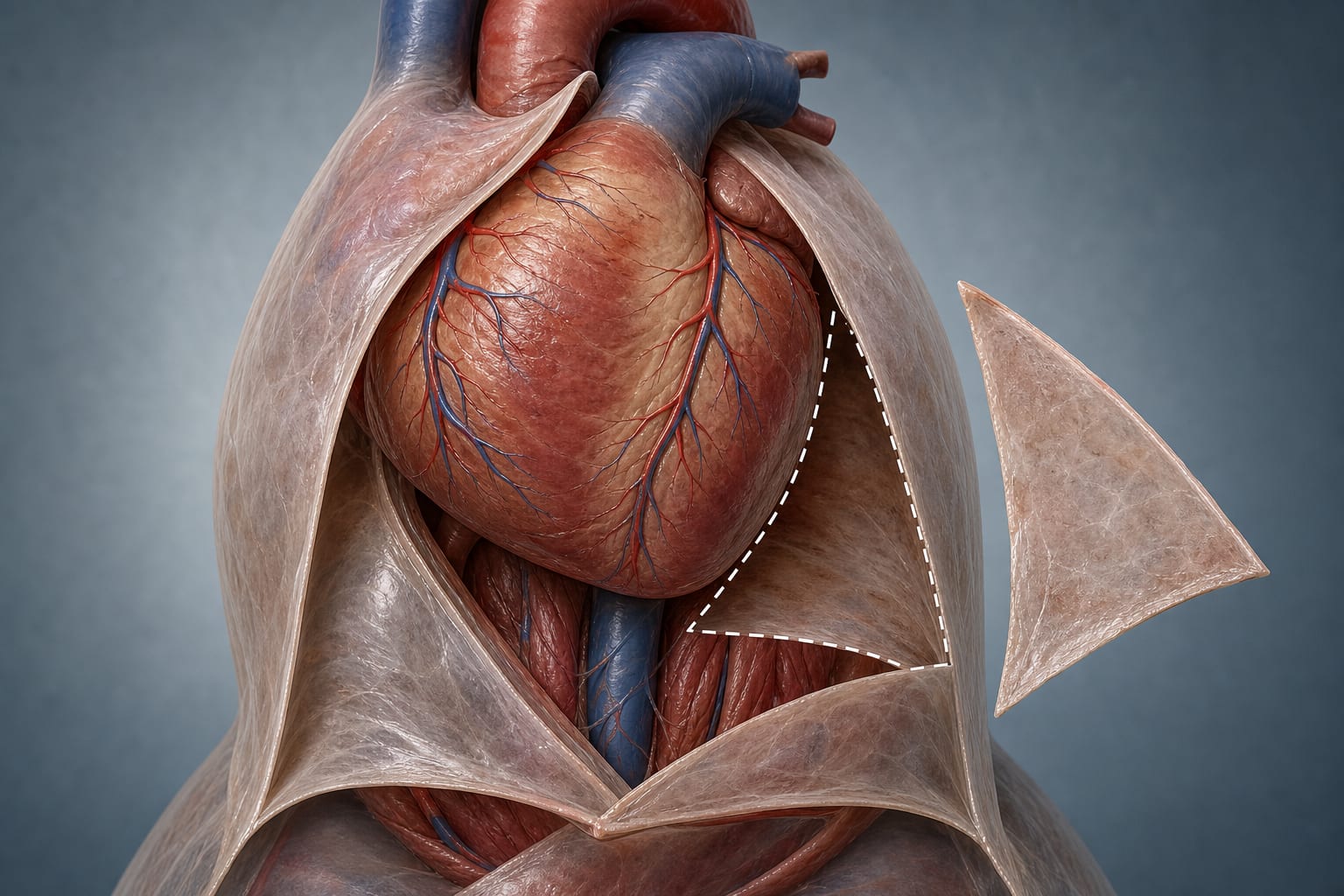
Clinical Report: Impact of Triangular Posterior Pericardiectomy on CABG Outcomes

Overview

This study evaluates the effects of triangular posterior pericardiectomy (TPP) on early and one-year outcomes following coronary artery bypass grafting (CABG).

Background

Coronary artery bypass grafting (CABG) is a critical intervention for advanced coronary artery disease, yet it carries risks of complications such as postoperative atrial fibrillation (POAF) and pericardial effusion. These complications can lead to increased morbidity and prolonged hospital stays, making strategies to mitigate them essential for improving patient outcomes.

Data Highlights

OutcomeStandard Surgery (n=347)TPP (n=142)
CRP LevelsHigherLower
Drainage Volume≈1200 mL≈950 mL
POAF Incidence35%0%
Pericardial EffusionPresentAbsent

Key Findings

  • Four phenotypes identified based on postoperative responses.
  • Phenotype 4, with 92% TPP prevalence, showed no POAF or atrial fibrillation at 12 months.
  • TPP was associated with lower CRP levels and drainage volumes compared to standard surgery.
  • Higher prevalence of POAF and pericardial effusion was noted in phenotypes with lower TPP prevalence.
  • TPP did not increase the risk of pleural complications.

Clinical Implications

The findings indicate that further investigation into TPP's impact on postoperative outcomes is warranted.

Conclusion

Further investigation into the application of triangular posterior pericardiectomy in surgical practice is warranted.

Related Resources & Content

  1. Frontiers in Cardiovascular Medicine, 2026 -- Triangular posterior pericardiectomy and postoperative outcomes after coronary artery bypass grafting
  2. The Society of Thoracic Surgeons 2026 Clinical Practice Guidelines for the Prevention and Treatment of New-Onset Postoperative Atrial Fibrillation after Cardiac Surgery - PubMed
  3. Posterior Left Pericardiotomy for the Prevention of Postoperative Atrial Fibrillation After Cardiac Surgery - American College of Cardiology
  4. Pediatric Cardiology — Comparative Approaches to Treating Truncus Arteriosus: Staged Repair Versus Immediate Surgical Intervention
  5. Pediatric Cardiology — Factors Influencing Outcomes of Pulmonary Artery Stenting Following Bidirectional Cavopulmonary Connection in Patients with Single Ventricle Physiology
  6. Frontiers in Cardiovascular Medicine — OPCAB in the minimally invasive era: impact on wound complications—a comparative study with on-pump CABG
  7. Clinical Research in Cardiology — Comparative Analysis of PASCAL and MitraClip-XTR Edge-to-Edge Devices for Managing Tricuspid Regurgitation: A Propensity-Matched Study
  8. The Society of Thoracic Surgeons 2026 Clinical Practice Guidelines for the Prevention and Treatment of New-Onset Postoperative Atrial Fibrillation after Cardiac Surgery - PubMed
  9. Posterior Left Pericardiotomy for the Prevention of Postoperative Atrial Fibrillation After Cardiac Surgery - American College of Cardiology
  10. Frontiers | Triangular posterior pericardiectomy and postoperative outcomes after coronary artery bypass grafting

Original Source(s)

Related Content