Evaluating combined acupuncture and antiresorptive therapy in Chinese women with postmenopausal osteoporosis: a systematic review and network meta-analysis - Report - MDSpire
Advertisement
Evaluating combined acupuncture and antiresorptive therapy in Chinese women with postmenopausal osteoporosis: a systematic review and network meta-analysis
Clinical Report: Assessing the Efficacy of Acupuncture in PMOP Treatments
Overview
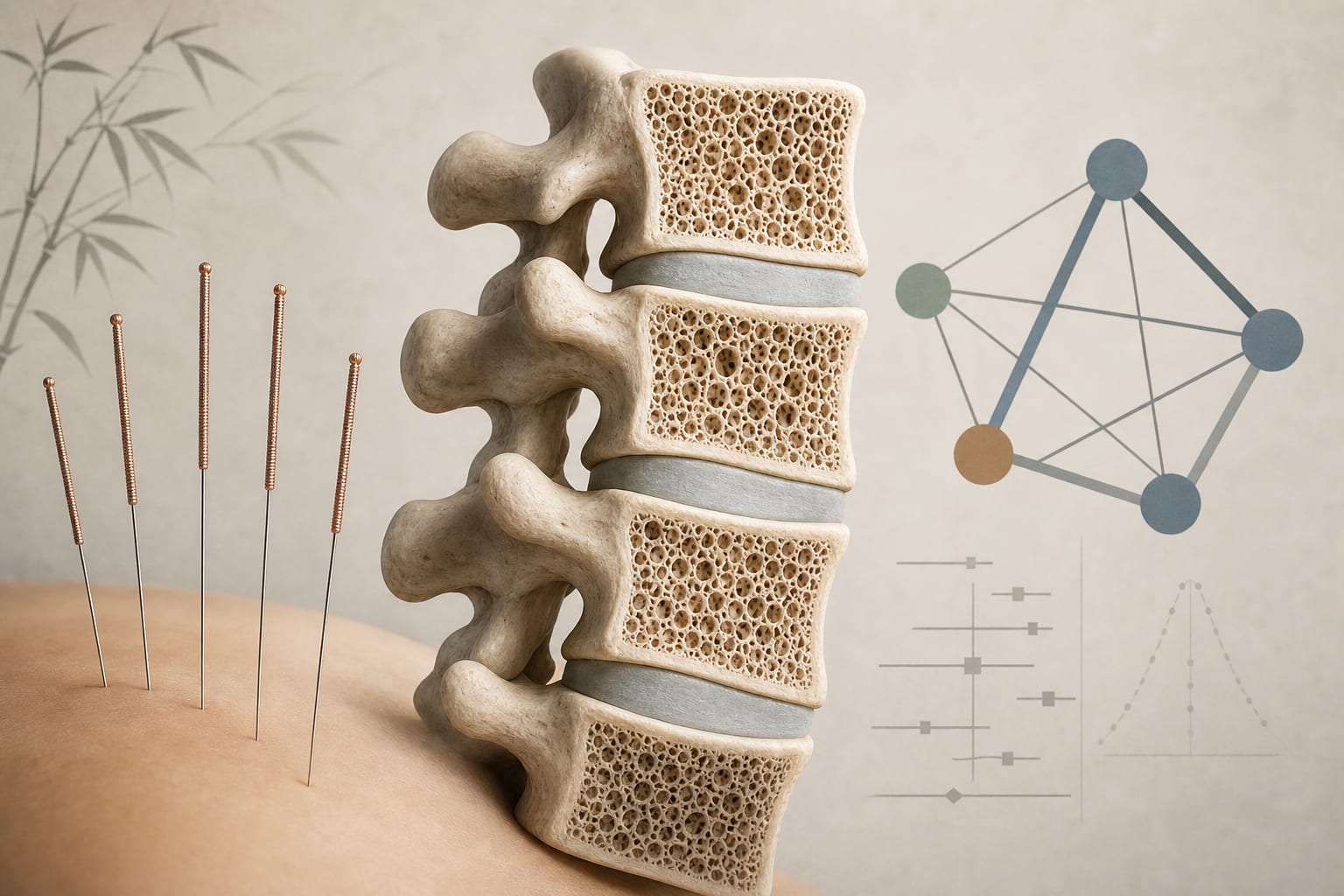
This systematic review and network meta-analysis evaluated the efficacy and safety of acupuncture combined with various pharmacotherapies for postmenopausal osteoporosis (PMOP) in Chinese women. Differential benefits across treatment strategies were observed, particularly in improving bone mineral density and clinical efficacy outcomes.
Background
Postmenopausal osteoporosis (PMOP) is a significant health concern, leading to fractures and increased mortality among older women. Current treatments include anti-resorptive agents and complementary therapies like acupuncture, yet comparative evidence on their combined efficacy remains limited.
Data Highlights
Outcome
Best Treatment
LS-BMD
Calcitriol_Electroacupuncture
FN-BMD
CT_VD_TCM_Fire dragon moxibustion
Clinical Efficacy
TCM_Acu
Low Back Pain
TCM_Acu
PINP
CT_VD_BP_Acupoint injection
CTX
CT_VD_TCM_Acu
E2
CT_VD_BP_TCM_Acupoint catgut embedding
Key Findings
112 RCTs involving 9,908 patients were included in the analysis.
Calcitriol combined with Electroacupuncture ranked highest for lumbar spine bone mineral density (LS-BMD).
CT_VD_TCM_Fire dragon moxibustion and CT_VD_BP_TCM_Acu were best for femoral neck bone mineral density (FN-BMD).
TCM_Acu showed the best clinical efficacy among the treatments evaluated.
Acupuncture combined with pharmacotherapy offers varied benefits across different efficacy outcomes.
Fracture data were limited, with only one trial reporting two hip fractures.
Clinical Implications
Acupuncture can be integrated with pharmacotherapy for managing PMOP, with specific combinations yielding better outcomes for bone density and pain relief.
Conclusion
Acupuncture combined with pharmacotherapy presents differential benefits in treating PMOP.