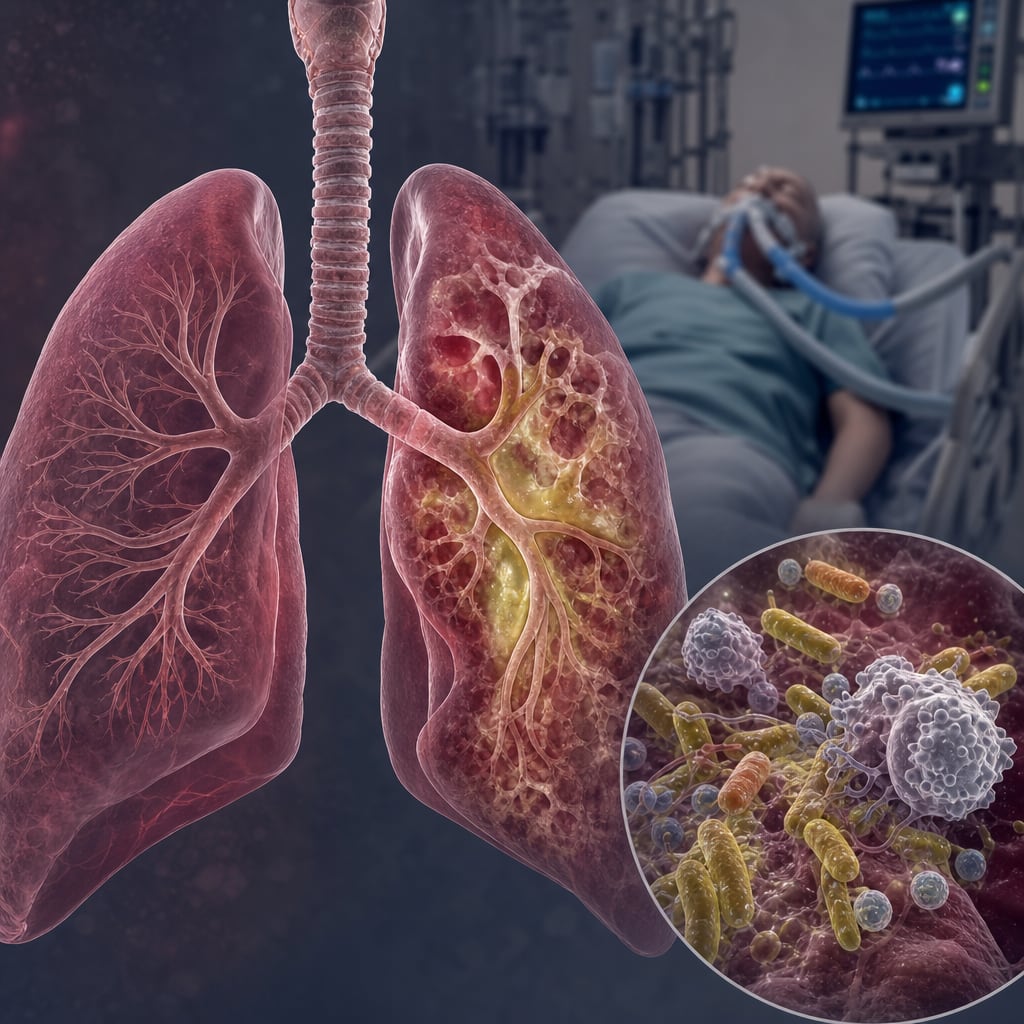
Clinical Report: Evaluation of Biological Age Post-Radiation Therapy in NSCLC
Overview
This study evaluates the association of biological age, estimated through facial photographs and pulmonary function tests, with outcomes in early-stage non-small cell lung cancer (NSCLC) patients undergoing stereotactic body radiation therapy (SBRT). The findings highlight the importance of biological age assessments in guiding treatment decisions for high-risk patients.
Background
Lung cancer remains a leading cause of cancer-related mortality, with non-small cell lung cancer (NSCLC) representing the majority of cases. Accurate assessments of biological fitness are critical for tailoring treatment strategies, especially for older patients with comorbidities who may not benefit from traditional surgical interventions. Recent advances in artificial intelligence provide new avenues for evaluating biological age, which may better reflect patient health than chronological age alone.
Data Highlights
No numerical data provided in the article.
Key Findings
The study utilized a deep learning model to estimate biological age from facial photographs in NSCLC patients.
Biological age assessments may improve prognostication and treatment decision-making in high-risk patients undergoing SBRT.
Patients with a younger biological age may be more suitable candidates for curative-intent SBRT.
Spirometry-estimated age provides complementary physiological information independent of facial age assessments.
Accurate biological age estimation could enhance personalized treatment approaches in lung cancer care.
Clinical Implications
Clinicians should consider integrating biological age assessments into their evaluation of NSCLC patients, particularly those undergoing SBRT. This approach may facilitate more personalized treatment decisions, optimizing outcomes for patients with varying levels of biological fitness.
Conclusion
The study underscores the potential of biological age as a critical factor in managing early-stage NSCLC patients, particularly those receiving SBRT. Further research is needed to validate these findings and refine prognostic models.
by Grace Lee, Fridolin Haugg, Dennis Bontempi, John He, Danielle S. Bitterman, Suraj Pai, Christian Guthier, Kelly J. Fitzgerald, David E. Kozono, Benjamin H. Kann, Hugo J. W. L. Aerts, Raymond H. Mak