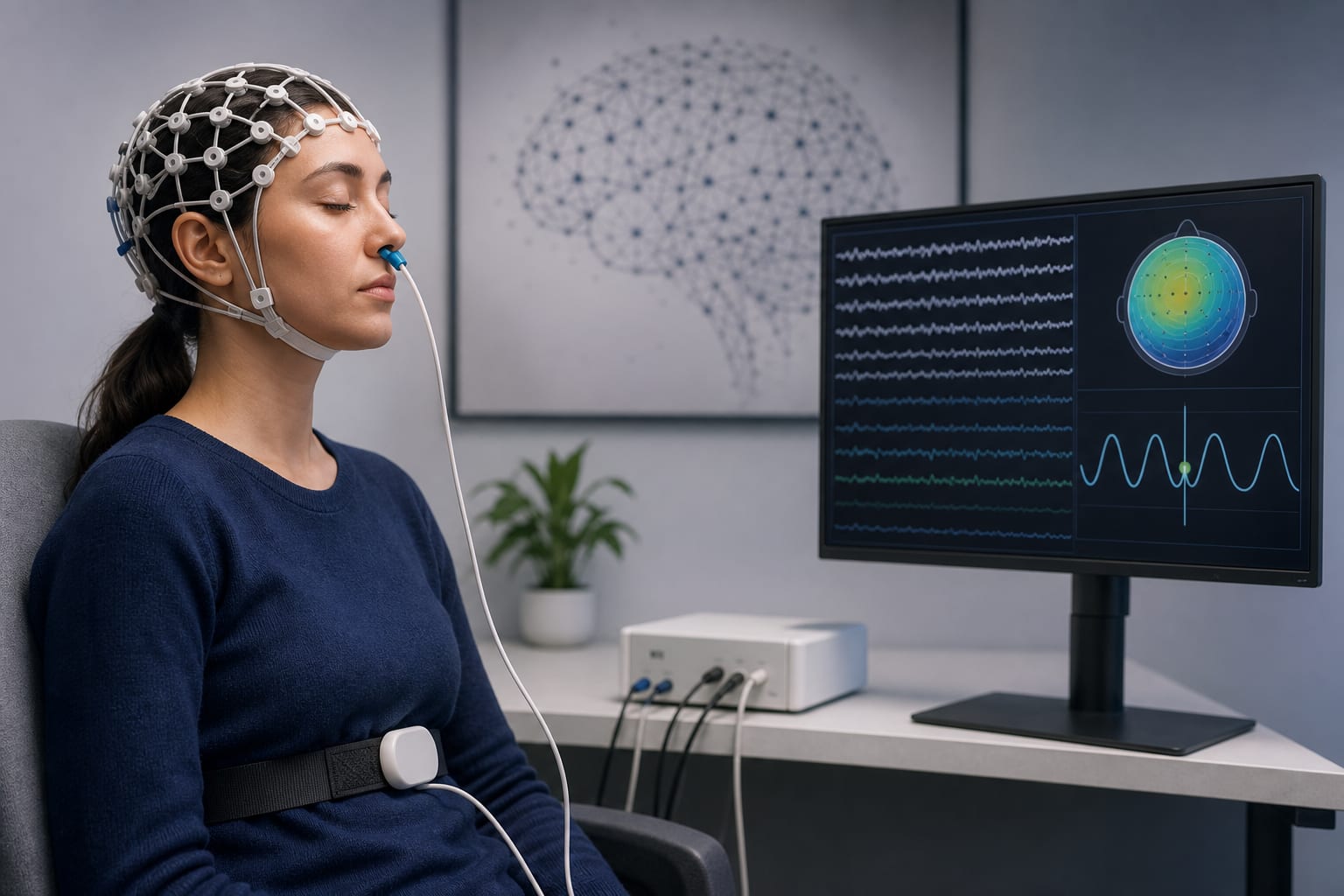
Clinical Report: A Real-Time Framework for Respiratory Modulation
Overview
This study presents a real-time respiratory modulation framework aimed at regulating affective disturbances through prefrontal EEG analysis. Significant improvements in affective states were observed, alongside measurable changes in EEG oscillatory activity.
Background
Affective disturbances are prevalent in psychiatric disorders, posing challenges for effective treatment. Respiratory modulation has emerged as a non-invasive intervention strategy that can influence both physiological and psychological states. Understanding the relationship between respiration and affective processing is crucial for developing effective therapeutic approaches in clinical psychiatry.
Data Highlights
Measure
Before Intervention
After Intervention
p-value
Negative Psychological Symptoms
High
Low
< 0.05
Positive Mood
Low
High
< 0.05
FZ Beta-Band Power
High
Low
< 0.05
FZ/FCZ Beta-Band Midline Differential Index
High
Low
< 0.05
Key Findings
Participants showed significant improvements in negative psychological symptoms post-intervention.
Positive mood levels increased significantly after the respiratory modulation protocol.
EEG analysis indicated decreased FZ beta-band power associated with affective regulation.
The FZ/FCZ beta-band Midline Differential Index decreased significantly, indicating changes in neural activity.
Theta-band changes were non-significant, suggesting specific cortical responses to the intervention.
Clinical Implications
The findings suggest the potential of respiratory modulation as a non-pharmacological intervention for affective disturbances.
Conclusion
This study highlights the effects of respiratory modulation on affective states and EEG patterns.