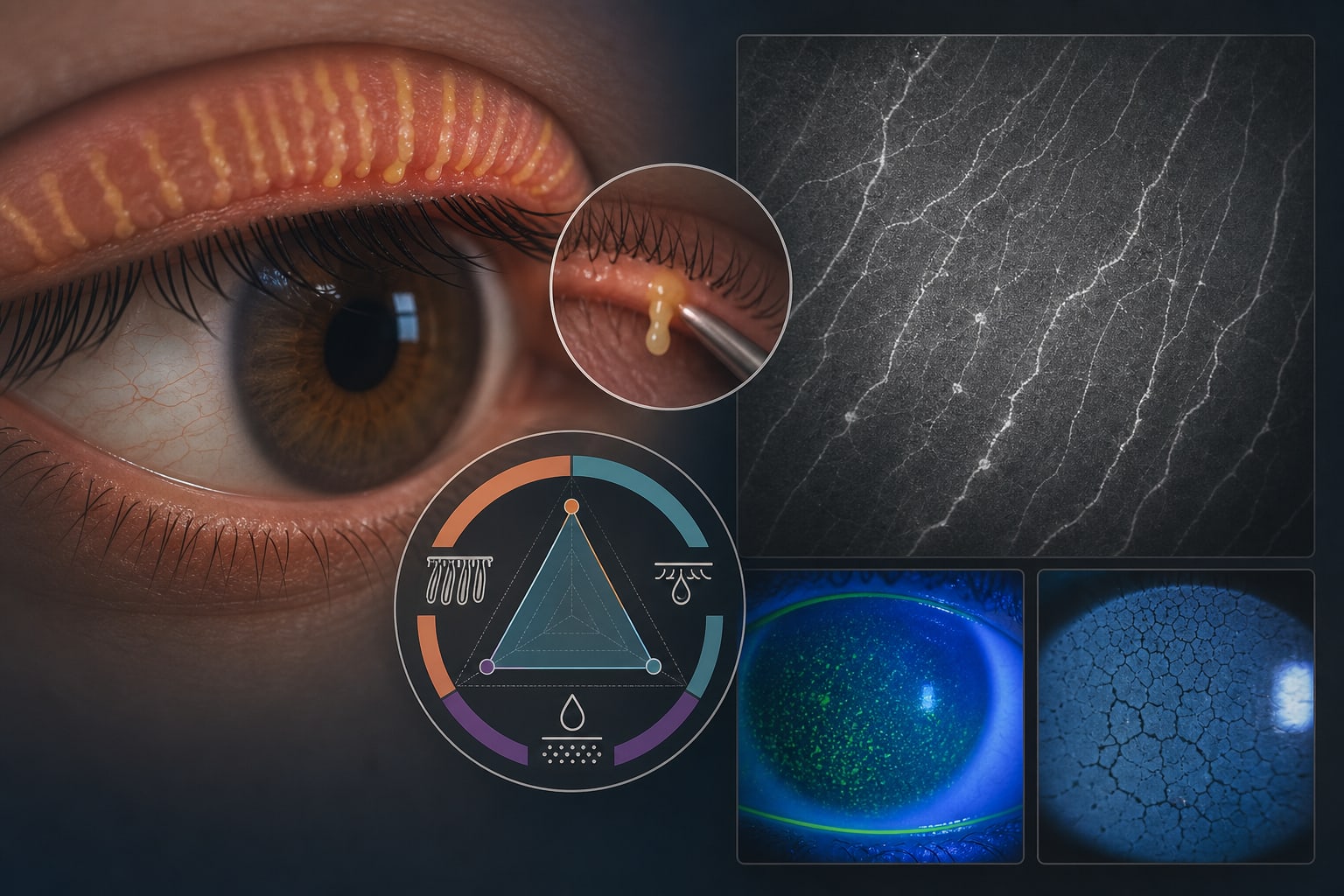
Clinical Report: Infrared Meibography Analysis in Ocular Rosacea
Overview
Expand on the implications of the findings in the context of current diagnostic practices.
Background
Ocular rosacea is a common manifestation of rosacea, affecting a significant portion of patients and often leading to meibomian gland dysfunction (MGD). MGD contributes to evaporative dry eye, making accurate diagnosis and assessment critical for effective management. Understanding the extent of meibomian gland loss can aid in developing standardized diagnostic criteria and improve patient outcomes.
Data Highlights
Group
Lower Eyelid Meiboscore
Meibomian Gland Loss Rate
Ocular Rosacea Patients
2.10 ± 1.36
38.7%
Healthy Controls
0.61 ± 0.78
12.9%
Key Findings
Lower eyelid meiboscores were significantly higher in ocular rosacea patients compared to controls (p < 0.001).
Meibomian gland loss rate was 38.7% in rosacea patients versus 12.9% in controls.
Meibomian gland dropout correlated with ocular surface disease index and tear breakup time.
Standardized therapy in pediatric patients significantly reduced gland dropout.
Quantitative analysis of meibomian gland loss offers potential for developing diagnostic criteria.
Clinical Implications
The findings highlight the importance of assessing meibomian gland loss in patients with ocular rosacea, as it may serve as a diagnostic marker. Clinicians should consider incorporating infrared meibography into routine evaluations to enhance diagnostic accuracy and tailor management strategies.
Conclusion
Highlight the importance of further research to confirm the study's conclusions.