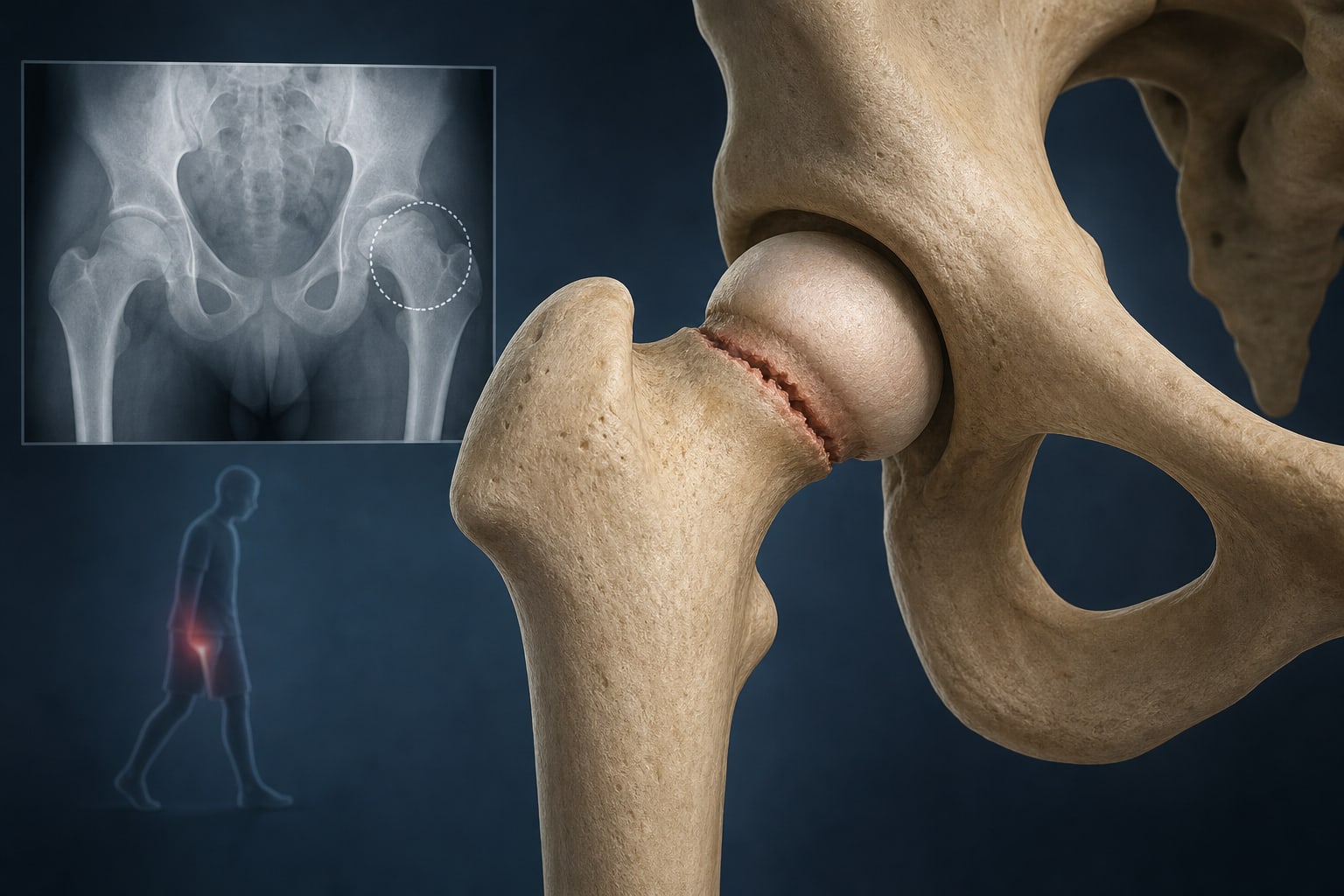
Identification and management of unrecognized femoral head epiphysiolysis: a case report - Report - MDSpire

Identification and management of unrecognized femoral head epiphysiolysis: a case report

  • By

  • Martina Ranieri

  • Maria Rizzo

  • Francesco Maria Lotito

  • Alessandro Aprato

  • Maria Alessio

  • Valentina Discepolo

  • Marina Russo

  • June 10, 2026

  • 0 min

Share

Clinical Report: Recognition and Treatment of Undiagnosed Femoral Head Epiphysiolysis

Overview

This report discusses a case of delayed diagnosis of slipped capital femoral epiphysis (SCFE) in a 16-year-old boy, highlighting the importance of timely recognition and intervention. The case underscores the association of SCFE with endocrinological conditions and the implications of delayed treatment.

Background

Slipped capital femoral epiphysis (SCFE) is a common condition in adolescents that can lead to significant morbidity if not diagnosed promptly. It predominantly affects obese males during growth spurts and is associated with various endocrine disorders. Early diagnosis and management are crucial to prevent complications such as avascular necrosis and the need for more invasive surgical procedures.

Data Highlights

No numerical data available in the article.

Key Findings

  • SCFE is often misdiagnosed due to vague symptoms, including poorly localized pain.
  • Delayed diagnosis can lead to increased risk of further slippage and complications.
  • Endocrinological conditions such as insulin resistance may coexist with SCFE.
  • The modified Dunn procedure is gaining popularity for its potential to reduce complications.
  • Timely imaging and orthopedic referral are essential upon suspicion of SCFE.

Clinical Implications

Healthcare providers should maintain a high index of suspicion for SCFE in adolescent patients presenting with limping or hip pain, particularly in those with obesity. Prompt imaging and referral to orthopedic specialists can significantly improve outcomes and reduce the need for complex surgical interventions.

Conclusion

This case illustrates the critical need for awareness of SCFE in adolescents to facilitate early diagnosis and treatment. Recognizing the potential for associated endocrine disorders further emphasizes the importance of comprehensive evaluation.

Related Resources & Content

  1. AAFP, AFP, 2025 -- Slipped Capital Femoral Epiphysis: Rapid Evidence Review
  2. Knee Surgery, Sports Traumatology, Arthroscopy, 2017 -- Hip Arthroscopy Facilitates the Diagnosis and Management of Subchondral Insufficiency Fractures of the Femoral Head with Associated Intra-Articular Conditions
  3. Frontiers in Medicine, 2026 -- Recurrent dysplasia epiphysealis hemimelica: a case report and review of the literature
  4. Conexiant -- Torsional Deformity Masquerading as Knee Instability
  5. Surgical Approaches for Managing Legg-Calvé-Perthes Disease
  6. Slipped Capital Femoral Epiphysis: Rapid Evidence Review | AFP
  7. Risk factors associated with avascular necrosis following unstable slipped capital femoral epiphysis in pediatric patients: A systematic review and meta-analysis

Original Source(s)

Related Content