Clinical Report: Microbial Biomarkers in Tongue Cancer
Overview
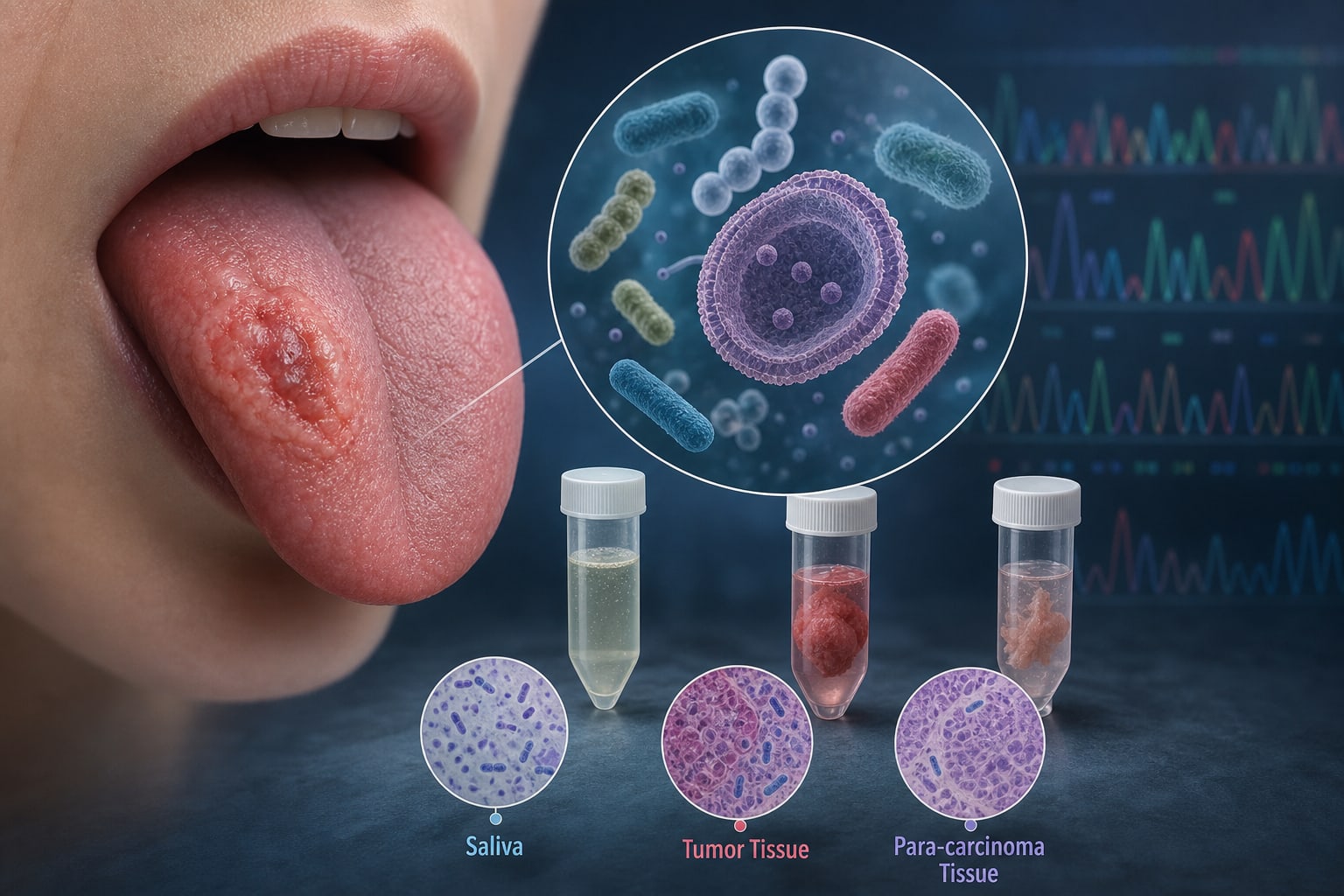
This pilot study identifies specific microbial strains in saliva and tumor tissues of tongue squamous cell carcinoma (TSCC) patients, suggesting their potential as non-invasive biomarkers for early detection. The findings indicate significant differences in microbial composition between cancerous and healthy tissues.
Background
Oral cancer, particularly tongue squamous cell carcinoma, presents a major health challenge due to late-stage diagnoses and poor survival rates. Early detection is crucial for improving outcomes, yet current screening methods are inadequate. The role of tumor-associated microbiota in cancer progression highlights the potential for microbial biomarkers in non-invasive diagnostic approaches.
Data Highlights
Microbial Strain
Presence in Cancer Tissues
Presence in Healthy Tissues
Acinetobacter calcoaceticus
High
Low
Dietzia natronolimnaea
High
Low
Burkholderia cepacia
High
Low
Acinetobacter baumannii
High
Low
Weissella cibaria
Higher in saliva
Absent
Sphingomonas azotifigens
Higher in saliva
Absent
Aeromonas sobria
Higher in saliva
Absent
Key Findings
Significant differences in microbial composition between cancerous and healthy tissues were observed.
Specific strains such as Acinetobacter calcoaceticus and Burkholderia cepacia were prevalent in cancer tissues.
Weissella cibaria and Sphingomonas azotifigens were more abundant in the saliva of TSCC patients compared to healthy individuals.
Microbial biomarkers show promise for non-invasive screening methods for oral cancer.
Findings are preliminary and require validation in larger studies with rigorously matched controls.
Clinical Implications
The identification of microbial biomarkers in saliva and tumor tissues may facilitate the development of non-invasive screening tools for early detection of oral cancer. Clinicians should consider the potential of microbiota profiling as an adjunct to existing diagnostic methods, particularly in high-risk populations.
Conclusion
This study underscores the potential of microbial biomarkers in the early detection of tongue cancer, warranting further investigation to validate these findings in larger cohorts.