Aging-driven metabolic abnormalities remodel intercellular communication through the gut–liver–heart axis and may promote coronary artery disease: the key role of bile acid metabolism - Report - MDSpire
Conexiant’s news site is now MDSpire News. Learn more
Advertisement
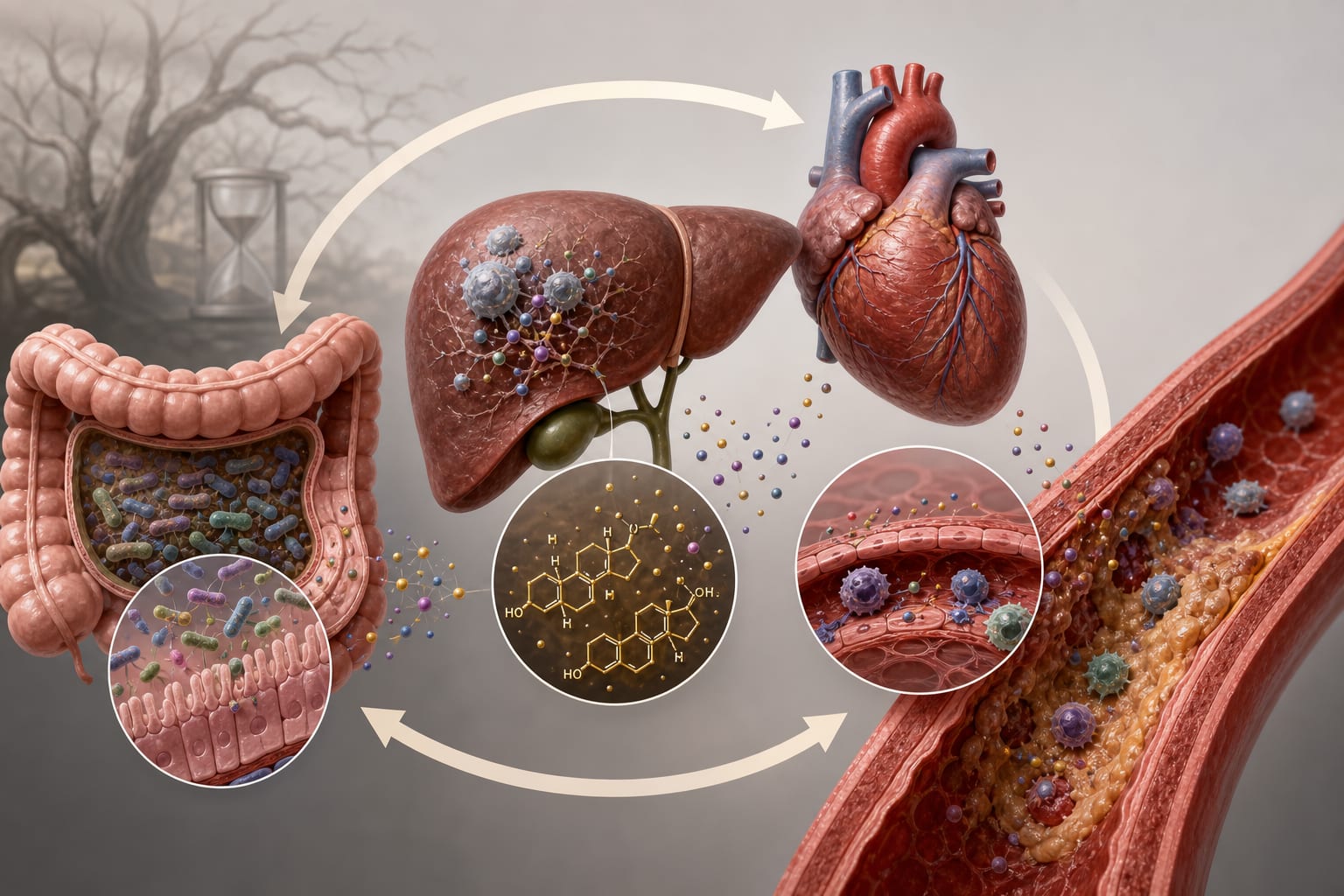
Metabolic Changes Associated with Aging Alter Intercellular Interactions via the Gut–Liver–Heart Axis and May Contribute to Coronary Artery Disease: The Critical Function of Bile Acid Metabolism
Metabolic Changes Associated with Aging Alter Intercellular Interactions via the Gut–Liver–Heart Axis and May Contribute to Coronary Artery Disease
Background
Coronary artery disease (CAD) is the leading cause of cardiovascular mortality globally, with its prevalence increasing significantly in older populations. Aging is identified as a strong independent risk factor for CAD, with cellular senescence and chronic inflammation playing critical roles.
Data Highlights
No numerical data provided in the source material.
Key Findings
Aging promotes coronary artery disease through immunometabolic remodeling of the gut–liver–heart axis.
Senescent cells contribute to chronic systemic inflammation via the senescence-associated secretory phenotype (SASP).
Age-related dysbiosis affects bile acid metabolism, impacting gut barrier integrity and promoting metabolic endotoxemia.
Altered signaling in the liver amplifies systemic inflammation and contributes to vascular dysfunction.
Clinical Implications
Understanding the role of bile acid metabolism and the gut–liver–heart axis in aging can inform the development of targeted therapies for coronary artery disease. Clinicians should consider the implications of cellular senescence and chronic inflammation in older patients when assessing cardiovascular risk.
Conclusion
The interplay between aging, bile acid metabolism, and chronic inflammation provides a crucial framework for understanding coronary artery disease in older adults. Further research is needed to explore potential therapeutic interventions.
These 10 states make it more practical for physicians to participate in hospital ownership by aligning statutory structure, corporate practice of medicine rules, and population trends.