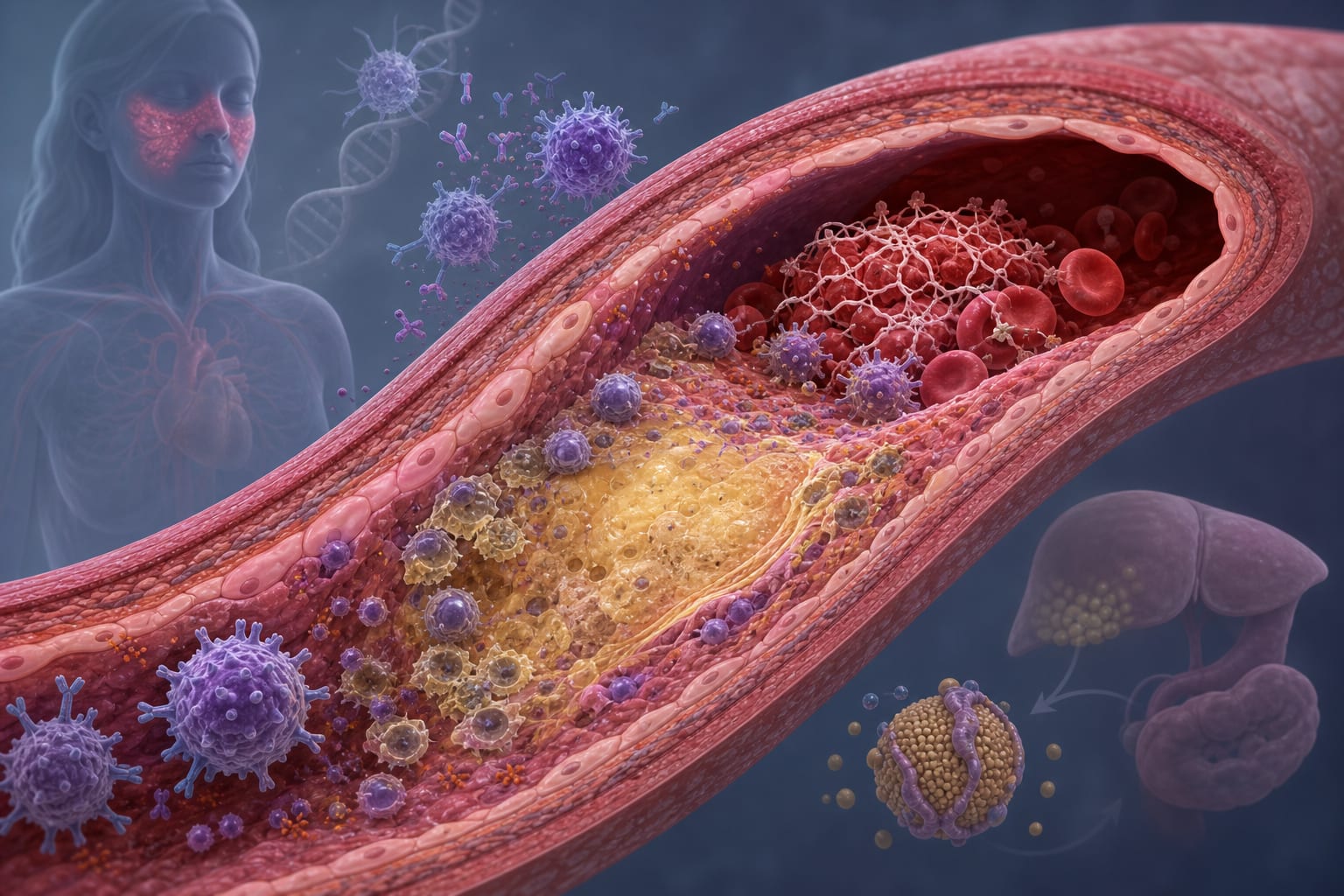
Clinical Report: Effectiveness of Low-Dose Rituximab in SLE Management
Overview
This study compares the efficacy and safety of low-dose rituximab (100 mg/month) with belimumab (10 mg/kg) in treating systemic lupus erythematosus (SLE). Results indicate that while both treatments improve disease activity and laboratory parameters, belimumab shows superior efficacy in reducing glucocorticoid dosage and improving hypercoagulability.
Background
Systemic lupus erythematosus (SLE) is a complex autoimmune disease that predominantly affects women of childbearing age, leading to significant morbidity. Current treatments often involve glucocorticoids and immunosuppressants, which can have serious side effects. The development of biologics like rituximab and belimumab offers new therapeutic options, but their comparative effectiveness in clinical practice remains to be fully elucidated.
Data Highlights
Parameter
Low-Dose RTX
Belimumab
Overall Efficacy
39.2%
57.6%
Adverse Events
7.8%
12.12%
Reduction in Glucocorticoid Dosage
Not specified
Greater reduction (p = 0.02)
Improvement in Creatinine
Small rise
Improvement
Reduction in D-dimer
Not specified
p = 0.03
Key Findings
Both low-dose rituximab and belimumab significantly improved SLEDAI-2K scores post-treatment (p < 0.05).
Low-dose rituximab achieved an overall efficacy of 39.2%, while belimumab achieved 57.6% (p < 0.05).
Belimumab resulted in a greater reduction in glucocorticoid dosage compared to low-dose rituximab (p = 0.02).
Both treatments increased complement C3/C4 and decreased immunoglobulins without significant between-group differences.
Adverse events were reported in 12.12% of belimumab patients and 7.8% of rituximab patients (p > 0.05).
In renal outcomes, both treatments equivalently reduced proteinuria, but belimumab improved creatinine levels while rituximab caused a small rise.
Clinical Implications
Low-dose rituximab may be considered a viable treatment option for SLE, demonstrating comparable efficacy to belimumab in improving disease activity. However, clinicians should note the advantages of belimumab in reducing glucocorticoid dosage and improving hypercoagulability.
Conclusion
Low-dose rituximab presents an effective and safe alternative for managing SLE, although belimumab shows certain advantages in specific clinical outcomes.