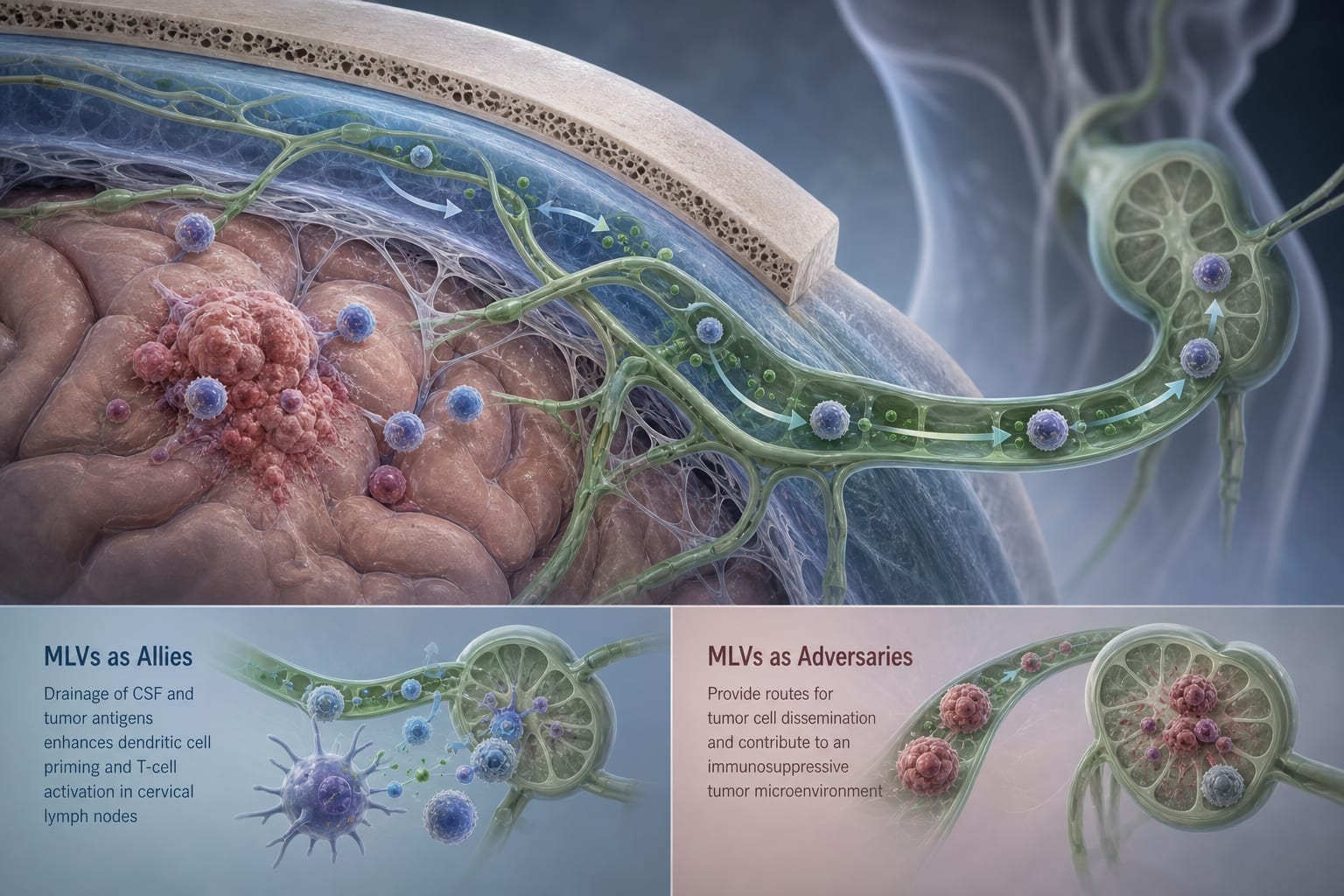
Clinical Report: Dual Functions of Meningeal Lymphatic Vessels in Brain Metastasis
Overview
Revise to include specific examples of MLV roles in early and advanced stages of brain metastases.
Background
Brain metastases are the most common intracranial malignancies, with a poor prognosis due to treatment resistance and a restrictive tumor microenvironment. The discovery of MLVs has reshaped our understanding of CNS immunity, revealing their role in immune cell trafficking and waste clearance. Understanding MLVs' functions is crucial for developing new therapeutic strategies against brain metastases.
In advanced tumors, MLVs undergo pathological remodeling, facilitating tumor dissemination.
Excessive VEGF-C from tumors leads to MLV dysfunction and an immunosuppressive niche.
MLVs can be targeted to enhance immunotherapy and drug delivery.
Therapeutic strategies may include enhancing MLV drainage or inhibiting tumor-driven lymphangiogenesis.
Clinical Implications
Enhancing the function of MLVs could improve the efficacy of immunotherapies and drug delivery in patients with brain metastases. Conversely, targeting the pathological remodeling of MLVs may help limit the spread of metastatic disease and improve patient outcomes.
Conclusion
Meningeal lymphatic vessels play a complex role in brain metastases, acting as both facilitators of anti-tumor immunity and conduits for tumor spread. Targeting these vessels presents a promising avenue for future therapeutic interventions.